
In one sentence
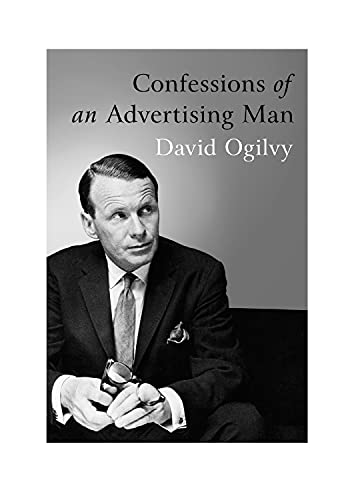
Effective advertising is not primarily self-expression or decoration; it is researched, strategically positioned communication intended to change behavior. Ogilvy argues that good agencies pair disciplined management and client service with memorable creative work, while respecting the intelligence of the consumer.
Overview
Published in 1963, the book moves from Ogilvy’s professional background into advice on running an agency, winning and retaining clients, creating campaigns, writing copy, using illustrations and photography, making television commercials, advertising particular product categories, and entering the profession. The structure is managerial and operational as much as creative.
Core ideas
Advertising begins with the product and its positioning
Creative execution cannot rescue a weak or badly positioned product indefinitely. First identify what is distinctive, useful, believable, and relevant to the prospective buyer; then build the campaign around that promise.
Research disciplines creative judgment
Ogilvy treats research as a source of consumer understanding, message testing, and campaign learning—not as a substitute for imagination. The advertiser should learn how people perceive the product, what language they use, and what information changes their minds.
The consumer is an intelligent decision-maker
Persuasion should be informative and respectful rather than contemptuous or manipulative. Explain the benefit, provide reasons to believe it, and avoid assuming that loudness, cleverness, or visual novelty automatically produces sales.
The headline and opening determine attention
In print advertising, the headline and visual must earn attention from people who are scanning rather than reading closely. The central promise should be easy to identify, while body copy can supply proof and detail for interested readers.
Specificity and demonstration beat vague claims
Concrete facts, product demonstrations, testimonials, explanations, and evidence make an advertisement more credible than generalized enthusiasm. The creative idea should dramatize a real benefit instead of merely creating an attractive mood.
Consistency builds brands over time
A campaign should establish recognizable associations rather than change personality with every execution. Short-term response matters, but fragmented messaging can weaken accumulated brand memory.
Agency quality depends on people and culture
Ogilvy connects creative output to hiring, standards, organization, professional courtesy, timely delivery, and honest relationships with clients. Management is presented as the protection and multiplication of talent, not merely administration.
Client service is part of the product
Winning an account is only the beginning. Retaining clients requires understanding their business, producing dependable work, communicating candidly, and treating the relationship as a serious long-term responsibility.
Practical takeaways
- Before writing or designing, state the target audience, the single most persuasive benefit, the reason to believe it, and the desired action.
- Separate the campaign’s strategic promise from its executional style; the style should make the promise memorable, not obscure it.
- Collect customer language and objections before inventing slogans or concepts.
- Prefer one clear proposition supported by evidence over a list of loosely related benefits.
- Use testing and performance data to challenge personal taste, but do not let mechanical testing eliminate strong creative ideas prematurely.
- Audit every advertisement for immediate comprehension: who is speaking, what is being offered, why it matters, and what the reader should do next.
- Build repeatable standards for briefs, review, deadlines, client communication, and post-campaign learning.
- Treat the book as a source of heuristics and professional standards, not as a universal formula for every medium or market.
Caveats and counterpoints
- Much of the advice is shaped by 1950s–1960s agency life, especially print, direct mail, television, and traditional client–agency structures. Digital platforms, algorithmic distribution, creator media, privacy rules, and rapid experimentation require additional frameworks.
- Ogilvy’s rules are often intentionally emphatic. Claims such as the superiority of particular formats, photography, long copy, or repetition should be treated as hypotheses whose usefulness depends on audience, category, medium, and objective.
- The book presents Ogilvy’s successful practices and self-narrative more than a balanced history of advertising. His examples are valuable but selected, and success stories can understate failures, market conditions, and survivorship bias.
- A results orientation does not by itself settle ethical questions. Persuasive advertising can still exploit vulnerability, encourage unnecessary consumption, or make technically accurate claims that create misleading impressions.
Questions worth revisiting
- What is the strongest customer problem or desire this product addresses?
- What evidence would make the central promise believable?
- Which parts of Ogilvy’s advice still apply to the current medium, and which are artifacts of print-era attention patterns?
- How will success be measured beyond clicks or short-term response—profit, retention, brand memory, or customer value?
- Does the campaign respect the audience’s intelligence in both its claims and its omissions?
Return to this when…
Return to the core-ideas section when reviewing a brief, evaluating creative work, onboarding an agency or marketer, or deciding whether a campaign is strategically clear. Revisit the caveats before applying Ogilvy’s prescriptions directly to digital, highly regulated, or socially sensitive categories.