

Bookmarks
Links worth keeping.
Articles, essays and ideas I’ve found worth returning to.
- Articles
- 162
Search
Search all link notes
/ to focus
Search titles, authors and overview descriptions.
Reading list
Articles 162
A 11 links
- Adam Curtis on the dangers of self-expression
Details
In this 2017 conversation, filmmaker Adam Curtis argues that self-expression—once associated with rebellion—has become a dominant form of consumer culture and a substitute for collective political action. He contrasts individual freedom with collective power, explores computers’ ability to reveal shared identities, and calls for new myths capable of restoring enchantment and common purpose.
- So you wanna de-bog yourself
Details
Adam Mastroianni’s humorous catalog of the recurring ways people become psychologically stuck: insufficient activation energy, misguided escape plans, and self-created “bogs.” By naming patterns such as gutterballing, waiting for a jackpot, puppeteering, and obsessing over tiny predictors, he turns vague paralysis into recognizable problems with more actionable exits.
- Muse retrospective
Details
Adam Wiggins’s candid retrospective on Muse, the canvas-based thinking tool he helped build from 2019 to 2023. He traces its research origins, product and positioning challenges, launch-driven growth, 2022 downturn, failed B2B pivot, and transition to solo stewardship, extracting lessons about category creation, distribution, focus, capital, platform strategy, and graceful endings.
- 82 Commandments for Successful Living
Details
A 2016 Film Stage list presents 82 compact principles attributed to Alejandro Jodorowsky, while clarifying that they derive from ideas associated with spiritual teacher George Gurdjieff and were transmitted through Reyna d’Assia. The advice emphasizes self-observation, disciplined action, nonattachment, emotional transformation, generosity, humility, and imaginative spiritual practice.
- The Age of Average
Details
Alex Murrell argues that contemporary creative culture is converging on a safe, globally recognizable “average.” From Airbnb interiors and five-over-one buildings to identical cars, influencer faces, franchise entertainment, and bland brand identities, he traces sameness to optimization, imitation, testing, consolidation, and shared online references—and presents distinctiveness as an unusually valuable opportunity.
- The Age of Average (Encore)
Details
Alex Murrell argues that streaming has made popular music increasingly optimized for attention and payout: songs are shorter, less melodically varied, and more repetitive. Drawing on chart analyses, he connects these changes to platform incentives and industry concentration, then makes a creative case for artists to reject formulas and pursue genuine musical experimentation.
- Intro to Large Language Models
Details
A fast, technically grounded introduction to large language models, explaining their files, training, inference, capabilities, limitations, and security risks. Karpathy uses the analogy of an operating system to show how models may become a new computing layer: software accessed through natural-language tokens rather than traditional interfaces.
- 26 charts that show Australia is in trouble
Details
A data-heavy warning about Australia’s weakening confidence, living standards, productivity, fiscal position, public services, social cohesion, and Indigenous outcomes. Andrew Kemp assembles 26 charts from government, academic, and policy sources, arguing that Australia remains broadly prosperous but is drifting without a convincing plan to restore productivity, improve services, manage spending, or renew faith in the future.
- Why governments can’t reform anymore. A historical perspective.
Details
Andrew Kemp argues that Australia’s productivity problem is not merely economic: decades of professionalisation, credentialism, regulation, and fragmented authority have created a “kludgeocracy” in which reform is slowed by many institutional veto points. The system has delivered real social gains, but now struggles to build homes, expand services, and act decisively.
- Why books donʼt work
Details
Andy Matuschak argues that explanatory nonfiction often fails not because readers are careless, but because the book medium silently assumes a false “transmission” model: read sentences, receive knowledge. Books leave readers to supply difficult metacognitive work—testing understanding, choosing practice, and generating feedback—then proposes designing new media whose default interactions embody how learning actually works.
- The Closure of the Internet
Details
A sweeping, partisan history of how Arctotherium argues the Internet shifted from an open, pluralist space into a coordinated system of platform moderation, algorithmic suppression, deplatforming, and para-state narrative control between 2015 and 2022. The essay traces this transformation across major platforms and examines its effects on dissent, expertise, politics, anonymity, and emerging AI systems.








B 2 links
- Every Software Company Has a 'Natural Size'
Details
Peldi Guilizzoni argues that a software company’s appropriate scale is largely determined by the problem it solves, customers’ expectations, and the market structure around its product. Entrepreneurs should identify that “natural size” early because financing, hiring, support, ownership, and growth strategy must fit it—not personal preferences alone.
- Peter Thiel’s CS183: Startup
Details
Blake Masters’s 2012 essay distills Peter Thiel’s Stanford CS183 startup lectures into a contrarian framework for creating new companies. Across fifteen classes, it covers technological progress, monopoly, founding teams, sales, financing, culture, distribution, secrets, failure, and long-term strategy—while preserving the lecture notes’ provisional, anecdotal character and occasional historical overreach.


C 7 links
- How to be More Agentic
Details
Cate Hall argues that agency—the determination to make things happen—is not an innate personality trait but a learnable practice. Drawing on poker, law, startups, and personal experiments, she recommends pursuing overlooked advantages, asking for ambitious opportunities, seeking candid feedback, tolerating low-status learning, expanding exposure to luck, and protecting energy from burnout.
- After Work, We’ll Have Each Other
Details
Clara Collier examines what happens when AI eliminates most economically necessary work. Drawing on aristocratic courts, upper-class volunteer networks, working-class urban villages, and studies of American workers, she argues that post-work life may become intensely relational—and therefore more status-conscious, conformist, exclusionary, and dependent on social groups. Work’s overlooked value is impersonal dignity: respect for skills, contributions, and usefulness.
- The ‘Enshittification’ of TikTok (Or how, exactly, platforms die)
Details
Cory Doctorow explains “enshittification,” his term for the predictable decline of digital platforms: first they serve users, then business customers, and finally shareholders. Using Amazon, Facebook, Twitter, Google, and TikTok, he argues that lock-in, opaque algorithms, and blocked interoperability let platforms extract value until users and suppliers begin to leave.
- 2020, the year of everything fake
Details
Curtis Yarvin’s caustic 2020 retrospective argues that the pandemic exposed a broader “fakeness” in American institutions: public-health rules, political narratives, expert authority, and media events often substituted ritual and legitimacy-management for competent action. He contrasts decisive state capacity with America’s ambiguous, weak governance, then generalizes from Covid to a society detached from reality.
- A techno-pessimist manifesto
Details
Curtis Yarvin’s satirical critique of techno-optimism argues that technology does not automatically create civilization, order, or human flourishing. Using Johannesburg, Kinshasa, William James, E.M. Forster, and Trotsky, he contrasts technological progress with social order and human purpose, warning that automation may produce dependency, uselessness, and politically dangerous populations rather than universal abundance.
- Rise of the neutral company
Details
Curtis Yarvin’s 2021 essay argues that companies should adopt broad political neutrality: employees may hold political views, but workplaces should not become arenas for collective ideological struggle. Yarvin presents neutrality as both a discipline of desire and a management strategy for preserving clear authority, accountability, and executive control.
- The Cathedral or the Bizarre
Details
Curtis Yarvin applies the cathedral–bazaar metaphor from software development to modern political authority. Drawing on Mosca, Burnham, Pareto, and Aristotle, he argues that decentralized journalism and academia have become an unaccountable “Reality Department,” producing ideological conformity through spontaneous coordination. He concludes that reform requires replacing intellectual oligarchy with either populism or monarchy.





D 9 links
- Notes On Taiwan
Details
Daniel Frank’s travel essay contrasts Taiwan’s unusually strong everyday competence, hospitality, trust, food culture, and public systems with what he experiences as the transactional dysfunction of the United States. Alongside personal observations from Taiwan, Hong Kong, Shenzhen, and Macau, he reflects on Confucianism, Chinese cultural influence, Taiwan’s ambiguous political status, and the risks facing its future.
- Best of Kellblog
Details
Dave Kellogg’s curated index of his favorite and most popular Kellblog posts, organized around boards, careers, CEO work, culture, marketing, management, pipeline, SaaS metrics, sales, Silicon Valley, and strategy. It is not a single argument, but a map of recurring operating principles for scaling B2B technology companies.
- On the Phenomenon of Bullshit Jobs: A Work Rant
Details
David Graeber’s 2013 essay argues that advanced economies have used technology not to shorten the workweek but to generate vast numbers of socially unnecessary administrative and professional jobs. He examines the psychological harm of meaningless work, the unequal status of essential labor, and the political function of disciplining people through compulsory employment.
- Ideas are just a multiplier of execution
Details
A compact business essay arguing that ideas have little practical value without execution. Derek Sivers presents a simple multiplier model: idea quality can raise or reduce potential, but disciplined, effective implementation determines most of the outcome. The piece challenges secrecy around ordinary ideas and redirects attention toward demonstrated ability to act.
- If you’re not feeling “hell yeah!” then say no
Details
Derek Sivers argues that an overfull life is often created by accepting opportunities that inspire only mild interest. By reserving “yes” for commitments that produce a strong, genuine sense of enthusiasm, you recover time and attention for fewer pursuits—and can pursue those pursuits with unusually complete focus.
- My favourite fable
Details
A concise retelling of a traditional farmer-and-horses fable, presented by Derek Sivers as a lesson in resisting premature judgments. Through a chain of apparently fortunate and unfortunate events, the story shows how outcomes remain uncertain and how emotional distance can preserve clear judgment when circumstances change.
- Relax for the same result
Details
Derek Sivers uses a bicycle ride to show how excessive effort can add stress without meaningfully improving results. His experiment—cycling at half intensity and finishing only two minutes slower—becomes a practical reminder to distinguish productive effort from tension, urgency, and self-imposed overexertion.
- Why Everything Became Television
Details
Derek Thompson argues that contemporary media is converging on “television” understood not as a device or industry, but as an endless flow of episodic video optimized for passive attention. Social networks, podcasts, and AI tools increasingly serve this model, potentially amplifying solitude, emotionality, political spectacle, and the erosion of sustained, inward thought.
- The Coming Preference Cascade
Details
Douglas Wilson argues that public authority can collapse suddenly when people privately reject an official orthodoxy and then discover that many others agree. Using recent political and cultural controversies, plus Saul and David as a biblical analogy, he portrays a coming “preference cascade” accelerated by authorities’ visible abandonment of wisdom.





E 2 links
- Against the protection of stocking frames
Details
Ethan Marcotte argues that large language models should be understood as a failed product class, not an inevitable technological revolution. Their unreliable outputs, severe social and ecological costs, weak consumer demand, and dependence on enormous financial support are obscured by institutional pressure to adopt them. The deeper function, he suggests, is workplace control.
- What I think about when I edit
Details
Eva Parish distills a cross-genre editing practice into a compact set of principles: identify the intended message and audience, state ideas directly, remove unnecessary words, define unfamiliar terms, control tone, and structure pages for skimming. Her core standard is deliberate clarity rather than rigid obedience to style rules.


F 1 link
- The Wuhan Lab Leak Hypothesis Is A Conspiracy Theory, Not Science
Details
A June 2021 Forbes essay by Ethan Siegel argues that the SARS-CoV-2 lab-leak claim was then being advanced through circumstantial clues, political association, and conspiracy-style reasoning rather than direct virological evidence. He defends zoonotic emergence as the better-supported explanation and urges stronger pandemic surveillance without vilifying researchers.

G 1 link
- Bitcoin Is Worse Is Better
Details
Gwern’s 2011 essay argues that Bitcoin succeeded not because it was an elegant cryptographic invention, but because it assembled familiar components into an ugly, decentralized system that could survive independently of any company. Its incompleteness, inefficiency, and socially determined edge cases were liabilities aesthetically—but advantages for bootstrapping, persistence, and eventual improvement.

H 5 links
- The Great Feminization
Details
Helen Andrews argues that the recent feminization of major American institutions—not merely women’s entry into them, but the spread of feminine norms emphasizing consensus, empathy, safety, and social cohesion—helps explain wokeness and institutional dysfunction. She attributes this shift partly to anti-discrimination law and HR practices, and calls for formally gender-neutral, substantively meritocratic rules.
- The Racial Crossroads
Details
Helen Andrews argues that America’s post-1960s racial settlement is becoming untenable because demographic change and persistent racial disparities are expanding the number of people claiming race-based advantages. She contrasts permanent racial favoritism with a new legal regime of equal treatment, warning that race-centered law will increasingly politicize institutions, suppress speech, and compound failures of competence.
- How I stay motivated as a solo-creator
Details
Herman Martinus explains how he sustains motivation while working alone: choose projects he genuinely wants to live with, create a flexible daily rhythm, protect attention, stop before exhaustion, maintain relationships with peers, and write publicly to clarify his thinking. The system replaces external workplace structure with deliberately designed sources of momentum and accountability.
- Embrace your lack
Details
Hollis Robbins reads Vince Gilligan’s Pluribus through Lacan’s idea of “lack,” arguing that separation, incompleteness, and limited perspective are conditions for language, desire, culture, and art. The essay uses the show’s hive mind—and its parallels with language models—to suggest that perfect responsiveness can reproduce culture without possessing subjective desire or genuine resonance.
- I Beg to Differ
Details
In this July 26, 2022 memo, Howard Marks argues that superior investment results require behavior that differs from the consensus—and judgment good enough to make that difference profitable. He connects unconventionality, second-level thinking, intelligent contrarianism, tolerance for looking wrong, and disciplined focus on long-term value rather than short-term macro forecasts.




I 2 links
- I Have to Bury My Talent in Yesterday
Details
DeepSeek kernel engineer Liu Shengyu reflects on AI rapidly mastering the specialized work he loves. He expects not immediate unemployment but forced professional change, and mourns the loss of craft itself. The essay links personal displacement to an arms race in which engineers must accelerate the technology that will eventually supersede them.
- IQ Shredders
Details
A 2014 Isegoria post presents Singapore as an “IQ shredder”: a wealthy, orderly, selective, high-productivity city-state that attracts talented people while encouraging them to have very few children. The post frames this as a paradox in which capitalism efficiently concentrates human capital but may undermine its long-term biological reproduction.


J 20 links
- A Guide to Understanding the Hoax of the Century
Details
Jacob Siegel’s long-form critique of the post-2016 “disinformation” apparatus. Through thirteen linked perspectives, he argues that a foreign-influence panic evolved into a state–corporate system for monitoring and suppressing domestic speech. The essay connects Russiagate, counterterrorism, COVID-19 moderation, election politics, NGOs, and AI-enabled censorship, while presenting a strongly polemical defense of individual autonomy.
- Losing the Narrative: The Genre Fiction of the Professional Class
Details
James McElroy argues that America’s professional-managerial class has learned to communicate through recycled genre conventions: corporate jargon, résumé narratives, ideological branding, and political tropes. Because bureaucratic advancement rewards plausible performance over truthfulness, elites become detached from ordinary life and unable to generate compelling public stories. The essay ends by calling for renewed, reality-based civic action.
- Designing the Ideal Bootstrapped Business with Jason Cohen
Details
In this MicroConf talk, Jason Cohen explains how to design a self-funded software business that produces predictable cash rather than recurring anxiety. He connects revenue model, market selection, pricing, cash flow, customer acquisition, and founder goals into a practical template: a focused B2B product with recurring demand, healthy margins, and repeatable distribution.
- Discount gambit
Details
Jason Cohen argues that software companies should avoid arbitrary, last-minute discounts and instead offer price protection before an announced future increase. The latter approach preserves trust, signals product momentum, reduces haggling, attracts better-fit customers, and frames early buyers as valued members of a growing community rather than targets for negotiation.
- Extreme brainstorming questions to trigger new, better ideas
Details
Jason Cohen presents a set of deliberately extreme business and product questions for escaping incremental thinking. By imagining constraints such as no customers, no support, no meetings, unlimited cost, or only one annual initiative, teams expose hidden assumptions, discover strategic options, and identify ideas worth testing in ordinary reality.
- Finding Fulfillment
Details
Jason Cohen’s 2022 framework for understanding fulfillment at work and in life. He combines autonomy, mastery, and purpose with a practical three-circle model—Joy, Skill, and Need—and shows how missing any one creates recognizable traps: useless flow, indulgent failure, or burnout. The essay is especially useful for founders and leaders choosing roles.
- Fixing the ROI rubric
Details
Jason Cohen critiques conventional ROI spreadsheets as falsely precise: uncertain impact and effort estimates often create rankings that cannot survive ordinary error. He proposes “Fermi ROI”—using deliberately coarse, widely separated values, explicit qualitative definitions, and selective tie-breakers—to focus debate on strategic differences rather than spurious numerical precision.
- Kung-Fu
Details
Jason Cohen’s compact collection of startup operating principles, covering product validation, pricing, metrics, strategy, distribution, leadership, scaling, culture, and personal discipline. Rather than presenting universal rules, Cohen frames these ideas as one workable “style” among many, emphasizing focused execution, honest financial analysis, customer value, organizational resilience, and continual founder evolution.
- Navigating the unpredictability of everything
Details
Jason Cohen argues that strategy remains essential even though markets, customers, competitors, and outcomes are profoundly difficult to predict. Using examples from Tesla, chess, Slack, Flickr, WhatsApp, and his own companies, he proposes designing strategies that learn quickly, preserve options, exploit strengths, hedge failure, and emphasize durable customer needs over forecasts.
- Pricing determines your business model
Details
Jason Cohen argues that pricing is not a late-stage monetization choice but a constraint that shapes the product, customer, sales process, support model, financing needs, and growth rate. He maps monthly price points from free to $100,000 onto distinct business models, then recommends testing price expectations directly during customer interviews.
- The Elephant in the room: The myth of exponential hypergrowth
Details
Jason Cohen argues that startup “hypergrowth” is usually misclassified as exponential. Real companies more often follow an “Elephant Curve”: growth accelerates, becomes roughly linear during optimization, then decays. Marketing campaigns, products, geographies, and viral effects stack into quadratic-looking company growth, making component-level modeling more useful than percentage-growth slogans.
- The practical application of "Rocks, Pebbles, Sand"
Details
Jason Cohen turns the familiar Rocks–Pebbles–Sand metaphor into a practical product-development planning system. Long-term strategic initiatives (“Rocks”) maximize impact, medium-sized tactical work (“Pebbles”) maximizes return on effort, and small maintenance or quality improvements (“Sand”) maximize throughput. The essay explains distinct decision rules, ownership, risks, and sprint-planning tactics for each category.
- The roadmap to Product/Market Fit… maybe
Details
Jason Cohen presents an eight-step, experience-based roadmap to product/market fit, drawing mainly on WP Engine and Smart Bear. The method combines founder-market advantage, market and customer validation, rapid delivery of a simple lovable complete product, active marketing and sales, retention-focused iteration, ruthless prioritization, and psychological resilience—while acknowledging that successful companies may reach fit through different paths.
- When you want to quit because it’s just not worth it
Details
Jason Cohen describes the emotional collapse that can accompany startup work—even after revenue, customers, and apparent success. Through a humiliating enterprise-sales encounter, he argues that persistence is not emotional mastery or confident stoicism. It is continuing while feeling inadequate, angry, or afraid: surviving the difficult stretch rather than triumphantly overcoming it.
- Risk, decisons, and scarcity
Details
Jason Fried reflects on risk-taking as a scarce organizational resource. Drawing on a conversation with a larger-company founder, he argues that distance from decisions, organizational scale, and concern for predictable results steadily reduce risk tolerance. Founders therefore have a distinctive duty: deliberately replenish the company’s willingness to make consequential, uncertain bets.
- Failing to Fail: The Spiderweb Software Way
Details
Jeff Vogel recounts how Spiderweb Software survived—and occasionally prospered—for decades as a tiny, niche game studio. Through history, sales anecdotes, and blunt advice, he argues that durability comes from modest scope, repeatable production, direct customer relationships, a useful back catalog, financial caution, and refusing to imitate larger companies.
- Duke's 2024 Commencement Address
Details
In Duke’s May 12, 2024 commencement address, Jerry Seinfeld argues that graduates should replace pressure to discover a single calling with curiosity, effort, attention, love, and humor. Using jokes about privilege, AI, work, money, and uncertainty, he presents a comic philosophy of living: enjoy the process, pursue interesting work, and stay alert to life’s absurdity.
- How Not To Fail
Details
In this 2016 keynote, Jessica Livingston distills lessons from more than 1,000 Y Combinator startups into a survival checklist: build something users genuinely want, stay focused, measure growth, preserve cash, and understand fundraising risk. She also urges women founders not to let legitimate barriers and surrounding media noise become distractions from building.
- On Creativity
Details
A humorous but practical talk arguing that creativity is not a rare talent but a mode of operating: playful, curious, relaxed, and willing to delay premature judgment. Cleese contrasts an open mode with the pressure-driven closed mode, then offers conditions—space, time, confidence, humor, and trusted collaborators—that help original ideas emerge.
- Why the Past 10 Years of American Life Have Been Uniquely Stupid
Details
Jonathan Haidt argues that America’s democratic dysfunction is not mainly a decline in intelligence or morality, but a structural consequence of social media’s post-2009 shift toward viral amplification. By rewarding outrage, punishing dissent, and fragmenting shared reality, platforms weakened trust, institutions, and common stories. Haidt proposes institutional, technological, and childhood reforms.







K 10 links
- COVID-19 Origins: Investigating a “Complex and Grave Situation” Inside a Wuhan Lab
Details
An investigative reconstruction of the Wuhan Institute of Virology’s safety problems, political pressures, and opaque communications before the COVID-19 outbreak. Eban and Kao argue that newly examined documents make a research-related incident more plausible, while acknowledging that the evidence does not identify a specific accident or conclusively resolve the pandemic’s origins.
- Lessons from Keith Rabois
Details
A compact collection of Keith Rabois’s startup lessons, organized around choosing ambitious problems, navigating an “idea maze,” challenging industry assumptions, designing founding teams around core risks, and deliberately forging markets. The notes emphasize conviction, specificity, mission-driven recruiting, and practical execution over prestige, conventional wisdom, or passive waiting for product-market fit.
- 1,000 True Fans
Details
Kevin Kelly argues that independent creators can build a sustainable livelihood without mass popularity by cultivating roughly 1,000 “true fans”—customers who eagerly buy nearly everything they make. The model depends on direct relationships, sufficient annual value per fan, and internet-enabled distribution, while acknowledging the labor, variability, and team costs involved.
- 101 Additional Advices
Details
Kevin Kelly’s 101 compact principles for living, working, learning, relating, and making decisions. The advice favors experimentation over certainty, long horizons over immediate comfort, generosity over status competition, and deliberate attention to small daily choices. It extends Kelly’s earlier advice with practical reminders about resilience, curiosity, relationships, work, and personal responsibility.
- 103 Bits of Advice I Wish I Had Known
Details
A compact collection of 103 aphorisms Kevin Kelly published for his 70th birthday on April 28, 2022. Drawing on work, friendship, money, creativity, learning, technology, aging, and everyday conduct, the list favors memorable rules of thumb over systematic argument. Its value lies in the cumulative pattern: act now, keep experimenting, protect relationships, and remain open to surprise.
- 68 Bits of Unsolicited Advice
Details
Kevin Kelly’s compact collection of practical life advice, originally written for his adult children on his 68th birthday. The accessible aphorisms cover learning, creativity, work, relationships, judgment, money, technology, and aging. Its emphasis is less on grand principles than on small behavioral rules that improve attention, curiosity, resilience, and long-term usefulness.
- 99 Additional Bits of Unsolicited Advice
Details
A brief 2021 post presenting five sample principles from Kevin Kelly’s larger collection of practical life advice. The suggestions emphasize preserving individuality, avoiding needless effort, valuing character over achievement, exceeding expectations, and keeping apologies or compliments free of hidden conditions. The article also introduces the expanded book version, Excellent Advice for Living.
- The Case Against 1000 True Fans
Details
Kevin Kelly revisits his “1,000 True Fans” thesis by examining whether creators were actually earning sustainable livelihoods from direct fan support in 2008. His evidence suggests that direct patronage could supplement income, but rarely replace it—especially for low-priced creative goods—and required substantial ongoing labor in customer acquisition, relationship management, and fulfillment.
- How to Walk and Talk: Everything We Know
Details
Kevin Kelly and Craig Mod’s practical field guide to organizing a weeklong walking salon: roughly 100 kilometers, eight to ten participants, daily shoulder-to-shoulder conversations, and moderated evening discussions. It treats route design, group chemistry, lodging, meals, technology, costs, gear, and documentation as tools for creating unusually deep friendships and memorable collective thought.
- Crony Beliefs
Details
Kevin Simler argues that many beliefs are “cronies”: ideas retained less for accurately modeling reality than for earning social rewards such as belonging, status, loyalty, or protection. Using an employer-and-employee analogy, he contrasts pragmatic “merit beliefs” with socially useful beliefs and proposes examining incentives, defensiveness, actionability, and community norms.




L 3 links
- I Will Fucking Haymaker You If You Mention Agile Again
Details
A furious, comic critique of Agile as practiced in dysfunctional software organizations. Ludicity argues that stand-ups, retrospectives, backlog grooming, estimation rituals, and tracking tools often substitute ceremony for judgment while interrupting productive work. The essay’s alternative is not another methodology, but competent hiring, clear priorities, realistic commitments, trust, and managerial restraint.
- I Will Fucking Piledrive You If You Mention AI Again
Details
A data scientist’s furious, comic critique of corporate AI hype. Ludicity argues that most organizations should stop announcing experimental AI initiatives and instead repair basic engineering, security, documentation, and management failures. The essay distinguishes genuine technical disruption from performative “AI readiness,” warning that shallow preparation will neither improve ordinary operations nor protect firms from radical change.
- The Noonday Demon — Our Metaphysical Laziness
Details
Luke Burgis argues that familiar critiques of social media—dopamine, stupidity, and censorship—miss a deeper spiritual problem: acedia, or resistance to reality and meaningful attention. Through images of Chernobyl, the noonday demon, and envy of birds, he examines how metaphysical laziness makes people evade difficult questions rather than confront the world as it is.


M 14 links
- IT'S TIME TO BUILD
Details
A pandemic-era argument that Western societies’ failures stem not only from poor foresight but from losing the capacity and willingness to build. Marc Andreessen applies this diagnosis to healthcare, housing, education, manufacturing, transportation, and government, urging both political parties—and individuals—to prioritize production, experimentation, infrastructure, and measurable results over inertia and ideological protection.
- The Pmarca Blog Archive
Details
An edited public archive of Marc Andreessen’s 2007 essays on startups, venture capital, hiring, careers, productivity, platforms, luck, and technology. Its strongest pieces offer blunt operating heuristics: prioritize markets, expect plans to change, seek leverage, hire exceptional people, and treat entrepreneurial success as a mixture of preparation, persistence, and luck.
- The Techno-Optimist Manifesto
Details
Marc Andreessen’s 2023 manifesto argues that technological progress, economic growth, free markets, artificial intelligence, and abundant energy are mutually reinforcing forces for human flourishing. It attacks precautionary, anti-growth, and centralized approaches as demoralizing sources of stagnation, while presenting technological ambition, competition, individual agency, and material abundance as the route toward a freer, richer future.
- Why AI Will Save The World
Details
Marc Andreessen’s 2023 case for rapid, largely unrestricted AI development. He argues that AI will amplify human intelligence, accelerate prosperity, improve safety, and help democratic societies compete with China. The essay rejects extinction, censorship, mass-unemployment, and inequality concerns as exaggerated, while acknowledging misuse by criminals and hostile states.
- Why AI Won't Cause Unemployment
Details
Marc Andreessen argues that AI is unlikely to produce economy-wide unemployment—not because technological displacement is impossible, but because regulation already blocks rapid technological change across most major sectors. He contrasts innovation-friendly industries, where prices fall and quality improves, with protected sectors such as health care, education, housing, and government, where costs rise despite stagnation.
- Why not to do a startup
Details
Marc Andreessen’s deliberately unsentimental opening to his startup guide. Drawing on founding, investing, and advising across Silicon Valley, he catalogs the emotional, operational, interpersonal, and external risks founders routinely underestimate—before even addressing product or market execution. The essay is a useful reality check against startup mythology, especially for first-time founders.
- The Most Important Question of Your Life
Details
Mark Manson argues that meaningful goals should be evaluated less by their attractive outcomes than by the difficulties required to reach them. By asking what pain, sacrifice, uncertainty, and repetition we are willing to sustain, we can distinguish genuine commitments from fantasies and choose values that fit the life we actually want.
- U.S. Public Health Agencies Aren't ‘Following the Science’
Details
A July 2022 critique of U.S. COVID-19 policy by Marty Makary and Tracy Beth Høeg, based largely on conversations with anonymous NIH, FDA, and CDC personnel. The authors argue that political pressure, institutional conformity, and weak evidence distorted decisions—especially concerning young children, boosters, natural immunity, and internal scientific debate.
- Why Dall-E will not steal my job as an illustrator
Details
A professional illustrator tests DALL-E against storyboard and personal illustration work, arguing that image generators in 2022 could not reliably deliver precise, coherent, client-ready results. He broadens the case: artistic professions survive disruptive tools because audiences value human judgment, skill, intention, and performance—not merely the final visual output.
- “That’s Not Happening and It’s Good That It Is”
Details
Michael Anton’s compact catalog of seven rhetorical techniques he attributes to contemporary progressive institutions and media. Using examples involving sex, race, immigration, surveillance, and political dissent, Anton argues that power protects itself by denying foreseeable consequences, reversing factual judgments, demanding public self-abasement, and portraying resistance as aggression. The essay is polemical rather than empirical.
- I Sold TinyPilot, My First Successful Business
Details
Michael Lynch recounts selling TinyPilot, a bootstrapped hardware-software business, for $598,000 after four years of growth. He explains why he chose to exit, how simplifying operations improved both his quality of life and the company’s attractiveness, how brokers and strategic buyers shaped the process, and why closing a small-business acquisition is emotionally and operationally grueling.
- Lessons from my First Exit
Details
Michael Lynch’s candid retrospective on selling TinyPilot, a bootstrapped hardware company, for $598,000 in April 2024. He explains what made the exit smooth, what created unnecessary cost and stress, and which operational, legal, financial, and human details he would handle differently next time. Particularly useful for founders preparing a small-business acquisition.
- My Sixth Year as a Bootstrapped Founder
Details
Michael Lynch reviews TinyPilot’s sixth year, when revenue approached $1 million and profit rose sharply after shifting from experimental hardware work toward scaling, outsourcing, and operational resilience. He explains how metal cases improved pricing power, third-party logistics reduced hidden stress, mature software slowed feature output, and asynchronous support delegation increased team autonomy.
- What advice do I give to my students?
Details
Mike Levin’s advice for unconventional researchers and academic “misfits”: build a network of partial mentors, trust but test your intuition, protect an uncensored creative core, and learn to translate unusual ideas for institutions. The essay combines career reflection, practical social strategy, and personal methods for generating, preserving, and developing ambitious research ideas.








N 5 links
- Principles
Details
A compact list of 63 life and work principles drawn from Nabeel S. Qureshi’s experience. The advice emphasizes speed, experimentation, integrity, deliberate environments, creative production, intellectual fallibilism, strong relationships, and building enduring value. It combines practical operating rules with reminders about risk, status, health, attention, and the emotional realities of ambitious work.
- Why the WHO took two years to say COVID is airborne
Details
Nature’s investigation of why the WHO was slow to recognize and clearly communicate that SARS-CoV-2 spreads through airborne particles. It traces the delay to entrenched droplet-based infection-control models, limited aerosol expertise, demanding evidentiary standards, institutional caution, and weak communication—while showing how that delay diverted attention from ventilation and indoor masking.
- Why I Am a Bad Correspondent
Details
In this brief explanatory essay, Neal Stephenson argues that reader correspondence and public appearances compete directly with the uninterrupted time required to write novels. He rejects the “recluse” label, apologizes for unanswered messages, and frames his limited availability as a deliberate choice: offer polished work to many readers rather than fragmented, lower-quality interactions with a few.
- Why the Web Won't Be Nirvana
Details
In this 1995 Newsweek essay, astronomer and early internet user Clifford Stoll challenges utopian claims about the Web. He argues that online networks cannot replace editors, teachers, civic institutions, commerce, or face-to-face relationships, warning that technological convenience may disguise information overload, weak participation, isolation, and the devaluation of human contact.
- Why has American pop culture stagnated?
Details
Noah Smith investigates whether American mass culture has genuinely stagnated, arguing that technological and economic conditions—not merely bad taste or weak artists—shape both demand and creative supply. He explores algorithmic feeds, exhausted artistic “low-hanging fruit,” television’s relative vitality, the rise of new cultural forms, and the disappearance of peer-based avant-garde gatekeeping.





O 1 link
- The Eternal Pursuit of Unhappiness
Details
A concise summary of Ogilvy & Mather’s culture handbook, centered on eight virtues intended to make creativity habitual: courage, idealism, curiosity, playfulness, candor, intuition, free-spiritedness, and persistence. The article presents these principles as practical defenses against fear, bureaucracy, conformity, excessive rationalism, and the discouragement that creative work routinely produces.

P 28 links
- Fast
Details
Patrick Collison’s illustrated catalogue of ambitious projects completed unusually quickly, from the BankAmericard and the P-80 jet fighter to Apollo 8, JavaScript, Git, and COVID-19 vaccines. The examples become an argument about institutional capacity: modern societies often know how to build, but increasingly struggle to decide and execute at speed.
- You Can Probably Stand To Charge More
Details
Patrick McKenzie argues that software entrepreneurs often price according to development effort, insecurity, or imagined perfection rather than customer value. Because software’s marginal cost is nearly zero and customers usually cannot—or do not want to—rebuild it, pricing should reflect the value of solving their problem, not the hours or resources spent creating the product.
- Crazy New Ideas
Details
Paul Graham argues that an implausible idea deserves unusual attention when proposed by a reasonable person with deep expertise. Instead of dismissing it, ask questions: the idea may expose a flaw in your own model. The essay examines paradigm blindness, envy, factionalism, vested interests, and why radical ideas initially look weak.
- Do Things that Don't Scale
Details
Paul Graham argues that startups rarely “take off” on their own: founders must deliberately push them into motion. Early progress often requires manual user recruitment, extraordinary customer care, narrow-market focus, hands-on implementation, and temporary workarounds. These unscalable efforts generate growth, product insight, and company culture before automation and scale become possible.
- How to Get Startup Ideas
Details
Paul Graham’s 2012 essay argues that strong startup ideas are usually discovered, not invented. Founders notice urgent problems in fields they understand, often because they are already “living in the future.” The practical method is to build useful things, investigate anomalies, and begin with a narrow group of users who care deeply.
- How to Make Wealth
Details
Paul Graham’s 2004 essay explains wealth creation through startups and other high-leverage work. He distinguishes wealth from money, argues that unusually large rewards require measurable performance and leverage, and emphasizes small teams, difficult technical problems, user feedback, and the substantial randomness and risk behind startup fortunes.
- How To Think For Yourself
Details
In this November 2020 essay, Paul Graham argues that independent-mindedness is essential in work where success requires ideas that are both correct and novel. He explains how truthfulness, resistance to conformity, and curiosity reinforce one another—and suggests practical ways to cultivate them through diverse relationships, reduced exposure to conventional opinion, and sustained investigation.
- Keep Your Identity Small
Details
Paul Graham argues that productive thinking and discussion become difficult when beliefs are tied to personal identity. Politics, religion, national loyalties, professional labels, and even programming languages can trigger partisan defensiveness. His proposed remedy is to keep identity deliberately sparse: treat labels as provisional, follow evidence, and avoid making too many opinions part of the self.
- Maker's Schedule, Managers Schedule
Details
Paul Graham’s 2009 essay distinguishes the manager’s fragmented, appointment-based day from the maker’s need for long, uninterrupted stretches to create. It explains why meetings impose disproportionate costs on programmers, writers, and other builders, and proposes scheduling practices—especially clustered office hours—that let organizations coordinate without destroying deep work.
- Making Startups Powerful
Details
Paul Graham presents a practical framework for making startups structurally more powerful rather than merely more profitable. He explores owning customer relationships, creating platforms and network effects, moving upstream, serving fast-growing customers, going full-stack, and playing the long game—while insisting that every power-building move must produce a better outcome for customers.
- The Acceleration of Addictiveness
Details
Paul Graham argues that technological progress increasingly concentrates pleasurable experiences into more potent, harder-to-resist forms—much as opium became heroin or ordinary games became massively engaging online platforms. As social norms adapt too slowly, individuals must increasingly design personal rules around technology, consumption, attention, and the activities they refuse.
- The Top Idea in Your Mind
Details
Paul Graham argues that difficult work depends not only on deliberate effort but also on “ambient thought”—the unconscious processing that occurs when the mind drifts. Because one concern usually dominates those moments, commitments involving money, disputes, or emergencies can crowd out the work that matters most. Design your circumstances accordingly.
- What I've Learned from Users
Details
Paul Graham distills lessons from advising hundreds of Y Combinator startups. He argues that most companies encounter recurring problems, but solving them requires individualized diagnosis, ruthless prioritization, rapid experiments, and experienced feedback. YC’s deepest value is improving founders’ focus and speed while surrounding them with unusually helpful peers.
- Writing, Briefly
Details
A compact checklist for improving nonfiction writing through rapid drafting, repeated rewriting, ruthless cutting, conversational language, and attentive reading. Paul Graham argues that writing is not merely a way to communicate finished thoughts: the process itself produces and tests ideas. The essay’s advice emphasizes practical habits, editorial judgment, feedback, and intellectual honesty.
- A time for truth and reconciliation
Details
In this January 2025 Financial Times essay, Peter Thiel interprets Donald Trump’s return as an opportunity to expose what he sees as suppressed truths about America’s institutions, media, intelligence agencies, COVID-19, and major historical controversies. He links political reconciliation to disclosure, while presenting the internet as the force that has defeated an entrenched information-controlling establishment.
- Against Edenism
Details
Peter Thiel argues that returning to a pretechnological “Eden” is neither possible nor ethically neutral. A densely argued theological and political defense of technological progress, the essay contrasts Judeo-Christian hope and Enlightenment optimism with modern technological pessimism, while acknowledging that science and technology create genuine dangers requiring moral and political judgment.
- Back To The Future
Details
Peter Thiel reviews Ross Douthat’s The Decadent Society, arguing that contemporary civilization is marked by technological stagnation, demographic decline, institutional sclerosis, and cultural repetition. He accepts Douthat’s diagnosis but presses for more concrete ambition: achievable technological goals, institutional reform, and a moderate path that rejects both complacent optimism and fatalistic despair.
- Lecture 1: Knowledge Shall Be Increased
Details
Peter Thiel’s first lecture frames modern technological progress through Daniel’s prophecy of increasing knowledge. It links scientific advancement to apocalyptic danger, declining institutional comprehension, and the possibility that a leader could exploit existential fear. The proposed alternative to both total global control and catastrophic war is moral and political freedom: knowledge advances, but history remains open.
- Spending The Future
Details
Peter Thiel reviews two books on philanthropic foundations and argues that charitable wealth should be judged by its long-term institutional effects, not merely its tax-exempt status or annual grantmaking. He contrasts perpetual and spend-down foundations, warns of ideological drift, and urges donors to fund risky, original projects capable of producing durable social change.
- The Diversity Myth
Details
An edited 2023 speech revisiting Peter Thiel and David Sacks’s 1995 critique of Stanford multiculturalism. Thiel argues that “diversity” functions less as genuine pluralism than as an attention-directing ideology, diverting scrutiny from scientific stagnation, inequality, university economics, theological confusion, and totalitarian political impulses. He ends by urging renewed attention to communism and China.
- The Education of a Libertarian
Details
Peter Thiel recounts his shift from politically engaged libertarian activism to skepticism about democratic politics. He argues that libertarians should seek freedom not primarily through persuasion or elections, but through technologies and institutions that let people exit political control—especially cyberspace, outer space, and seasteading—while warning that technology’s liberating potential is neither automatic nor guaranteed.
- The End of the Future
Details
Peter Thiel argues that Western civilization has mistaken rapid digital progress for broad technological advancement. Since roughly 1973, energy, transportation, agriculture, medicine, wages, and productivity have stagnated relative to mid-century expectations. The result is a dangerous dependence on debt, financial bubbles, and political promises that assume growth will automatically return.
- The Optimistic Thought Experiment
Details
Peter Thiel’s 2008 essay treats globalization as the central wager of modernity: either deeper integration produces peace and prosperity, or its failure leads toward war, authoritarianism, or systemic collapse. Using financial bubbles as evidence, Thiel argues that investors must distinguish genuine bets on constructive globalization from speculative instruments merely trading on its seductive narrative.
- The Straussian Moment
Details
Peter Thiel’s 2007 essay interprets the post-September 11 world through Locke, Schmitt, Leo Strauss, and René Girard. It argues that liberal modernity understates religion, human violence, rivalry, and political conflict. Thiel’s proposed posture is neither Enlightenment complacency nor Schmittian extremism, but cautious statesmanship that recognizes dangerous truths while favoring peace in close cases.
- Voyages to the End of the World
Details
Peter Thiel and Sam Wolfe read Francis Bacon’s New Atlantis, Jonathan Swift’s Gulliver’s Travels, Alan Moore’s Watchmen, and Eiichiro Oda’s One Piece as successive reflections on science, empire, technology, and the Antichrist. The essay argues that modern projects promising peace and salvation through knowledge or global control risk becoming counterfeit, totalizing religions.
- Your Suffrage Isn’t in Danger. Your Other Rights Are.
Details
A brief 2009 follow-up to Peter Thiel’s critique of democratic politics. Thiel rejects the idea that women’s suffrage is under threat, but argues that political attention is misdirected: voting remains secure while drug prohibition, government abuse, and financial bailouts threaten more substantive liberties. He recommends pursuing freedom through peaceful, technological, and institution-building projects outside electoral politics.
- The Pope and the Antichrist
Details
Peter Thiel and Sam Wolfe argue that Pope Benedict XVI’s writings and late-life remarks reveal a sustained concern with the Antichrist, apocalyptic history, and Christianity’s loss of faith in the future. Through Bonaventure, Joachim, Solovyov, Hans Küng, and Ratzinger, they present eschatological awareness as an antidote to complacent progressivism and philosophical evasion.
- Why I'm unreachable and maybe you should be too
Details
Pieter Levels explains why he deliberately closes private communication channels: his finite time is better spent on deep work, health, relationships, and self-directed projects than on answering strangers. He argues that most people can find answers independently, customers—not famous founders—should provide product feedback, and anyone can reclaim focus by becoming less available.











R 1 link
- Luxury Beliefs are Status Symbols
Details
A transcript of Rob Henderson’s 2022 Nudgestock talk arguing that affluent groups increasingly signal status through fashionable beliefs rather than conspicuous goods. Drawing on Veblen, Bourdieu, costly-signaling theory, and examples involving policing, agency, and elite vocabulary, Henderson claims these “luxury beliefs” are affordable for elites but can impose disproportionate costs on poorer people.

S 19 links
- E Pur Si Muove
Details
Sam Altman argues that innovation depends on protecting controversial, unpopular, and even seemingly absurd ideas from social punishment. Using examples from science, technology, and social change, he warns that treating people as heretics suppresses debate and drives capable thinkers away, while acknowledging the difficult boundary between tolerating ideas and tolerating harmful conduct.
- How To Be Successful
Details
Sam Altman’s 2019 essay distills thirteen principles for achieving unusually large impact, wealth, or career success. Drawing on startup experience, it emphasizes compounding leverage, independent judgment, persuasion, focused execution, ownership, ambitious risk-taking, persistence, strong networks, and intrinsic motivation—while acknowledging that privilege and an initial baseline of opportunity make these strategies easier to apply.
- Moore's Law for Everything
Details
Sam Altman argues that increasingly capable AI will drive the cost of labor, goods, and services sharply downward while concentrating wealth in companies and land. He proposes an “American Equity Fund,” financed by annual taxes on corporate value and land, to distribute ownership and dividends broadly and preserve social stability during rapid automation.
- Productivity
Details
Sam Altman’s 2018 productivity essay argues that effectiveness begins with choosing valuable problems, not optimizing routines. He describes a personal system built around written lists, ruthless prioritization, protected focus time, selective delegation, suitable collaborators, and attention to sleep, exercise, nutrition, environment, relationships, and long-term direction.
- What I Wish Someone Had Told Me
Details
A compact list of seventeen lessons on building ambitious organizations and sustaining long-term work. Sam Altman emphasizes conviction, focused bets, strong teams, clear communication, fast iteration, incentives, resilience, and compounding advantages—while urging readers to act before inspiration fades and to judge efforts by outcomes rather than process.
- Britain, 2049
Details
A satirical vision of Britain in 2049, where attempts to solve public problems through regulation, redistribution, technology, and political favoritism have produced a tightly monitored, asset-poor society. Ashworth-Hayes links housing scarcity, demographic politics, bureaucratic overreach, health surveillance, and stagnant infrastructure into a bleak comic future in which citizens own little and autonomy is rationed.
- All the nerds are dead
Details
Sam Kriss argues that hipster culture was an improvised human response to overwhelming information, while “nerd culture” became the algorithmic response: mass entertainment organized around franchises, accumulation, loyalty, and indiscriminate liking. He claims this regime is now collapsing, but warns that its successor may be cultural amnesia rather than renewed artistic judgment.
- Overwhelming and Collective Murder: The grand, gruesome theories of René Girard
Details
Sam Kriss reviews René Girard’s theories of mimetic desire, scapegoating, sacrifice, and Christianity, then traces their adoption by Peter Thiel and the online right. He argues that Girard’s sweeping, sometimes crankish account remains valuable precisely because it illuminates how imitation, rivalry, victimhood, and collective violence can periodically organize political life.
- The Day You Became A Better Writer
Details
A compact, humorous writing lesson from Scott Adams arguing that effective prose depends less on complexity than on clarity, brevity, reader-oriented structure, and deliberate word choice. He presents business and humor writing as closely related practices, then demonstrates the method through a provocative speculative digression about longevity and assisted suicide.
- Notes to myself
Details
A compact list of 65 reminders Seth Godin uses to guide creative work, leadership, decision-making, and personal growth. Rather than developing one sustained argument, the post offers memorable prompts about serving specific people, shipping work, accepting discomfort, building trust, ignoring sunk costs, and cultivating attitudes that improve through practice.
- I want to do everything, be everything
Details
A fevered first-person meditation on wanting an impossibly expansive life. Sherry Ning catalogs ambitions, pleasures, identities, places, relationships, and sensations with comic excess, turning abundance into both a celebration and a source of dread. The essay’s central tension is between devouring experience and accepting that every choice excludes other possible selves.
- Just do whatever you like
Details
A fierce, introspective essay about self-sabotage and the fear of receiving what we genuinely want. Sherry Ning argues that people often disguise desire as indifference, discipline, or noble suffering, gradually training themselves to refuse happiness. The essay’s closing challenge is direct: distinguish performing from living, stop suppressing legitimate wants, and act on them honestly.
- Stop looking at each other
Details
A concise critique of social media’s social psychology: its deepest danger may not be surveillance by institutions, but the way ordinary users become one another’s watchers, judges, data gatherers, and enforcers. Sherry Ning connects this dynamic to loneliness, parasociality, and the false intimacy created by continuously observing other people’s curated lives.
- Viscerality
Details
Simon Sarris argues that pleasure is not merely something to consume but a sensory skill to cultivate. Modern convenience can narrow our contact with the world, while selected discomfort, meaningful objects, seasonal rhythms, attention, and deep attachments can restore a richer, more visceral everyday life.
- What Is ChatGPT Doing… and Why Does It Work?
Details
Stephen Wolfram’s extensive, mostly nontechnical explanation of why ChatGPT can generate coherent humanlike language. He moves from next-token prediction and neural-network training to embeddings, transformers, attention, human feedback, computational irreducibility, and the possibility that language has discoverable semantic laws. The essay is both an accessible technical primer and a speculative argument about language and computation.
- Bending over: How to sell to large companies
Details
Steve Hanov’s practical, irreverent guide to selling software into large companies. It explains why enterprise deals take longer, require legal and procurement paperwork, and often involve purchase orders, resellers, tax forms, and unusual payment processes. The central advice is to price for administrative friction, protect yourself contractually, and remain professional throughout.
- 2005 Stanford Commencement Address
Details
In his June 12, 2005 Stanford commencement address, Steve Jobs organizes his advice around three personal stories: trust connections that become visible only in retrospect, recover from professional loss by returning to meaningful work, and use mortality to distinguish genuine priorities from social pressure. He closes by urging graduates to remain curious, unconventional, and open to possibility.
- Make Something Wonderful
Details
A curated collection of Steve Jobs’s speeches, interviews, emails, and personal notes, spanning Apple, NeXT, Pixar, design, leadership, failure, creativity, and mortality. Rather than a conventional biography, it presents Jobs’s thinking in his own words, showing how curiosity, taste, focus, storytelling, and demanding standards shaped his work and worldview.
- Perceived Age
Details
Surya reflects on why time appears to accelerate with age and proposes “perceived age” as a way to measure the shrinking subjective weight of each year. Combining neuroscience, memory, personal experience, and lifestyle advice, the essay argues that novelty, challenge, and deliberate change can make life feel fuller and less repetitive.










T 9 links
- The Hollow Men
Details
T. S. Eliot’s five-part modernist poem portrays spiritually depleted people trapped between life, death, and meaningful action. Through fragmented imagery, ritual echoes, nursery-rhyme rhythms, and allusions to Conrad, Dante, Shakespeare, and Christian prayer, it examines paralysis: the hollow men recognize judgment and transcendence but cannot reach either. ()
- The History of the Board Ho
Details
A 2004 Alphaville Herald essay by humdog examines message-board participation as a system that converts personal disclosure, conflict, and identity into data, spectacle, and attention. Its “board ho” metaphor describes users who voluntarily commodify their private lives, while “board ho divas” identifies high-status posters whose dramatic visibility helps platforms sustain engagement and extract value.
- Peter Thiel is taking a Break from Democracy
Details
Barton Gellman’s profile of Peter Thiel presents a billionaire whose political interventions arise from repeated disappointment: with democratic government, Trump, technological progress, and even his own investments. Thiel’s retreat from 2024 political giving is less a principled withdrawal than another attempt to escape institutions he sees as incapable of producing transformative change.
- Better Than Free: How To Differentiate In The Age Of AI
Details
Tim Ferriss presents Kevin Kelly’s updated “Better Than Free,” originally published in 2008, as a framework for earning money when AI makes copies of knowledge, media, and creative work nearly free. The answer is to sell scarce, relationship-based value—such as trust, interpretation, access, authenticity, and embodied experiences—rather than copies alone.
- Why You Should Seek More Awe in the New Year
Details
Tim Ferriss introduces an essay by Ashley Stimpson on the psychology and possible benefits of awe. Drawing on researchers David Yaden and Dacher Keltner, it explains awe as a response to vastness that temporarily exceeds comprehension, then argues that nature, art, music, moral beauty, relationships, and big ideas can make awe a deliberately cultivated part of ordinary life.
- The Tail End
Details
Tim Urban reframes remaining life not as an abstract number of years but as a finite inventory of experiences and shared days. Using visual countdowns and his relationships with parents, siblings, and old friends, he argues that geographic distance, unexamined priorities, and inattentive time use can quietly consume the final portion of meaningful relationships.
- The Secret History of the Shadow Campaign That Saved the 2020 Election
Details
Molly Ball’s 2021 TIME investigation reconstructs the decentralized, cross-partisan effort to protect the 2020 U.S. election from pandemic disruption, voter suppression, disinformation, violence, and attempts to overturn the result. It emphasizes preparation, institutional coordination, grassroots restraint, and the fragility of democratic procedures that are often mistaken for self-sustaining guarantees.
- Availability Cascades and Risk Regulation
Details
A legal-economic analysis of how vivid events, social imitation, and reputational pressure can transform uncertain risk perceptions into seemingly unanimous public demands. Kuran and Sunstein distinguish useful attention-focusing from harmful mass scares, then propose institutional “circuit breakers”—peer review, comparative risk oversight, cost-benefit analysis, judicial review, and trusted public information—to keep regulation from following publicity alone.
- “Context is that which is scarce”
Details
Tyler Cowen explains why knowledge is often less scarce than the context needed to use it. Through examples from economics, workplaces, art, education, social media, and leadership, he argues that understanding depends on background frameworks—and that missing context can produce poor judgments, missed value, and misplaced accusations of bad faith.






V 5 links
- Handbook for New Employees
Details
Valve’s 2012 employee handbook presents the company as a flat, employee-directed organization where individuals choose projects, recruit collaborators, and are evaluated by peers rather than managers. It explains how newcomers should navigate ambiguity, build credibility, make decisions, and contribute to a growing company—while revealing the assumptions and vulnerabilities behind Valve’s celebrated culture.
- Encyclopaedia Britannica, Eleventh Edition
Details
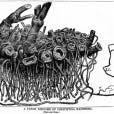
The eleventh edition of the Encyclopaedia Britannica, published in 29 volumes in 1910–1911 and renowned for its detailed scholarly articles.
- St Lukes - C4 Cutting Edge
Details
A 1994 Channel 4 Cutting Edge documentary segment about the London advertising agency St Luke’s, examining its unconventional culture, creative ambitions, and challenge to established advertising practices. The surviving Vimeo page provides almost no metadata or transcript, so these notes remain intentionally limited to what the public source can substantiate.
- I am rich and have no idea what to do with my life
Details
After selling Loom and gaining enough money never to work again, Vinay Hiremath describes a year of disorientation, status-seeking, emotional avoidance, and experiments in robotics, mountaineering, government work, and physics. The essay is an unusually candid account of discovering that freedom removes external structure—and that purpose may require tolerating uncertainty rather than manufacturing a grand mission.
- "No handshakes, please": The tech industry is terrified of the coronavirus
Details
A February 2020 report on Silicon Valley’s anxious response to the emerging Covid-19 outbreak. Vox examines company travel bans, canceled events, masks, no-handshake policies, elite disaster fears, and public-health guidance, while distinguishing reasonable precautions from overreaction, misinformation, and anti-Asian discrimination.





W 3 links
- My Own Private Tokyo
Details
William Gibson revisits Tokyo after Japan’s economic Bubble, asking whether the city still represents the future. Through neon streets, phones, fashion, advertising, and historical memory, he argues that Japan’s futurism is less about novelty than about having endured continuous, technology-driven upheaval—and learning to make that change feel ordinary, safe, and livable.
- WTF Happened In 1971?
Details
A visual, data-heavy economic and political argument that 1971 marked a decisive break in modern American life. The site links the end of Bretton Woods and the dollar’s gold convertibility to inflation, stagnant wages, rising inequality, financialization, declining savings, political polarization, and deteriorating social outcomes. Its evidence is suggestive but often correlational and polemical.
- WTF Happened In 2012?
Details
A data-dense visual essay asking what changed after roughly 2012, using long-term charts across social life, mental health, economics, technology, demographics, and politics. Its central pattern is a broad divergence: social connection and leisure decline while debt, housing costs, stress, inequality, digital saturation, and institutional scale rise.


Y 1 link
- YC’s Essential Startup Advice
Details
A compact collection of Y Combinator’s foundational startup guidance: launch early, learn directly from users, prioritize one painful problem, and delay scaling until people clearly want the product. It also covers focus, customer selection, unit economics, fundraising discipline, founder relationships, personal sustainability, and the recurring danger of “fake work.”
Z 3 links
- Dangerous Professionals: Hacking the Bureaucracy to Get Stuff Done
Details
Zain Rizvi explains how to navigate large organizations by treating bureaucracy as a system of people, incentives, permissions, and imperfect rules. Rather than fighting “the company” head-on, identify gatekeepers, escalation paths, policy gaps, and team-specific motivations. The essay presents tactical ways to move legitimate work forward faster.
- 2025 letter
Details
Zhengdong Wang’s 2025 annual letter combines a retrospective on AI’s surprisingly rapid progress with reflections on travel, culture, pluralism, and work. Its central argument is cautiously optimistic: compute-driven progress is not inevitable, but its persistence makes continued transformation more likely than stagnation. The personal sections frame agency, marginalia, and optimism as responses to technological upheaval.
- Why transformative AI is really, really hard to achieve
Details
Zhengdong Wang and Arjun Ramani argue that transformative AI faces a coupled system of technical, economic, and institutional bottlenecks. Progress in language models may be dramatic yet insufficient: physical manipulation, tacit knowledge, human supervision, regulation, adoption, and social demand could all constrain aggregate growth. AI may still become historically important without producing an intelligence explosion.