
In one sentence
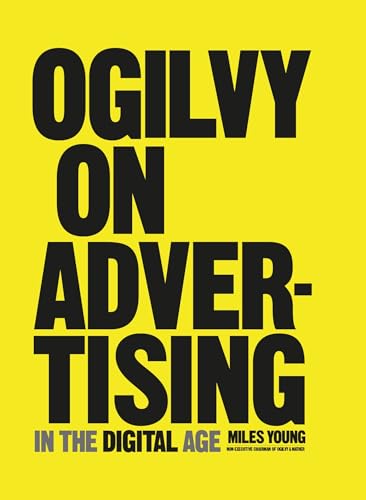
Digital technology changes advertising’s instruments, speed, data flows, and consumer behavior—but not its central test: does the work build a distinctive brand and persuade people to act? Young argues that marketers should combine Ogilvy-style discipline and creativity with digital fluency, experimentation, connectivity, and cultural understanding.
Overview
Published in the United States by Bloomsbury in 2018, the 288-page book is structured as a contemporary companion to David Ogilvy’s classic. Its chapters move from the digital revolution and ecosystem to millennials, postmodern brands, content, creativity, data, connection, creative technology, industry battlegrounds, digital transformation, major advertising platforms, global markets, agency culture, and thirteen future predictions.
Core ideas
Digital is a new environment, not a replacement for advertising fundamentals
Young treats digital as a major disruption comparable to earlier media shifts, but maintains that clear positioning, persuasive ideas, good writing, brand building, and measurable business results remain essential. The medium changes; the need for relevance and effectiveness does not.
The digital ecosystem rewards participation and connection
Digital media are interactive, immediate, fragmented, and networked. Advertising increasingly competes with—or becomes part of—content, conversation, search, communities, and platform behavior. The practical challenge is to create work people choose to notice, use, share, or respond to.
Data is useful only when joined to judgment
The book presents data as a defining resource of digital marketing: it can reveal behavior, target audiences, personalize messages, and improve response. But data does not supply the idea, cultural insight, or emotional meaning that make communication persuasive.
Content is abundant, so attention and distinctiveness matter
Young’s argument is not simply “make more content.” Much online content is ignored; therefore content must earn attention through usefulness, entertainment, emotional force, participation, or a strong point of view. A content strategy needs a reason for existing, not merely a publishing schedule.
Brands operate locally as well as globally
Global scale does not erase local preference. Young uses international and Asian-market examples to show that brand meaning, cultural codes, and market conditions vary. Global brands need adaptable principles rather than one uniform execution everywhere.
Creativity and technology should meet in the work itself
The valuable combination is not technology for its own sake, nor creativity detached from implementation. Strong digital work uses technology to make an idea more useful, participatory, responsive, measurable, or memorable. The “sweet spot” lies between creative ambition and technical possibility.
The agency’s role is being redefined
Digital transformation changes organizational boundaries: agencies, platforms, clients, data specialists, technologists, creators, and consultants increasingly overlap. Successful teams need collaboration and strategic integration, while preserving the courage to make distinctive work rather than producing safe outputs for every channel.
Predictions should be treated as period evidence, not timeless doctrine
The closing forecasts—including views on India, virtual reality, political advertising, and the future value of writing—capture the industry’s expectations around 2017–2018. They are useful for understanding the author’s framework, but should not be treated as current market forecasts.
Practical takeaways
- Start with the business problem, audience, proposition, and desired behavior before choosing a platform or format.
- Use data to sharpen questions and improve decisions; do not confuse targeting precision with a compelling idea.
- Design content around a specific audience benefit or emotional payoff. If people have no reason to care, distribution will not rescue it.
- Build a distinctive brand consistently across paid, owned, earned, social, search, and experiential touchpoints.
- Separate global brand principles from local expression, cultural context, and market-specific execution.
- Pair creative teams with technologists and analysts early, not after the campaign idea has already been fixed.
- Judge digital activity by meaningful outcomes—attention, consideration, behavior, sales, or brand effects—not by volume of posts, impressions, or engagement alone.
- Keep investing in writing and editing: faster media increase the amount of communication, which makes clarity and originality more—not less—valuable.
Caveats and counterpoints
- This is a 2018 book, so its treatment of platforms, millennials, data practices, and emerging technologies reflects the digital industry of that period rather than the current environment.
- The book is an insider’s account from a senior Ogilvy executive and is consequently strongest on agency practice, brand communication, and strategic perspective—not on independent empirical evaluation of every recommendation.
- Its continuity with David Ogilvy can become prescriptive: classic brand-building principles are presented as broadly durable, but their effectiveness still depends on category, audience, budget, regulation, and the role of the product.
- The emphasis on major advertising players and large international brands may translate imperfectly to small businesses, nonprofit campaigns, public-sector communication, or products with limited media budgets.
- The publisher describes the book as a sequel and handbook; it should not be mistaken for a comprehensive technical guide to analytics, marketing operations, privacy, experimentation, or platform buying.
Questions worth revisiting
- Which of Young’s 2018 predictions still look credible, and which were overtaken by later platform, privacy, or AI developments?
- For a current campaign, what is the smallest useful dataset—and what human judgment cannot be delegated to it?
- Does the proposed content give the audience a genuine benefit, or is it primarily designed to fill a channel?
- Where should a brand preserve global consistency, and where should local teams have authority to adapt the message?
- What evidence would distinguish real brand building from short-term engagement or cheap response?
- Which principles from David Ogilvy remain valid only when modified for mobile, social, search, creators, and algorithmic distribution?
Return to this when…
Return to the core-ideas section when planning a campaign across multiple digital channels, evaluating a content strategy, deciding how to combine creative and data teams, or checking whether platform tactics are obscuring the underlying brand and business problem.
Highlights
Unlike authors who have to worry about why they are writing at all, my purpose is very narrow. The point of this book is to persuade people to read or re-read Ogilvy on Advertising by David Ogilvy. It is still pure, pure gold. Yes, the cast has changed, the scenery is different, the plumbing is new, but the tragic and comic plots, sub-plots and counter-plots of this business remain persistently and defiantly unchanged. Of course, this irritates some people who really would rather all had changed completely.
Ogilvy on Advertising begins with a chapter called Overture. It is classic David Ogilvy. Plainspoken, forthright and resonant with his concise prose, it includes his famous line: “I hate rules.”
One of the last working meetings David attended was a summit of our direct marketing leaders in the Château d’Esclimont, a turreted pile outside Paris. David was there as a treasured icon rather than as an active contributor, and played a passive role for most of the meeting, apparently peacefully somnolent at the rear of the room. Then the head of the Austrian office started a presentation of unprecedented complexity. It was a small triumph of process over content. After five minutes, the explosion happened. “STOP!” David bellowed. “FOR GOD’S SAKE, STOP.” And then slightly softer and more pained: “I cannot understand or see the usefulness of what you are saying.” And then, with acute pain: “And from the land of Mozart!” It was a mortifying and terrifying moment which no one in the room will easily forget, least of all that hapless Austrian colleague. He shouldn’t feel bad about it if he’s reading this now. But this is a clue for me about how David would respond to much of the verbiage, hype, redundancy, over-complication and ungrounded optimism that surrounds the Digital Revolution, observing and undermining the enormous gifts it brings.
Cacophony The unwanted child of fragmentation is cacophony. Noise, noise, everywhere. A few years ago I came across the writings of the now-forgotten Canadian sociologist Orrin Klapp, from the University at Western Ontario. They even smell slightly musty, as mine is a second-hand copy, but deserve to be displayed in neon now, because Klapp saw, with a clarity that still is scarce, exactly what would happen. Computers can speed the process of data, but give us little help in reading the meaning of the printout. Meaning has a reputation for arriving late – indeed the highest meaning, wisdom, is also slowest to arrive…. So society suffers a meaning gap, between input of factual information and the construction of common meaning. The paradox of the meaning gap generated by information overload is that ever more facts pile up, the credibility of which is unquestioned, but the overall meaning of the system is lacking and its rhetoric is rejected as hypocritical. The whole is less than the sum of the parts.
David Ogilvy, indeed, was slaying similar demons as far back as the 1950s. They don’t go away: they just come back after a period of TV-imposed sobriety when mass media did develop
In a speech to the 4A’s (one of our premier industry trade groups) in 1955, he said, It is my guess that 95 per cent of all campaigns now in circulation are being created without any real reference to long-term considerations. They are being created ad hoc. Hence the oscillation. Hence the tacking. Hence the lack of any coherent personality from one season to another. How tragically easy it is to stampede into change. But what golden rewards await the advertiser who has the brains to create a favourable brand image – and the stability to stick with it over a long period. They still do.
“SENDING ELECTRONIC MAIL OVER THE ARPANET FOR COMMERCIAL PROFIT OR POLITICAL PURPOSES IS BOTH ANTI-SOCIAL AND ILLEGAL.” According to a handbook published by MIT, whose AI Lab later hooked into the network.
As Steve says, there is no such thing as digital marketing or digital advertising; there is just good marketing and good advertising. As he puts it: “If Dove is good at digital, then what makes it good there is exactly the same as what makes it good anywhere. It is the fundamentals of marketing.”
We have become victims of our desire to show ourselves to be successful. I plead guilty of signing off case histories where the measure is “views”, as if views are all that matters. They do matter, because they show that what you do has got pull, that consumers enjoy it. But pull has to have conscience. It is easy to pull by pandering to the lowest common denominators of crowd culture: we would just put a cat in every video.
Look at the total views creators such as PewDiePie and Smosh get. Brands envy that, but those views are dependent on building – even pandering – to an audience built over years of daily video production.
Music videos routinely dominate the top views-per-video chart. This is because music is consumed via free media and streaming services. This doesn’t represent the triumph of a few great artists so much as it does the total disruption of the music industry.
To some extent, it is inevitable in all revolutions that there will be zealots versus resistors, taliban versus dinosaurs. The tensions are there: but perhaps we are getting to a point where we can see the benefit in recognizing that they are additive and complementary: analogue and digital integration and specialization slices and scale maths and madness form and content
David’s surviving colleagues remember his advice: “It’s what you say, not how you say it.” It’s advice needed now much more than ever it was before.
These are the five things that seem important to me after 20 years of driving a digital agenda. I don’t believe they’re taught in any business school. 1. Do keep asking the question “but why?” insistently, repeatedly, like a curious 5-year-old. “Why” is the only word that cuts through the fog, gets to the real problem and helps distinguish between the means and the end. Why? Why? Why? I even run training courses entitled “The Power of Why”. 2. Don’t fetishize certainty. The ready availability of a slew of measures doesn’t mean they are useful. Treat all KPIs (Key Performance Indicators) with caution, and the singular KPI with as much reserve as a plague spore. It could infect your whole organization with a distorted sense of priorities. 3. Do programme yourself to total openness. You have a unique opportunity to break down internal silos. And you need the collaboration of a wider range of attitudes than ever before. Playing your cards close to your chest has become a loser’s stratagem. 4. Do avoid the divas when hiring. They abound, and they can easily dazzle, only then to disappoint. As one of my clients once said: “Talent is a mere commodity, only perseverance differentiates.” When I’ve repeated this to graduates, they tend to gasp, but it’s never been truer than now. 5. Do relish dualism. The tensions of the digital world can push you – or those around you – into zero-sum games. But success lies in managing the tension rather than clinging to the “either” or the “or”. It’s also more fun.
In fact, just as it is difficult to pin down Millennials in any useful way as one digital cohort, so it is also challenging to see them as homegrown in other respects. The first thing we tend to do in a presentation on Millennials is to deny that there is such a thing as a Millennial. We are, after all, talking about 38.1 per cent of the world’s population – and there’s little in common between Pakistan’s 99 million Millennials and the US’s 91 million. Confining ourselves to the US, it is quite difficult to talk of a homogeneous group when, for instance, income disparities between rich Millennials (most often the poster boys and girls for the tribe) and poor ones are so large.
A built-in sense of entitlement is another alleged hallmark of Millennials, but it just doesn’t wash. In fact, compared to Gen X, they have a greater propensity for saving money and possess a sense of frugality, by, for instance, patiently recognizing that there is a “point of readiness” at which you can buy a home. Meanwhile, Centennials show a more extreme development of the same responses. They’re much less inclined to see themselves as “about fun”, or to do anything risky. And they are already and actually worried about the future, in particular, the environment. So this is the American Millennial challenge: just being one coincides with a period in history when the good times are running out. And that does mean the emergence of distinct characteristics. They are much less likely to own homes, or to use credit cards, or to buy or drive cars, or to get married at the same age their parents did. They are much more likely to share. And to value diversity, and to believe that all lives matter
Millennials are no longer faced with a simple career ladder – more like a game of snakes and ladders! They frequently make sideways shifts, take temporary breaks, and reach up and across to more technical challenges. When they fail, they dust themselves off and try another ladder. I admire both their effort and bravery; it must surely make for some interesting experiences along the way.
For digital natives, the internet has truly become an extension of self. In this AT&T study from 2016, almost a third of the US digital native respondents surveyed claimed they’d prefer to chop off a finger than lose their phone.
decrease in technophobia, which is real, does not infer that techno indifference is also on the decline. In fact, the latter is rising.
• Centennials are more sceptical and wary. Two thirds prefer to interact with friends in person, as opposed to 15 per cent who would rather do so online. A majority prefer to make purchases in brick-and mortar shops rather than online. • Research conducted by J. Walter Thompson shows that Millennial views about technology are much more nuanced than they are often portrayed. In fact, they fear being trapped by it. • Millennials show a disturbing tendency not to follow the rules set by those who first tried to define them. For instance, they read. A study by Pew Research in 2015 showed a surprising pattern in book reading, with those aged 18–29 more likely than their elders to have read a book in the last 12 months. Now many of them are still students, but the point stands. Fully 80 per cent of the youngest group had read a book, compared to 71 per cent of those aged 30–49, 68 per cent of those 50–64 and only 69 per cent of those 65 and older. • Millennials continue to engage with traditional advertising formats more than Gen S, in fact. Of course, they often do so in a different way. • Millennials are “meshers”. They use second devices to complement the content they’re accessing on the first. And they’re “showroomers”, meaning, they research their purchases in the virtual universe, and then buy. • As they buy, Millennials are waving a big yellow flag to all of us. They tend to be under-indexed in many of the big brand franchises. The reason for this is revealing: putting affordability aside, this so-called narcissistic generation actually searches for something beyond mere gratification. They look for authenticity, and for brands that behave well. The same is true for Centennials, but even more so.
Holt gives a hilarious account of one such, which all of us in the business must recognize: They started out with the brand vision: this drink was to “Enable a life lived absolutely, completely, and totally fulfilled”. The core proposition was “A new thirst-quencher that empowers you to achieve far more than you ever thought”. But some managers disagreed; they did not think that this was quite right. So more research was commissioned and the brand vision changed. Now the brand would champion “Up for Adventure”. And in the next iteration, they moved on to “Refresh Your Day”. Then to “Refueling Vitality”, “Refreshment for an Active Lifestyle”, and “Fuel for Life”. The company’s management eventually settled on “Refresh for Life”.
“It's a belief system which drives everything that a brand does and helps it to attract widespread support.” Brand X believes the world would be a better place if .......................... Try completing the sentence for brands you are familiar with, brands that have momentum and a clear sense of identity. It might take a little while but the chances are you can come up with something that feels interesting, maybe even provocative, and quite specific to that brand. We have found that the best Big IdeaLs seem to exist in the intersection between two realms of thought and experience.
Pantene backed away for #notsorry, which encouraged women not to apologize when they’ve done nothing wrong in difficult social situations. “Be strong and shine”, they said – but what on earth is the connection with shiny hair? Not surprisingly, there was no business lift to this campaign. It’s borrowing an agenda: it’s not rooting one in the brand.
A shift seems to be taking place where the centre of the debate is moving from “feminism” to “soft feminism” to “girl power” to “deeper fulfillment. The more it shifts, the more likely you are to look for work that gets deep into the real desires of women. When Under Armour says, “I will what I want”, it reads that women are now surrounded by a lot of superficially “empowering” messages which in reality disempower, because they generalize the person. If sports products enable you to do what you want, they celebrate strength not weakness. Lesson number 1 in brand building: always go back to the product.
“Content” is one of the most used, reused, misused and abused words in the practice of marketing communications. It is associated, both consciously and subconsciously, with the phrase “Content is King”, which is the title of an essay Bill Gates posted on the Microsoft website on 3 January 1996. “Content is where I expect much of the real money will be made on the Internet, just as it was in broadcasting,” Gates wrote. Content was not a word in David Ogilvy’s lexicon, although he might have recognized “contents” very readily. When it would become a singular noun applied to media, it started to morph into many meanings. “Branded content” has become, perhaps, the most enduring of these.
The vast majority of content produced on the internet remains unread, unwatched, unseen and unheard. In 2014, Spotify released data indicating that only 80 per cent of the music-streaming service’s songs has been listened to. That means 20 per cent of the music – some 4 million songs – had never been heard.
How, then, to avoid the call of the dumpster? It helps to have a sound definition. This is mine: content noun Communication so good you want to spend time with it or share
- Magnetic Content How many times have clients in the last few years said at the end of a brief, “…and please will you make it viral.” That’s not something we like to hear. Not only do we mistrust “virality” itself – Ogilvy & Mather’s own video practice has officially banned the word from all internal discussions – but the degree to which a piece of content is magnetic or not is often difficult to plan for or predict. And our understanding of the root causes – what makes for the magnetism – is only recently developing. The magnetism of a piece of content is linked to arousal. Arousal is a state of heightened emotion, drawing people to share information or material. In short, it is what guides our fingers to the share icon.
I was once asked to paint a slogan on a slogan wall at one of our offices in China on the subject of strategy. Over-sated with several days of strategic discourse, I wrote the words “superior execution is the highest form of strategy”.
8 tips for content 1. Don’t try to be a mainstream news provider. 2. Don’t compromise on quality: journalism is a craft not a commodity. 3. Scale! Be willing to promote your content, to make sure it interrupts the interruptions. Don’t be foolishly purist and expect you can just build it and they will come. 4. Recognize that you need an engine to drive it. 5. Don’t forget why you are doing it. You are creating your own “walled garden” which people have to enjoy. Enjoyment has been proven to enhance not impede information processing. 6. Make it sticky: link a lot; balance stock and flow; create series and sequences; build loops. 7. Don’t forget why you are doing it: who is the brand custodian and where is the brand conscience? 8. Personalize. And use higher cost content as a reward for loyalty.
CADBURY One of the defining images of the digital age is a gorilla hammering drumsticks. How did that happen? Cadbury Dairy Milk’s 2007/08 marketing programme has assumed mythical status. The actual history is sometimes difficult to disentangle. It began in a dire period for the brand: a salmonella scare leading to a recall of over a billion chocolate bars. And, generally, this was a brand which no longer enjoyed universal brand preference. It was highly polarized by age. Anyone over 35 considered it to be the best chocolate, and those under 35 did not. So a brief went out with two components: to “get the love back”, and at the same time, to remind younger consumers, in particular, that Cadbury chocolate is actually made with milk. There was a codicil given by the new Marketing Director, Phil Rumbol, who was insistent that the advertising should be as enjoyable to watch as it is to consume the product. What an exciting brief for an agency. Unfortunately, great briefs are never easy, especially if you sometimes know too much. The incumbent agency could not crack it. Phil gave the brief to Fallon, went to Australia on a business trip, and came back a week later to find there was a small raft of work to see. Cadbury’s famous Gorilla commercial featured Phil Collins’ track ‘In the Air Tonight’, which added an air of drama before the sticks came crashing down. He had been waiting for this moment, and it showed. There was one campaign idea out of them which seemed to answer the second part of the brief: Glass and a Half Full productions, a flexible enough device for understanding milk content, and with that were four executions, among them Gorilla. It was the very antithesis of linear, persuasive advertising, and the reactions up the line in Cadbury were of bemusement not amusement. Phil recalls it was something like: “Let’s get this right: You want to make an advert two times longer than a normal ad. It’s got no chocolate in it, and it’s got no message. Are you mad?” Like a disappointing movie sequel, a second film, Trucks, didn’t live up to expectations. It lacked the sheer joy and exuberance of the bar set by Gorilla. Glass and a Half Full productions was looking half empty, not half full. What follows was a masterful exercise in stakeholder management. Phil persuaded his superiors at least to make the ad. Then it was shown to the senior management team, one of whom said: “You are never showing that ad.” Phil then requested, “Can I ask for one last favour? Please take it home, watch it with your family over the weekend and see how they react.” Of course, on the Monday the positive calls came in – yes, it had made them smile. Then came the meeting with Todd Stitzer, the CEO. Again, the blanket refusal. In this case, the marketing team answered the CEO with the standard defence: research. They did their research pre-tests. The results were not promising. It “could be for any brand”, it “didn’t tell you anything new about the brand”. Of course, these were the answers to the wrong questions. The question which the “old model” research should have asked was “does this, aspirationally, feel like something Cadbury Dairy Milk would do?”. By then the CMO was onside, and the 10 or 20 last pretests of Cadbury ads, when plotted from worst to best on the standard nine box matrix, had provided some permission to believe that this one was relatively “airable”. At the end of the day, an edit of respondents’ reactions on video, moving from smiles to big, big smiles was what won the day. It was aired on 31 August 2007. The impact was instantaneous. YouTube and Twitter were barely a year old, but the views and posts became an avalanche. With them came the spoofs – the tribute of the digital audience to something which engages them. So what was the idea? It’s been constructed in Cadbury culture as being about “joy”. A latter-day Phil in Cadbury, Phil Chapman, was one of the most articulate explainers of this kind of joy: a world away from “happiness”, something vital and visceral; in the case of Gorilla something that even comes close to anger, letting feelings out of the system. Defining the idea is important. Cadbury, during the time between the two Phils took something of a wrong turn into a zone which was called joy (Joyville) but which was actually joyless. And Glass and a Half Full’s immediate sequel to Gorilla, Trucks is a laborious sequence of airport trucks “fooling around” where joy seems almost completely absent. Much, much later I remember Phil and his boss, Cadbury President Bharat Puri, saying of a South African script featuring a woman pregnant with triplets, as he signed off on it, “with joy, you have to sniff it”. A lot has to do with charm, and craft plays a role here. The Italian Art Director Juan Cabral, who made Gorilla, made it look wonderful – even adding the gold tooth which gives his scowl so much charm when the camera moves too close to him. And with a bold and beautiful vibrato – the joy was back! Triplets evoked the essence of Gorilla, its indulgent irreverence, by way of three unborn babies singing acapella in their contented mother’s womb. Back in 2007/08, the sales decline went into reverse, and Cadbury posted a 5 per cent increase in revenue. Todd Stitzer stood up at an analyst’s presentation in early 2008 to talk about the teamwork. He did it with a reasonably straight face.
What Heath had succeeded in doing was to show how emotional content in advertising is often more powerful than rational messages; the latter can be easily filtered out by the brain, while the former can be processed even at low levels of attention, and then act as a kind of “gatekeeper” to the rational decision which all marketers yearn for. In other words, it may be easier to get positive test results or research validation for those rational campaigns that are solely product based, but the risk is that they will “pass like ships in the night”. Logic persuades; but only emotions motivate. If people want to use your brand, they will find a logical rationale themselves – but the wanting comes first.
As the late Tim Broadbent, to whom we at Ogilvy & Mather owe so much of our own thinking on this subject, wrote: Mostly what happens is that we want something, and then we come up with a rationale to justify why we want it. The justification is not the same as the motivation, although conventional market research can confuse the two.
arguments against totalitarianism. In his book on creativity, The Act of Creation (1964), Koestler defines an idea as “a bi-sociation of two previously unconnected thought matrices”. It may not be great philosophy, but it’s a great definition – perhaps for the very reason that he was a creative writer himself.
My colleague Khai has written memorably that, “Man is a storytelling ape. He understands the world through story, and this is the way to move him.”
One problem with storytelling in the digital age is that, at its extremes, it has become a fad. Every Tom, Dick or Harriet describes themself as a storyteller. As our friend Stefan Sagmeister pungently remarked at a festival dedicated to storytelling: I think all the storytellers are not storytellers. Recently, I read an interview with someone who designs roller coasters and he referred to himself as a “storyteller”. “No, F***head, you are not a storyteller, you’re a roller coaster designer.
“America’s Most Wanted” painting is what happens when one follows the average way. It carries the illusion of safety, but it is in fact the most dangerous way of all. In the digital age, it simply consigns you to oblivion.
The other great requirement is simplicity. I once asked Neil French, very much a pre-digital creative, to design an in-house poster to encourage better creative ideas. It was not the easiest of briefs, but what he did is shown above: “How to Carve an Elephant”. The digital age has created complexity in a myriad of ways. I have noticed that not a few self-pronounced “digital” creatives are incurably complicated. The best way to be noticed and listened to is to be, at the root of whatever you are doing, beautifully simple.
Distinguish between measurement and effectiveness My late colleague Tim Broadbent used to remind us of the old story of the surgeon who said the operation had been a success, but, unfortunately, the patient had died. That surgeon was a measurement culture man. He may have carried out the procedure in the approved manner, but measuring the connections of the process do not help if the end result goes wrong.
“A measurement culture is obsessed by process; while an effectiveness culture is obsessed by results.”
Big data needs to justify itself with a multiplicity of metrics. It overdoses on them. I believe that we gain most by rationing the numbers of metrics we define as critical to any particular mission. The reason why this does not often happen so much is very simple: it requires the painful thinking to be done upfront. What are we really trying to achieve and why? Agreed in this way, and then adhered to, you can build “one version of the truth”, rather than getting mired in multiple, unresolved debates. For some clients we’ve constructed a single Report Card with as few as five metrics which sensitively capture the health of the brand and its contribution to the business. For others, we build more comprehensive dashboards.
So here comes another newbie, digitally spawned. We call them digital producers. In the tech industry, these people are often project managers, because all around, there are specialists who need to be coordinated, cajoled and encouraged. But the digital producer is not just a glorified digital project manager. He is the keeper of the vision, the link to the client, and often the talent scout for the project. Digital producers sit at the hub of the project, managing everything from user journeys to market research, from design to the engineering roadmap. To put a fine point on it, the digital producer is the leader of the project.
Authenticity matters on social platforms. When Audi started to over engineer its Instagram feed with #PaidMyDues, the audience demanded the brand get back to what it does best – cars.
Mobile is a very tough medium to compete on. By its nature, people spend less time on a given page, are often multi-tasking and switch between applications more often than on the web. It’s not easy to get consumers to watch a video, read an article or browse choices. Production on mobile is harder than web, which causes strains on the technology teams. So it is important to understand that it is always more difficult to go mobile first than just adapting non-mobile content to fit.
But when building a complete content strategy, it is a minimal requirement to have content optimized for mobile. Many people think that optimizing for mobile is simply a question of reformatting the content so it is visually optimized (scrolling down as opposed to having to move the screen horizontally and vertically). But this is only a small component of what mobile optimization really means.
My colleague Rory Sutherland reminds me of a speech David Ogilvy made to the Life Assurance Agency Management Association in 1965. David said: I myself have life assurance policies with three companies. Not one of them has even written me a letter suggesting that I buy more insurance from them. All they ever send me is premium notices. Bloody fools.
Another approach? Create the most appealing job posting in the world. Imagine the role of “Island Caretaker of a UNESCO world heritage site”, which comes with a $100,000 salary and a job description including swimming, snorkelling, and making friends with locals. Tourism Queensland invited applicants to do just that – and over 1.4 million people from 200 countries submitted video applications online.
Bob’s space is designed to make people enjoy working together. And not to feel big. He once read a famous Harvard Business Review article, which said that, after the size of 150 people, every creative organization loses something. Here, the space helps it fight back.
In talking to R/GA’s Bob Greenberg about Nike, it is understandable why he’s such a champion of the famed sports brand. The swoosh logo is the most internationally recognized brand mark in the world. And “Just Do It” is one of the most well-known slogans. Rap artists have name-checked Nike in their music 687 times over the last decade, trumped only by Gucci and streets ahead of rival Adidas. To say that Nike has become a part of contemporary culture is an understatement; in the kingdom of sportswear and apparel, Nike reigns supreme. Nike has always seemed one step ahead of the competition – from its launch of an innovative “waffle” shoe in 1974, to the release of “Air” technology in 1987, to a prescient Jordan sub-brand deal in the 1990s. The company has a knack for combining leading-edge technology with style and grace. In the 2000s, it was the turn of the Nike+ FuelBand to lead the brand’s evolution. Just as Apple’s iPod was by no means the first mp3 player, Nike did not invent the fitness tracker. Nevertheless, FuelBand kicked off the billion-dollar wearables industry. Placing it on your wrist, it immediately felt different from anything else on the market, and it functioned differently too. This was far from a pedometer shoehorned into a bracelet: with its built-in micro USB and the later addition of Bluetooth, FuelBand combined smart technology with equally smart user insight to trounce its competitors. And it did so with an unusual metric, Fuel Points, a new currency for measuring not just steps – walking or running – but broader exercise workouts, such as yoga, cycling, weight lifting and cross training. Fuel Points are easy to use, celebrate success, and are uniquely meaningful data. FuelBand set the wearables market in motion, and helped Nike amass a tribe of 40 million customers, the Nike+ community, in the process. So much more than a glorified CRM database, the Nike+ community is a sports club where location matters less than common goals. Members join to track their progress; they stay to motivate each other and engage in friendly competition. It transforms the lonely art of jogging, with runners competing in races asynchronously across different time zones. Football players find local matches in which to participate. Skaters share trends. Ecommerce is a click away, with links to the latest performance enhancing Nike products. The Nike+ community does more, perhaps, than any of the company’s other product offerings to achieve the brand ambition of inspiring the athlete in all of us, while at the same time providing a powerful direct-to-consumer channel for loyalists. The tech has changed over the years, from a sensor inserted in your shoe and synced with your iPod, to a Nike+ and TomTom co-branded GPS running watch, to the latest incarnation of Apple’s Watch – which now comes in an exclusive Nike+ version. But Nike has shown itself to be a solid team player, shifting technology partners to build its intellectual property, developing breakthrough solutions for its customers, and most importantly, growing the Nike+ community. The partnership with Apple suggests the company’s foray into consumer electronics is over. The business and tech press speculate that cost, quality issues or even a gentle push from Apple CEO, Tim Cook (who happens to be on Nike’s board) forced a strategy shift. I think the reason is a simpler one. The company’s instinct is to conduct itself in business as an athlete does in sport – to focus. In an era of the quantified self, “body hacking” and the connected athlete, hardware is a means to an end, not an end in itself. It’s the community that counts. What Apple did for portable music players with the iPod, Nike accomplished for wearables with the Nike+ FuelBand. Nike+ isn’t just valuable to users who keep track of their efforts, but also to Nike itself, which has been quietly transforming into an information-centric company. The Nike+ database gives exact information on how and where products are being used, allowing for better business decision-making around materials, suppliers and distribution channels. When a runner voluntarily inputs the model of their current training shoe, Nike has a precise way of measuring the life-cycle of its products down to the number of miles covered and over what terrain. And by opening the Nike+ dataset to the broader industry, Nike is putting itself and the Nike+ community at the centre of the entire sports business ecosystem. That’s quite an achievement. But what of the competition? Nike may consistently be running ahead of the pack, but there are other notable challengers. Adidas and, more recently, Under Armour continue to make strides within sporting sub-categories such as football and American football respectively. They may play in a different league at the global brand level, but they have considerable fan bases. It all raises questions about a brand’s potential for cultural dominance: if Nike really has won the cultural battle, how come Adidas hasn’t died, and how is upstart Under Armour carving space for new entrants too? It stands to reason that sports brands, above most others, would engender tribes. Perhaps Nike needs other brands to build their own following; it relies on those who are loyal to three stripes to maintain allegiance to the swoosh. So it is not a case of a single brand capturing the cultural high ground and the victor taking the spoils. Brands occupy different need states, they take variants of a cultural positioning – Nike is aspiration (Just Do It) while Adidas is confrontation (Impossible is Nothing), and Under Armour is self-determinism (I Will). The tribes that gather and grow around these ideas fuel competition among brands and the category as a whole. The game is far from over. But retirement is not really a very Buddhist concept. Akira Kagami is the world’s best-known Japanese ad man. Don't be fooled by his shirt and jacket, Kagami brings his brand of polite rebellion to every project. His work has spanned the whole of the digital revolution to date, championing creativity, continuous improvement, and a futurist’s vision for what is on the horizon.
So Chuck called the whole agency together and told them that the only thing he knew how to do was good work. He introduced one of his mantras: “Try to do something really good today, and we’ll let the future take care of itself.”
So began the glory years. Chuck’s next mantra was “Don’t feed the gorilla.” He was puzzled that the default strategy for challenged brands was always to bend over backwards trying to behave like a category leader. In fact, you need to do the exact opposite. When BMW’s Mini Cooper launched in the US, the default instinct was to behave as with any other car launch, and so run a large outdoor campaign. However, they put together a 22-city pre-launch tour of Minis on top of SUVs with banners that asked: “What are you doing for fun this weekend?” Not only was this a celebration of the Mini’s small size, but also made the statement that fun stuff goes on top of a car, whether it’s your mountain bike, surfboard or camping equipment.
At the end of the day, Bogusky’s heart was never in advertising. I think that shows in some of the work, where deep brand sensitivity is sometimes not there. Fame without brand can be a dangerous thing. In retrospect, the “King” of his Burger King work does feel like that. He himself said: “My relationship with advertising was that I was not fond of it.” It can sometimes show.
A study by a car insurance company found that when they ran a randomized controlled trial (RCT) on over 13,000 applications, there was a 10 per cent increase in the honesty of the mileage reported in the “sign at the top” forms, which equated to an average of US$97 on annual insurance premiums. Such a nudge is fascinating not just because it is low cost and scientifically validated, but because it highlights how there are “unseen opportunities” to change behaviour by designing the world for how people really behave, rather than how we traditionally think they think.
ANCHORING In decision making, people rely very heavily on the first piece of information received.
2006 (Ariely et al.): People placed 60–120% higher bids in auctions when anchored to the last two digits of their social security number if those numbers were high compared to low.
1974 (Ainsley): An overwhelming preference for sooner, smaller rewards over later, larger rewards was demonstrated with pigeons. More recent studies show that people choose $50 today over $100 in a year. However, when given the same choice shifted in time by five years, they prefer to wait an additional year for the greater reward.
1979 (Tversky & Kahneman): “Prospect theory”. People make decisions based on the potential value of losses and gains rather than the final outcome.
2007 (Zhang et al): An increased number of goals (e.g. building muscles and losing weight) is perceived as more difficult to achieve than when those goals are combined into a single means (e.g. exercising).
David Ogilvy is popularly quoted as saying: “The trouble with market research is that people don’t think what they feel, they don’t say what they think and they don’t do what they say.”
There is no either/or here. This is a big case of both/and. The happier the agency, the better the work. Someone unkindly once said that joining Ogilvy & Mather was more like joining a cult than an agency. But, it tends to work. As other strong agency brands have found, taking the medicine which we prescribe to clients makes people want to join more and leave less.
“Wouldn’t this be a wonderful business without clients?” is the age-old question of the agency folk, in all agencies, at all levels. Maybe it would. But it’s probably more helpful to our survival to consider how we turn our clients into supporters rather than wishing them away.
Clients get the advertising they deserve. I know some who are a malediction, and others who are an inspiration. Don’t keep a dog and bark yourself. Any fool can write a bad advertisement, but it takes a genius to keep his hands off a good one.
There’s one thing, though, which transforms the client-agency relationship, and that is actually liking your client. This sounds very trite, but, like many obvious things, it still deserves to be stated. The clients I have gone on to become friends with, we tend to do the best work for. They trust us and like us in return. Conversely, clients are quick to sense when we don’t really like them. I’ve told my trainees that they have to think of a new client as being like a semi-trained and insecure dog: they sense hostility and they detect fear unconsciously. Respect for clients has, perhaps, diminished over time. My first client meetings were formal set pieces. When a client such as Cow & Gate came up from Wiltshire to see my agency in Lintas, London in the late 1970s, it was a big day out; rehearsed presentations followed by a sumptuous lunch in a private dining room until it was time for them to catch the early evening train home. The first time I organized a lunch like this, I was surprised to be asked what ice sculpture I wanted for the table centrepiece. I chose a dolphin playing with a ball.
In the digital age, it is so normal for ideas and programmes to be presented virtually, by video conference, or even, in China, on WeChat in text-based dialogues. But I believe that this does not displace the need to have personal contact – face-to-face, work into leisure – with clients. In fact, it makes it more imperative.
David Ogilvy succumbed to the blandishments of the publisher of Ogilvy on Advertising and wrote 13 predictions. In a similar spirit, here are mine. 1. TV will continue to be the lynchpin medium, albeit transformed. 2. The Indian ad market will be the most attractive in the world. 3. The mobile handset will become as important to the whole of humanity as the bedtime pillow. 4. “Content” will cease to be a dirty word and will increasingly distinguish brands that offer a service to customers from those which don’t. 5. WeChat will surpass Facebook. 6. Virtual reality will find a niche, but will not take over the world. 7. Top-notch writing skills will carry a huge premium as they decrease in supply. 8. “Pure play” agencies will wither, or become main plays. 9. Candidates for political office will continue to use dishonest advertising. 10. New Asian multinationals will create the world’s most dynamic brands. 11. The debate as to whether our business is an art or a science will carry on forever, without resolution. 12. A breakaway from Cannes will form, which is more purely creative. 13. The word “digital” will ultimately disappear.
References
- Ogilvy on Advertising in the Digital Age - Miles Young - Google Books
- books.google.com
- Ogilvy on Advertising in the Digital Age - Miles Young - Google Books
- OGILVY ON ADVERTISING IN THE DIGITAL AGE | Kirkus Reviews
- Ogilvy on Advertising in the Digital Age: : Miles Young: Bloomsbury USA - Bloomsbury
- search.worldcat.org
- books.google.com
- library.usi.edu
- books.apple.com
- publishersweekly.com
- catalog.ucc.edu
- openlibrary.org