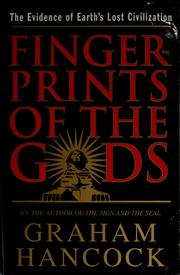

In one sentence
Hancock argues that major ancient cultures—including those of Egypt, Mesoamerica, and the Andes—inherited knowledge from a much older, globally connected civilization. He identifies the source with a lost culture associated with “Atlantis,” proposes that it was destroyed by catastrophic earth changes, and treats recurring myths and astronomical patterns as cultural memories of that event.
Overview
The book proceeds as a worldwide investigation. It begins with the Piri Reis map and alleged evidence that ancient cartographers knew of an ice-free Antarctica, then travels through Peru, Bolivia, Mexico, and Central America. Later sections compare myths, calendars, monuments, astronomical symbolism, and flood traditions across cultures before presenting a unified lost-civilization theory. The official contents show this progression from maps, to American sites, to comparative mythology and catastrophe.
Core ideas
Anomalies as clues
Hancock starts with features he considers difficult for conventional archaeology to explain: unusually precise stonework, disputed monument dates, sophisticated calendrical systems, apparent astronomical alignments, and old maps that he interprets as preserving otherwise impossible geographic information. These anomalies are treated cumulatively rather than as isolated puzzles.
Diffusion from a lost civilization
Similarities among Egyptian, Mesoamerican, and Andean traditions are presented as evidence of contact or common inheritance, rather than independent development. The proposed civilization is portrayed as an advanced seafaring culture whose survivors transmitted knowledge to later peoples.
Myth as distorted history
Floods, culture-bringers, serpent figures, underworld journeys, astronomical ages, and civilizing gods are read as transformed memories of real events and historical actors. Hancock’s method assumes that recurring motifs across cultures may preserve factual information beneath symbolic layers.
Catastrophe and the end of an age
The book’s chronology depends on a civilization flourishing before the end of the last Ice Age and being destroyed during large-scale environmental upheaval. Later cultures, in this account, rebuilt amid the ruins and remembered the founders as gods or culture heroes.
A challenge to archaeological authority
Hancock frames the investigation partly as a critique of academic reluctance to revise established timelines. The book’s appeal comes from connecting scattered evidence into a dramatic alternative narrative, but that narrative also places substantial weight on interpretation and on evidence selected for its fit with the theory.
Practical takeaways
- Read the book as a hypothesis-generating work and an example of narrative synthesis, not as a reliable survey of established ancient history.
- Separate three questions that Hancock often links together: whether a site is unusually sophisticated; whether it is older than conventionally dated; and whether it proves influence from a single lost civilization.
- When comparing myths, ask whether similarities are specific and historically traceable, or broad motifs that could arise independently.
- Check maps, astronomical claims, translations, and monument dates against specialist literature rather than accepting Hancock’s cumulative effect as proof.
- The book is useful for noticing how compelling explanations can emerge from anomalies, but also how confirmation bias can turn selected anomalies into a grand theory.
Caveats and counterpoints
- The central lost-civilization thesis is not accepted as established archaeology. The book was reviewed in the journal American Antiquity, reflecting its place in debates about archaeology, but publication of a review is not validation of Hancock’s conclusions.
- Its evidentiary strategy is cumulative and cross-disciplinary, but critics object that it links geographically and culturally distant material through analogy, selective comparison, and disputed interpretations rather than through direct archaeological evidence.
- Some of the book’s claims depend on older or controversial ideas, including interpretations of the Piri Reis map, crustal displacement, diffusion from a common source, and alleged “white” or bearded culture-bringers. These claims require especially careful source criticism because colonial-era accounts and later interpretations can reshape Indigenous traditions.
- The book’s rhetoric can understate the positive evidence for independent achievements by ancient American, Egyptian, and other societies. Treating local cultures mainly as recipients of lost knowledge risks reproducing the very historical distortions the book claims to challenge.
- The publisher presents the work as an intriguing historical investigation, while archaeological reference and review contexts classify Hancock’s approach as speculative or pseudoarchaeological. That disagreement is central to how the book should be remembered.
Questions worth revisiting
- Which individual claims still seem plausible after checking current archaeological and geological evidence?
- Does similarity between myths demonstrate contact, common ancestry, or recurring human responses to floods, stars, death, and political power?
- What physical remains would a genuinely advanced, globally connected civilization be expected to leave behind?
- How much of the argument depends on rejecting conventional dates, and how much rests on independent positive evidence?
- Does Hancock give sufficient credit to the technical, intellectual, and cultural achievements of the societies he describes as inheritors?
- Where does the book distinguish evidence from speculation—and where does its storytelling blur that boundary?
Return to this when…
Return to this book when thinking about lost-civilization theories, the persuasive power of cross-cultural pattern matching, or the difference between an intriguing anomaly and a demonstrated historical conclusion. Pair it with a specialist archaeology source or a skeptical treatment of pseudoarchaeology.
References
- Fingerprints of the Gods - Graham Hancock Official Website
- Fingerprints of the Gods by Graham Hancock: 9780517887295 | PenguinRandomHouse.com: Books
- Fingerprints of the Gods: The Evidence of Earth's Lost Civilization. Graham Hancock. 1995. Three Rivers Press, New York. 592 pp. $19.95 (paperback), ISBN: 978-0-517-88729-5. | American Antiquity | Cambridge Core
- books.google.com
- grahamhancock.com
- grahamhancock.com
- openlibrary.org
- FINGERPRINTS OF THE GODS | Kirkus Reviews
- simonandschuster.com
- books.google.com
- goodreads.com
- opac.lib.sun.ac.ug
- en.wikipedia.org