In one sentence
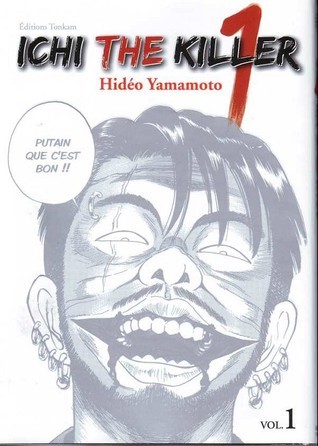
Ichi the Killer is less a conventional crime story than a collision between damaged people who turn violence into identity, communication, and even aesthetic experience. Its shock tactics are deliberate, but the manga’s deeper subject is how abuse, humiliation, and fantasy become mutually reinforcing systems.
Overview
Set amid Tokyo’s yakuza underworld, the story centers on Ichi, an emotionally fragile killer whose breakdowns unleash startling brutality, and Kakihara, a clan leader whose pursuit of pain makes him an unusually receptive—and dangerous—counterpart. Their escalating conflict drives the narrative, while the surrounding criminals reveal a world where dominance, victimhood, and performance constantly change places. The manga ran from 1998 to 2001 in ten Japanese volumes and later inspired Takashi Miike’s 2001 film; the current English Seven Seas edition collects the main series in five omnibuses.
Core ideas
Violence as identity
Characters do not merely commit violence; they use it to define who they are. Ichi’s killing is bound to psychological collapse, while Kakihara treats pain as proof of intensity and authenticity.
Victim and perpetrator are unstable roles
The manga repeatedly complicates the distinction between abused and abuser. Suffering can produce sympathy, but it can also become a license for further cruelty; power shifts without making anyone morally clean.
Masculinity as performance
The criminal world rewards hardness, control, and fearlessness, yet many characters are driven by insecurity, shame, dependency, or the need to be recognized. Their displays of toughness often expose vulnerability rather than conceal it.
Pain, desire, and spectacle
Kakihara’s sadomasochism makes explicit a broader pattern: characters convert pain into excitement, status, revenge, or meaning. The grotesque imagery asks whether spectators—including readers—are also being implicated in that conversion.
A bleak view of human nature
Yamamoto’s world offers little confidence in stable institutions or moral progress. His clean, controlled drawing style set against horrific material creates a disturbing tension between visual order and psychological disorder.
Practical takeaways
- The manga is useful to remember as a study of escalation: once cruelty becomes someone’s main language, ordinary motives and boundaries become difficult to recover.
- Do not reduce Kakihara to a simple villain or Ichi to a simple victim; their contrast is powerful precisely because both are shaped by damage and both exercise agency.
- The extreme content is not separable from the reading experience. Notice when disgust, fascination, nervous humor, or distance changes your interpretation of the characters.
- The film adaptation is a related work, not a substitute for the manga: the source’s longer form gives more room to its criminal ecosystem and shifting power relations.
Caveats and counterpoints
- This is exceptionally graphic, including sadistic violence, sexualized cruelty, abuse, and disturbing bodily imagery; it is not merely an action manga with gore.
- The work’s treatment of trauma and sexuality is intentionally provocative but can also feel exploitative or adolescent. Its psychological claims are better read as dark fiction and grotesque provocation than as clinical insight.
- Critical responses commonly divide between readers who find the extremity thematically purposeful and readers who find it numbing, sensationalistic, or ethically thin. The manga does not provide a reassuring moral framework.
- These notes address the main series, not the separate prequel material collected as Ichi the Killer (Omnibus) Vol. 0, which Seven Seas lists for December 22, 2026.
Questions worth revisiting
- Is Ichi’s violence presented as conditioning, repression, manipulation, personal choice—or deliberately all four at once?
- Does Kakihara seek pain itself, or the intimacy and certainty he believes pain can provide?
- When the manga makes violence visually compelling, is it criticizing the reader’s appetite, sharing it, or refusing to settle the question?
- Which characters understand the system they inhabit most clearly, and does that understanding help them escape it?
- Where does the manga’s critique of masculinity end and its own fascination with masculine violence begin?
Return to this when…
Return to this when comparing the manga with Takashi Miike’s film, thinking about exploitation versus transgression in fiction, or reviewing how a story uses extreme content to represent damaged desire and unstable power.
References
- Ichi the Killer | Rotten Tomatoes
- Ichi the Killer (Omnibus) Vol. 0 by Hideo Yamamoto: 9798895613597 | PenguinRandomHouse.com: Books
- Ichi the Killer (manga)
- comicsbox.it
- Yamamoto, Hideo - Enciclopedia - Treccani
- manga.fandom.com
- dbpedia.org
- mangaguide.de
- manga-news.com
- weebcentral.com
- sevenseasentertainment.com
- Ichi the Killer (Omnibus) Vol. 1 | Seven Seas Entertainment