
In one sentence
People are more willing to trust, cooperate with, and be influenced by someone who makes them feel respected, understood, and important. Carnegie’s method is therefore less about clever manipulation than about replacing self-centered interaction with genuine curiosity, appreciation, tact, and perspective-taking.
Overview
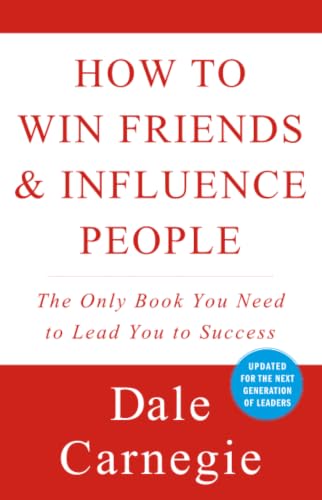
First published in 1936, the book is organized as a set of principles illustrated through anecdotes from business, politics, history, family life, and Carnegie’s communication courses. Its main sections address handling people, becoming more likable, persuading without provoking resistance, and leading change without humiliation.
Core ideas
Criticism usually produces defensiveness
Carnegie argues that condemnation rarely creates lasting improvement because people protect their self-image. Before correcting someone, understand the pressures and motives behind the behavior; when correction is necessary, preserve the person’s dignity.
Replace self-display with genuine interest
Conversation improves when attention shifts from impressing others to learning about them. Ask questions, listen carefully, remember relevant details, and let the other person speak. Carnegie treats attentive listening as one of the strongest forms of social influence.
Appreciation is more effective than flattery
Specific, sincere recognition reinforces valued behavior and satisfies the desire to feel significant. The distinction matters: appreciation responds to something real, while empty praise is merely a tactic and can appear manipulative.
Frame ideas around the other person’s interests
To persuade, connect a proposal to what the other person wants, fears, values, or is responsible for. Stating only what matters to you is unlikely to create motivation.
Avoid winning arguments at the expense of relationships
Directly proving someone wrong may secure a point while losing cooperation. Carnegie recommends beginning with agreement where possible, acknowledging your own fallibility, and inviting the other person to examine the issue rather than forcing surrender.
Let people retain ownership of decisions
Suggestions and questions often work better than commands. When people help develop an idea, they are more likely to support it because it feels partly their own.
Correct indirectly and make improvement possible
When leading or giving feedback, begin with what is working, identify the problem without shaming, and present change as achievable. The goal is not merely compliance but a preserved willingness to improve.
Influence depends on sincerity and restraint
The principles work best as habits of respect rather than a collection of social tricks. Carnegie repeatedly ties effective influence to genuine interest; performed warmth without concern for the other person risks becoming manipulation.
Practical takeaways
- Before a difficult conversation, write down the other person’s likely goals, pressures, and concerns.
- In your next conversation, ask two genuine questions before offering your own view.
- Replace vague praise with specific recognition of an action, effort, or useful quality.
- When disagreeing, first state what you understand or agree with, then ask a question that opens discussion.
- Present requests in terms of the recipient’s responsibilities or interests, not only your own needs.
- Admit a relevant mistake early; it lowers the pressure to defend yourself and can make reciprocal candor easier.
- Give feedback privately, focus on behavior rather than character, and end with a concrete next step.
- Use the book as a checklist for attention and tact—not as permission to avoid boundaries, accountability, or necessary disagreement.
Caveats and counterpoints
- The book’s anecdotes are persuasive illustrations, not a systematic or modern evidence base for every claim about human behavior.
- Its advice can sound excessively optimistic about what warmth and tact can accomplish when power differences, institutional incentives, discrimination, or bad faith are the real obstacles.
- Avoiding criticism is not the same as avoiding clear standards. Some situations require direct feedback, firm boundaries, documentation, or consequences.
- The emphasis on being agreeable can be misused to encourage people-pleasing or emotional labor, especially by people with less power.
- The 1930s setting shows in the gender roles, social conventions, and examples; the interpersonal principles need adaptation rather than literal imitation.
- The title foregrounds influence, but the book offers a stronger guide to rapport, conflict reduction, and everyday leadership than to negotiation strategy, organizational politics, or ethical persuasion.
Questions worth revisiting
- Where do I habitually prioritize being right over preserving a productive relationship?
- Can I show appreciation in this situation without exaggerating or flattering?
- What does the other person actually want, and how would my proposal help them?
- Am I listening to understand, or merely waiting for my turn to respond?
- When is indirectness becoming avoidance of necessary accountability?
- Would the other person experience my approach as sincere—or as a technique I am applying to get compliance?
Return to this when…
Return to the four-part structure before a high-stakes conversation: handle people without provoking defensiveness; create connection through attention; persuade through shared interests and questions; and lead change while preserving dignity. The most useful refresher is to reread the principles on criticism, listening, appreciation, disagreement, and feedback—not the historical anecdotes.
References
- How To Win Friends And Influence People by Dale Carnegie | Open Library
- How to Win Friends and Influence People | Book by Dale Carnegie | Official Publisher Page | Simon & Schuster
- openlibrary.org
- dalecarnegie.com
- nontechceo.co.uk
- books.razvantudorica.net
- utoread.com
- reiprime.com
- ideandigest.com
- kevintrudeau.com
- ojs.ptmjb.com
- csus.edu