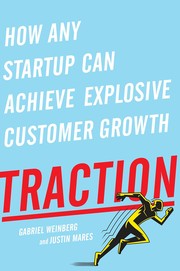

In one sentence
A startup’s product is only a hypothesis until customers arrive. Sustainable growth depends on deliberately testing distribution channels—not merely improving the product—and identifying one or more channels that can produce repeatable, scalable customer acquisition.
Overview
The authors define traction as quantitative evidence that a company is gaining customers or users. Their central warning is that founders commonly overinvest in product development while treating distribution as an afterthought. The book combines examples from successful startups with a structured process for exploring nineteen acquisition channels and deciding where to focus. The main framework is the Bullseye method: consider all plausible channels, run inexpensive tests across the most promising ones, then concentrate effort on the channel—or channel combination—with the strongest potential.
Core ideas
Traction is a separate problem from product development
A good product does not automatically create demand. The company must solve two linked but distinct problems: building something people want and building a reliable way to reach those people.
Keep every channel in play initially
The authors identify nineteen channels: viral marketing; public relations; unconventional PR; search-engine marketing; social and display advertising; offline advertising; search-engine optimization; content marketing; email marketing; engineering as marketing; business development; sales; affiliate programs; existing platforms; trade shows; offline events; speaking engagements; community building; and other channel-specific opportunities. The point is not to use all of them, but to avoid prematurely assuming which one cannot work.
Use the Bullseye framework
Start with a broad outer ring of possible channels. Move to the middle ring by designing small, inexpensive tests that reveal whether a channel can acquire customers at meaningful volume and cost. Move to the bullseye when one channel shows enough promise to justify concentrated resources.
Test channels with realistic experiments
A test should answer whether a channel can work for this business, not merely whether a tactic can produce attention. Measure customer behavior, acquisition economics, and the possibility of scaling—not vanity metrics such as impressions or isolated bursts of traffic.
Traction changes the company’s priorities
Before product-market fit, founders should reserve substantial effort for finding customers and learning distribution. Once a repeatable channel emerges, the organization can focus more confidently on optimizing that channel, improving the product for the acquired audience, and adding complementary channels.
Practical takeaways
- List all nineteen channels and rank them by plausibility, cost of testing, speed of feedback, and potential scale.
- Choose a narrow customer segment and define the behavior that counts as traction: activated users, paid conversions, retained customers, qualified leads, or another meaningful measure.
- Run several small tests rather than making a large early bet on one channel.
- Set a pre-test success threshold: for example, acceptable acquisition cost, conversion rate, retention, or number of qualified customers.
- Separate a channel’s ability to produce initial interest from its ability to produce repeatable growth.
- Keep a written record of assumptions, test results, and next actions; otherwise channel exploration becomes random experimentation.
- When a channel shows promise, concentrate resources long enough to learn its mechanics before abandoning it for the next tactic.
- Treat distribution as part of the product strategy: the best channel may affect pricing, positioning, onboarding, sales process, and even product design.
Caveats and counterpoints
- The framework is most useful for early-stage companies with limited resources; mature companies may need coordinated multi-channel marketing, brand investment, and organizational capabilities that the book treats less centrally.
- The nineteen-channel catalog is a useful 2010s map, not a permanent taxonomy. Platform rules, advertising costs, privacy expectations, and available tools change, so individual tactics require current validation.
- A promising acquisition channel is not necessarily a durable advantage. Competitors can copy tactics, platforms can change access, and growth can conceal weak retention or poor unit economics.
- The book’s startup examples are illustrative rather than universal evidence. A channel that worked for one company may depend on timing, founder credibility, regulation, network effects, or an unusually specific market.
- “Explosive” growth is not always the right objective. For capital-constrained, niche, regulated, or service businesses, profitable and deliberately paced growth may be superior.
Questions worth revisiting
- Which customer segment am I trying to reach first, and what measurable behavior would prove that I am reaching it?
- Which three traction channels are most plausible, and what is the cheapest credible test for each?
- Am I optimizing a meaningful customer outcome or merely generating attention?
- What acquisition cost, conversion, retention, or payback threshold would justify doubling down?
- If my current channel stopped working tomorrow, what adjacent channel or direct relationship would remain?
- What product, pricing, or onboarding changes would make the strongest channel more effective?
Return to this when…
Return to this book when product work is advancing faster than customer growth, when marketing experiments feel random, or when the team is debating channels based on intuition. Revisit the Bullseye framework before launching a major campaign or declaring a channel ineffective.
Highlights
Traction is the best way to improve your chances of startup success. Traction is a sign that something is working. If you charge for your product, it means customers are buying. If your product is free, it’s a growing user base.
Before we get started, let’s define traction. Traction is a sign that your company is taking off. It’s obvious in your core metrics: If you have a mobile app, your download rate is growing rapidly. If you’re running a subscription service, your monthly revenue is skyrocketing. If you’re an organic bakery, your number of transactions is increasing every week. You get the point. Naval Ravikant, founder of AngelList, an online platform that helps companies raise money, says it well: Traction is basically quantitative evidence of customer demand. So if you’re in enterprise software, [initial traction] may be two or three early customers who are paying a bit; if you’re in consumer software the bar might be as high as hundreds of thousands of users.
You can always get more traction. The whole point of a startup is to grow rapidly. Getting traction means moving your growth curve up and to the right as best you can. Paul Graham, founder of startup accelerator Y Combinator, puts it like this: A startup is a company designed to grow fast. Being newly founded does not in itself make a company a startup. Nor is it necessary for a startup to work on technology, or take venture funding, or have some sort of “exit.” The only essential thing is growth. Everything else we associate with startups follows from growth. Traction is growth. The pursuit of traction is what defines a startup.
THE 50 PERCENT RULE If you’re starting a company, chances are you can build a product. Almost every failed startup has a product. What failed startups don’t have is enough customers. Marc Andreessen, cofounder of Netscape and VC firm Andreessen Horowitz, sums up this common problem: The number one reason that we pass on entrepreneurs we’d otherwise like to back is they’re focusing on product to the exclusion of everything else. Many entrepreneurs who build great products simply don’t have a good distribution strategy. Even worse is when they insist that they don’t need one, or call [their] no distribution strategy a “viral marketing strategy.”
Traction and product development are of equal importance and should each get about half of your attention. This is what we call the 50 percent rule: spend 50 percent of your time on product and 50 percent on traction.
To be clear, splitting your time evenly between product and traction will certainly slow down product development. However, it counterintuitively won’t slow the time to get your product successfully to market. In fact, it will speed it up! That’s because pursuing product development and traction in parallel has a couple of key benefits.
Before you can set about getting traction, you have to define what traction means for your company. You need to set a traction goal. At the earliest stages, this traction goal is usually to get enough traction to either raise funding or become profitable. In any case, you should figure out what this goal means in terms of hard numbers. How many customers do you need and at what growth rate? Your
Your traction strategy should always be focused on moving the needle for your traction goal. By moving the needle, we mean focusing on marketing activities that result in a measurable, significant impact on your traction goal. It should be something that advances your user acquisition goal in a meaningful way, not something that would be just a blip even if it worked.
As Paul Graham said in his essay “Do Things That Don’t Scale”: A lot of would-be founders believe that startups either take off or don’t. You build something, make it available, and if you’ve made a better mousetrap, people beat a path to your door as promised. Or they don’t, in which case the market must not exist. Actually startups take off because the founders make them take off. . . . The most common unscalable thing founders have to do at the start is to recruit users manually. Nearly all startups have to. You can’t wait for users to come to you. You have to go out and get them.
Another factor to consider before you pivot: startup founders are usually forward thinking and as a result are often too early to market, which is another reason why it’s important to choose a startup idea you’re willing to stick with for many years. Granted, there is a big difference between being a few years too early and a decade too early. Hardly anyone can stick around for ten years with middling results. But being a year or two early can be a great thing. You can use this time to improve and refine your product. Then, when the market takes off, you have a head start on competitors just entering your space.
How can you tell whether you are just a bit early to market and should keep plugging away? Again, the best way to find out is by looking for evidence of product engagement. If you are a little early to a market there should be some early adopters out there already eating up what you have to offer.
Put half your efforts into getting traction. Pursue traction and product development in parallel, and spend equal time on both. Think of your product as a leaky bucket. Your early traction efforts are pointing you toward the holes worth plugging.
As billionaire PayPal founder and early Facebook investor Peter Thiel put it: [You] probably won’t have a bunch of equally good distribution strategies. Engineers frequently fall victim to this because they do not understand distribution. Since they don’t know what works, and haven’t thought about it, they try some sales, BD, advertising, and viral marketing—everything but the kitchen sink. That is a really bad idea. It is very likely that one channel is optimal. Most businesses actually get zero distribution channels to work. Poor distribution—not product—is the number one cause of failure. If you can get even a single distribution channel to work, you have great business. If you try for several but don’t nail one, you’re finished. So it’s worth thinking really hard about finding the single best distribution channel.
At any stage in a startup’s life cycle, one traction channel dominates in terms of customer acquisition. That is why we suggest focusing on one at a time, but only after you’ve identified a channel that seems like it could actually work.
The goal of this focusing step is quite simple: to wring every bit of traction out of your core channel. To do so, you will be continually experimenting to find out exactly how to optimize growth in this traction channel. As you dive deeper into it, you will uncover effective tactics and do everything you can to scale them until they are no longer effective due to saturation or rising costs.
The way this step gets most often messed up by founders is by keeping around distracting marketing efforts in other traction channels. For example, suppose you ran tests in three traction channels: search engine marketing, trade shows, and publicity. Search engine marketing was the most promising, and so you decide to focus on it and make it your core channel. However, your trade show and publicity tests were also successful, albeit much less so. There is a natural tendency to do more trade shows and publicity because you know they will somewhat work. This is a mistake. Search engine marketing was significantly better, and so you should spend all your efforts on this core channel because uncovering additional strategies and tactics within it will have a greater effect than using these secondary channels. They’re distracting. This is additionally confusing because oftentimes focusing on your core channel involves channel strategies that utilize other traction channels. One channel is still dominant, but others feed into it.
Making A/B testing a habit (even if you run just one test a week) will improve your efficiency in a traction channel by two or three times. There are many tools to help you do this type of testing online, such as Optimizely, Visual Website Optimizer, and Unbounce. These tools allow you to test optimizations without making complex changes to your code.
At a minimum, include the columns of how many customers are available, conversion rate, cost to acquire a customer, and lifetime value of a customer for a given strategy. Because these metrics are universal, you can use them to easily make comparisons across strategies. In general, we encourage you to be as quantitative as possible, even if it is just guesstimating at first.
Stay on the Critical Path. Assess every activity you do against your Critical Path and consistently reassess it. Building such assessment into your management processes is a good idea. Quantify traction subgoals and put them on a calendar so you can properly monitor your progress over time.
Many personal bloggers have strong readerships, but don’t make money from their writing. Noah offered them a way to show off a cool new service and make some money doing it. He simply sent them a message with “Can I send you $500?” as the subject and told them a bit about the product and what Mint was trying to do. Most were happy to share a useful product with their audiences and make some money in the process.
As another example, DuckDuckGo (Gabriel’s search engine) bought a billboard in Google’s backyard highlighting its privacy focus. It then used the billboard to get national press stories in USA Today, Wired, and many other media outlets. The reactions from this stunt alone doubled its user base at the time.
Blendtec is a blender manufacturer located in southern Utah. In 2007, its team decided to create a series of videos called “Will It Blend?” In these videos, Blendtec’s CEO stood by one of its blenders and blended items like a rake, golf balls, and even an iPhone. The series took off shortly after the videos were posted to YouTube. The iPhone video alone has received more than 8 million views, and the “Will It Blend?” series has become one of the one hundred most-viewed on YouTube. All for a company that makes blenders!
Alexis did the same thing at reddit. In its early days, he handed out free T-shirts with the reddit alien on the front. He personally emailed users to thank them for spending time on the site and did everything he could to make early redditors feel appreciated for being part of the community. These stories became a central theme in reddit’s early press articles and had a pronounced effect on the brand.
Billion-dollar brands such as Rolex, American Apparel, and other household names pay millions each year for social and display ads that push their brands to the forefront of consumers’ minds. This is one of the larger traction channels, in which companies spend more than $15 billion a year.
Major Social Sites Here are some well-known social sites where you could advertise. LinkedIn—LinkedIn’s social network is made up of more than 250 million business professionals. LinkedIn ads allow targeting by job title, company, industry, and other business demographics, all factors you can’t easily target elsewhere.
To get really cheap offline ads, look for remnant advertising. Remnant advertising is ad space that is currently being unused. For example, publications accept almost any price when selling empty inventory near print deadlines: after all, it is a complete loss for them if they don’t sell that space. Tim Ferriss, bestselling author of The 4-Hour Body and The 4-Hour Workweek, has said this on the subject: If dealing with national magazines, consider using a print or “remnant ad” buying agency such as Manhattan Media or Novus Media that specializes in negotiating discounted pricing of up to 90% off rate card. Feel free to negotiate still lower using them as a go-between. If you’re not sensitive to location or timing, you can get substantial discounts by committing to buy remnant inventory. This can be a cheap and effective strategy to reach millions of people if you have a mass-market product. Think of those “We buy ugly houses” billboards or any of the repetitive billboards that you see all over the place: they are likely using this approach.
Unorthodox strategies like hanging flyers in areas where your potential customers visit can be a surprisingly effective way to get some early traction for your company. For example, InstaCab hired cyclists to bike around San Francisco and hand out business cards to people who were trying to hail taxis. These were well targeted (it’s a good bet that someone hailing a taxi would appreciate an easier way of getting around) and got the company some good buzz and customer adoption early on.
One thing I learned at Smart Bear is that I have zero ability to predict what’s going to work. There’d be a magazine where I thought, “This is just some piddly magazine, surely no one reads this,” and sure enough it was cheap (due to small circulation) and it’d do terrifically! Our ROI on some of those were incredible. And you just couldn’t predict, whether on circulation size or media type, how it was going to go. And it changed over time—an ad might be good for a quarter, or a year, and then decay slowly until it wasn’t valuable anymore. It was unpredictable and decayed over time: so the only thing we were left with was trying everything and measuring what worked.
You can also use initial emails to get customer feedback. Colin sends each new Customer.io signup an automated, personal email thirty minutes after they sign up. Here’s the email: Subject: Help getting started? Hey {{ customer.first_name }}, I’m Colin, CEO of Customer.io. I wanted to reach out to see if you need any help getting started. Cheers, Colin He mentioned that the email receives about a 17 percent reply rate, which is fantastic as far as automated emails go. It opens the channel of communication between Colin and his customers. Through these replies he’s learned a great deal about what wasn’t working in the product, which has led to many improvements.
One of email’s strengths is that it’s a way to get feedback from your customers. One trick Colin told us about was not to send any email that comes from a “Noreply” email address (e.g., noreply@facebook.com). Intead, use that opportunity to send the automated email from a personal address and allow the recipient to reply with questions or problems they have. This can be great for support, for feature requests, and for upselling existing customers. Last, an effective
Last, an effective email sequence will be meaningless if you don’t have great email copy. Copywriting is an art on its own, but we suggest checking out some of the resources and information that Copy Hackers provides. An email campaign can easily go from a waste of time to wildly profitable just by tweaking a few words and headlines.
Even expert teams will take one or two engineers working two to three months, minimum, to implement and optimize a new viral channel to the point where it’s growing quickly without any ad spend. Once it gets going, though, it becomes easier to incrementally improve and grow the product. You need a strong strategy, and need to spend considerable time and resources to get something going.
Here are some of the more common items to test and optimize: Button vs. text links Location of your call to actions Size, color, and contrast of your action buttons Page speed Adding images Headlines Site copy Testimonials Signs of social proof (such as pictures of happy customers, case studies, press mentions, and statistics about product usage) Number of form fields Allowing users to test the product before signing up Ease of signup (Facebook Connect, Twitter login, etc.) Length of the signup process (the shorter you can make the process, the higher your conversion percentage will be) First focus on changes that, if they worked, would result in a 5–10x improvement in a key metric. This could be something like an entirely new email auto-responder sequence, a new Web site design, or a new onboarding flow. Once you’ve made big changes, then optimize the smaller stuff. Almost no optimization is too small to test: even changing one word in a headline can have a significant impact. Because viral growth compounds, a 1 percent improvement can make a big difference over the long term.
Because of the potential to acquire free customers, many startups try to go viral. Andrew mentioned that he sees companies making the same mistakes: Products that aren’t inherently viral trying to add a bunch of viral features Bad products that aren’t adding value trying to go viral Not doing enough A/B tests to really find improvements (assume one to three out of every ten will yield positive results) Not understanding how users are currently communicating/sharing, and bolting on “best practice” strategies (Just add Facebook “like” buttons!) Not getting coaching/guidance from people who’ve already done it Thinking about virality as a tactic rather than a deep part of a product strategy
cofounder and I would regularly “sell” (in the early days,
WP Engine, a WordPress hosting provider, is another prime example of a company using this channel successfully. The hosting market is saturated with hundreds of hosting companies, yet WP Engine has cornered the market on high-end WordPress hosting. This is thanks in part to its free tool that checks how fast your WordPress site loads. The WP Engine speed testing tool asks for only an email address in exchange for a detailed report about your site’s speed. It also gives you the option to opt in for a free mini-course about improving the speed of your blog. Once WP Engine has a user’s email, it sends her tips about improving her site speed and ends with a sales pitch. Dharmesh mentioned that it helps him to think of these tools as marketing assets with ongoing returns, rather than ads that result in a one-time boost.
I think of free tools as content (albeit interactive content). At HubSpot, we really believe in marketing channels that have high leverage (i.e., write it or build it once—and get value forever). As such, we take a very geeky and analytical approach to marketing. We think of each piece of content (blog article, app, video, whatever) as a marketing asset. This asset creates a return—often indefinitely. We contrast that to buying an ad, which does not scale as well. When you advertise, the money you’re spending is what drives how much attention you get. Want more clicks? Spend more money. Contrast this to inbound marketing whereby the cost of producing a piece of content is relatively constant. But, if it generates 10x more leads in a month, your marginal cost for those extra leads is almost zero. Further, with advertising (outbound marketing), the traffic you get generally stops when you stop paying. With inbound marketing, even after you stop producing new content, the old content can still drive ongoing visitors and leads.
I’m a big believer in using an engineering approach to marketing. But I’m biased (being an engineer myself). And yes, there are many other marketing channels available, but creating applications has a unique investment/return profile. Since it is considerably harder to build a very popular application, fewer people do it: so the “free apps” channel is usually less saturated. The best companies to use this apps-powered model are software companies. In this case, they can launch complementary apps—or subsets—for free. This not only creates value that draws people in, it also educates people on what the main product does.
Create a stand-alone, low-friction site to engage potential customers. Make sure it naturally leads to your main offering. The case for spending engineering resources on marketing becomes much stronger when you think about these marketing tools as long-term assets that bring in new leads indefinitely after only a small amount of up-front investment.
People tend to get caught up on the names—“is this a known name”—and place more emphasis on that than what might be more important elements. So I’d encourage people to think about the attributes of your partner. So rather than saying “I want to go after XYZ brand,” say “We want to go after Internet retailers that are between 50 and 250 on the IR [Internet Retailer] 500—because that puts them in this kind of revenue range—and have a director of e-commerce.”
Once you have a few partners you’re targeting, the real action starts. You start approaching potential partners with a value-focused proposition that outlines why they should work with you. Often these are larger companies. Brenda Spoonemore, former senior VP of interactive services at the NBA, put it like this: What do you have that they [big companies] need? You’re more focused than they are. You have an idea and you’re solving a problem. You’ve developed content or technology and you have a focus. That is very difficult to do at a big corporation.
Problem questions. These are questions that clarify the buyer’s pain points. Are you happy with your current solution? What problems do you face with it? Like situation questions, these questions should be used sparingly. You want to quickly define the problem they’re facing so you can focus on the implications of this problem and how your solution helps.
Questions could include: Does this problem hurt your productivity? How many people does this issue impact, and in what ways? What customer or employee turnover are you experiencing because of this problem? These questions should make your prospect feel the problem is larger and more urgent than he or she may have initially thought. For example, your prospect may see hard-to-use internal software as just an annoyance, a necessary cost of doing business. Implication questions can help shed light on the problems caused by this hard-to-use software: Does it lead to employee overtime because they struggle to accomplish things efficiently? Does it decrease overall quality of work? Does it impact employee turnover?
How do you get your first customers? As Steve Barsh, former CEO of SECA (acquired by MCI), said in our interview, “You get your first customers by picking up the phone.” If you are fortunate, you may be contacting people you know or were introduced to warmly by a friend. However, you may have to get your first customers by cold calling or emailing prospects.
When making cold calls, be judicious about the people you contact. Cold calling junior employees is just as difficult mentally as calling more senior employees, but has a much lower success probability because they have less decision-making authority and industry knowledge. Sean Murphy suggests that your first interaction should be with employees who have some power, but aren’t too high up: Ordinarily, it’s somebody who is one level or two levels up in the organization; they’ve got enough perspective on the problem and on the organization to understand what’s going to be involved in bringing change to the organization. As we work with them they may take us up the hierarchy to sell to more senior folks. We don’t tend to start at the top unless we are calling on a very small business, in which case you’ve got to call on the CEO or one of the key execs because no one else can make any decisions.
Process—How does the company buy solutions like the one you’re offering? Need—How badly does this company need a solution like yours? Authority—Which individuals have the authority to make the purchase happen? Money—Do they have the funds to buy what you’re selling? How much does not solving the problem cost them? Estimated Timing—What are the budget and decision time lines for a purchase?
One [problem] occurs when the prospect invites you in . . . [but] has no interest in buying what you have or will develop. They would like to learn a lot about this emerging technology area, or this problem area, or something like that. . . . The second situation that’s also a waste of time is when someone claims to be a “change agent.” He will tell you that your offering is going to have a huge impact; it’s going to transform all of General Motors, for example. Substitute your favorite lighthouse customer. Before you get started doing everything that he is telling you to do, you need to ask him, “Have you ever brought other technology into your company?” More often than not unfortunately he will say, “Well, no, but you know I’ve only been here six months, and this is what’s going to let me make a big difference here.” So the two typical problems are you end up giving away free consulting or you talk to somebody that in their own mind is this change agent, but they have no idea how to make it happen.
You want your first customers to be somewhat progressive and willing to work with you closely. As you’re still developing your product, you want their active involvement in helping you craft the best solution. Forming a strong relationship is crucial because you want to use your first few customers as references and case studies to give your startup some measure of credibility when you start designing your sales funnel.
The next stage in a sales funnel is lead qualification. Here, you want to determine how ready a prospect is to buy, and if they’re a prospect in which you should invest additional resources. For example, many companies require an email address and some company information in order to access materials on their site (e.g., a white paper or e-book). This information is then used to determine which prospects are worth spending more time on.
Once you’ve qualified your leads, the final step is to create a purchase time line and convert prospects to paying customers. Todd recommends laying out exactly what you are going to do for the customer, setting up the timetable for it, and getting them to commit (with a “yes or no”) to whether or not they will buy. An agreement at this stage might look like this: “We’ll set up a pilot system for you within two weeks. After two weeks, if you like the system we’ve built and it meets your needs, you’ll buy from us. Yes or no?” Getting a yes or no answer allows you to focus your time on deals that are likely to close without wasting time on prospects that aren’t prepared to buy.
You want to recognize that your prospect has a series of issues and questions they will want resolved before they make a buying decision. These are things like “Am I sure that this is the best product?,” “Am I sure that this will work for my situation?,” “Will I get a good return on investment?,” “Will this integrate with a system I have working in place today?,” and so on. A lot of companies design their sales cycles around how they think things should work. I believe very strongly in the notion that you have to design it from the customer standpoint inwards, as opposed to your standpoint outwards, which is the normal way I see people thinking about this stuff. Once you know what that buyer’s questions are, you want to design your process to effectively address all of their questions and recognize what kinds of things need to be handled. Ideally, as many of these questions you can handle on your Web site, the better. Your job, once you have their email, is to answer all of their buying questions and then create a trigger that gives them a strong reason to buy.
Blockages are usually due to sales funnel complexity. You want to make purchasing your product as simple as possible. Some ways you can minimize blockages: Removing the need for IT installs with SaaS (Software as a Service) Free trials (including through open source software) Channel partners (resellers of your products) Demo videos FAQs Reference customers (such as testimonials or case studies) Email campaigns (where you educate prospective customers over time) Webinars or personal demos Easy installation and ease of use Low introductory price (less than $250/month for SMB, $10,000 for enterprises) Eliminating committee decision making
As Evernote’s CEO, Phil Libin, puts it: We really killed ourselves in the first couple of years to always be in all of the App Store launches on day one. Whenever a new device or platform would come out, we would work day and night for months before that to make sure Evernote was there and supporting the new device or operating system in the App Store on the first day. . . . When iPhone launched we were one of the very first iPhone apps, so we were promoted and had a lot of visibility. When iPad launched, we were there on day one, not just with a port of our iPhone client, which a lot of other companies did. . . . [We had] a completely new designed version for the iPad even though we’d never seen an iPad before—we stood in line with everyone else. Same thing with Android devices and the Kindle Fire.
Chris Dixon, a partner at Andreessen Horowitz and the founder of Hunch before its acquisition by eBay, had this to say about platform-based growth: Some of the most successful startups grew by making bets on emerging platforms that were not yet saturated and where barriers to discovery were low. . . . Betting on new platforms means you’ll likely fail if the platform fails, but it also dramatically lowers the distribution risks described above.
Create a feature specifically to fill a gap for that platform’s users. Large companies have been built on the back of each major social platform by filling gaps with features that the platform was not providing itself. Focus on new and untapped platforms. Or try new aspects of major platforms because there is less competition there.
Jason Cohen put it this way: Set up meetings. Yes, meetings! Trade shows are a rare chance to get face time with: Editors of online and offline magazines. Often overlooked, editors are your key to real press. I’ve been published in every major programming magazine; almost all of that I can directly attribute to talking with editors at trade shows! It works. Bloggers you like, especially if you wish they’d write about you. Existing customers. Potential customers currently trialing your stuff. Your vendors. Your competition. Potential partners. Proactively set meetings. Call/email everyone you can find. It’s easy to use email titles which will be obviously non-spam such as “At [Trade Show X]: Can we chat for 5 minutes?” I try to get at least five meetings per day. Organizing dinner and/or drinks after the show is good too.
I think the overarching thing for marketing is [startups] need to try more things, and fail faster and more quickly. . . . Trying all of this stuff and seeing what works is paramount. The tried and true approaches like Facebook and AdWords are so crowded now. People need to think about doing things that don’t scale. Early on when you’re trying to get those first one thousand customers, you have to do things that don’t scale. You have to take more risks. You can still build a business without being creative. If you don’t have creativity, you need money. You need one or the other.
The best talks I’ve ever seen are where each slide is essentially a seven-minute story with a beginning, middle, and end. Once you get good at that, and you have these canned slides, you can change a sixty-minute talk to a twenty-minute talk just by taking slides out.
Tell a story onstage. Without a story, the audience will lose interest. We suggest telling a story about why you’re doing what you’re doing, and specifically present insights only you can give through your unique position as a startup founder. Make it exciting!
We had a manifesto, and an idea of what we wanted to accomplish. And people bought into the vision because it was about them being awesome. . . . [It is] about creating something that helps everyone in material and specific ways. It helps you get better at your job, at something you love doing. There was an idealism that people bought into with Stack Exchange, and we were out there talking about it all that time.