
In one sentence
The collection repeatedly asks what happens when humans gain a new way to understand reality—and whether greater understanding produces freedom, wisdom, or simply a more difficult form of responsibility.
Overview
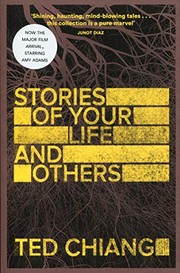
Published in 2002, the collection brings together eight early stories, including the award-winning “Tower of Babylon,” “Story of Your Life,” and the original-to-the-volume “Liking What You See: A Documentary.” The settings vary widely: biblical cosmology, enhanced intelligence, mathematical crisis, alien communication, Victorian alternate history, divine manifestations, and a near-future technology that alters judgments based on appearance. Chiang’s characteristic method is to establish one unusual premise, examine its rules carefully, and then follow its effects into intimate human choices. Reviewers particularly emphasize the collection’s combination of rigorous “literature of ideas” with humane, emotionally direct storytelling.
Core ideas
Knowledge changes the knower
Several stories treat understanding not as neutral information but as a transformation of identity. Enhanced intelligence, alien language, mathematical insight, or access to a larger cosmic order can make ordinary human assumptions impossible to recover. The central question is not merely “What is true?” but “What kind of person can live with this truth?”
Rules can produce wonder—and tragedy
Chiang often builds speculative worlds whose internal logic is clear enough to feel almost scientific, even when the premise is mythic or fantastical. The precision makes the consequences more affecting: characters are not rescued from the implications of their world merely because those implications are painful.
Free will versus acceptance
“Story of Your Life” uses language and an altered experience of time to examine whether foreknowledge eliminates meaningful choice. Its tension lies less in solving the philosophical problem than in asking whether love, commitment, and grief remain worthwhile when suffering is known in advance.
Otherness requires interpretation, not control
The collection’s encounters with aliens, angels, extraordinary minds, and artificial or altered beings expose the limits of approaching difference defensively or instrumentally. Communication is portrayed as a form of ethical attention: to understand another intelligence may require revising the categories used to judge it.
Human values persist under extreme premises
Chiang’s speculative devices are not excuses to abandon ordinary moral concerns. Questions about ambition, responsibility, beauty, faith, parenthood, work, and dignity remain recognizable even when the surrounding world is radically unfamiliar.
The collection is deliberately varied
Not every story pursues the same emotional register. Some are austere thought experiments; others are tender, comic, grotesque, or metaphysical. The unity comes from Chiang’s controlled construction and recurring interest in how abstract systems shape lived experience, rather than from a single setting or plot.
Practical takeaways
- When learning something consequential, ask how it changes your obligations—not only your options.
- A worldview can be internally coherent and still be emotionally or morally inadequate.
- Language is not just a tool for reporting experience; it can determine what distinctions and possibilities become available.
- Intelligence, technology, or access to information does not automatically supply judgment.
- A useful speculative story changes the question you bring back to ordinary life.
Caveats and counterpoints
- The collection mixes science fiction with fantasy and alternate history, so “scientific plausibility” is not the right standard for every story.
- Its intellectual clarity can feel emotionally restrained; readers seeking sustained character development may find some pieces more conceptual than immersive.
- “Story of Your Life” is the best-known entry because it inspired the film Arrival, but the collection should not be treated as merely a source text for that adaptation.
- The stories do not endorse one unified answer about free will, religion, progress, or technology; they stage tensions and leave room for disagreement.
Questions worth revisiting
- Which matters more in these stories: discovering a truth or deciding how to live after discovering it?
- Does Chiang portray limits as obstacles, protections, or conditions that make meaning possible?
- Where does careful reasoning clarify human experience, and where does it fail to capture it?
- Which form of otherness is hardest for the characters—and for you—to approach without trying to control it?
- Do the collection’s stories make you more hopeful about knowledge, more cautious, or both?
Return to this when…
Return to the collection when you want compact speculative fiction that rewards rereading: especially when thinking about language, determinism, scientific ambition, religious experience, artificial intelligence, or the ethical consequences of seeing people differently.
Highlights
It was clear now why Yahweh had not struck down the tower, had not punished men for wishing to reach beyond the bounds set for them: for the longest journey would merely return them to the place whence they'd come. Centuries of their labor would not reveal to them any more of Creation than they already knew. Yet through their endeavor, men would glimpse the unimaginable artistry of Yahweh's work, in seeing how ingeniously the world had been constructed. By this construction, Yahweh's work was indicated, and Yahweh's work was concealed.
She, like many, had always thought that mathematics did not derive its meaning from the universe, but rather imposed some meaning onto the universe. Physical entities were not greater or less than one another, not similar or dissimilar; they simply were, they existed. Mathematics was totally independent, but it virtually provided a semantic meaning for those entities, supplying categories and relationships. It didn't describe any intrinsic quality, merely a possible interpretation.