
In one sentence
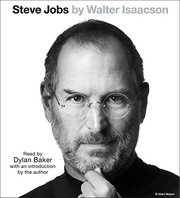
Jobs’s impact came less from inventing every underlying technology than from combining taste, intensity, user focus, storytelling, and organizational control into integrated products. Isaacson presents those strengths as inseparable from Jobs’s distortions, cruelty, denial, and capacity to damage relationships.
Overview
The biography follows Jobs chronologically: his adoption and youth; the Homebrew Computer Club and Apple’s founding with Steve Wozniak; the Macintosh conflict and departure from Apple; NeXT and Pixar; his return to Apple; and the creation of the iMac, iPod, iPhone, and iPad. Isaacson draws on extensive interviews with Jobs and more than 100 associates, while noting that Jobs did not demand copy approval.
Core ideas
Technology becomes meaningful through liberal arts and design
Jobs repeatedly treated engineering as only one part of a product. Hardware, software, typography, packaging, retail, sound, and presentation had to form one coherent experience. His distinctive contribution was often synthesis and selection rather than isolated technical invention.
Focus is an act of subtraction
After returning to Apple, Jobs sharply reduced the company’s product lines and concentrated resources on a few products. The underlying managerial lesson is not simply “work harder,” but decide what not to build, support, or discuss.
End-to-end control can create unusually coherent products
Jobs resisted open, modular systems when he believed integration would produce a better user experience. This helped Apple coordinate design and technology, but it also encouraged secrecy, dependence on Apple’s ecosystem, and limited user or developer control.
Reality distortion was both persuasion and self-deception
Jobs could make ambitious goals feel inevitable, pushing teams beyond their initial assumptions. The same force could become denial: dismissing evidence, rewriting events, or demanding impossible schedules. Charisma sometimes generated breakthroughs, but it was not a reliable substitute for sound judgment.
Abrasiveness was productive in some settings—and destructive in others
Jobs’s blunt criticism could identify weak work quickly and signal that mediocrity was unacceptable. Isaacson also documents humiliation, intimidation, dishonesty, and emotional neglect. The book does not establish that abuse was necessary for excellence; it shows that achievement coexisted with serious personal costs.
People and teams matter as much as vision
Jobs’s successes depended on collaborators—including Wozniak, Jony Ive, Pixar’s creative and technical teams, and strong operational leaders. His role was often to recruit exceptional people, define the product standard, connect disciplines, and force decisions.
Personal history shaped, but does not excuse, his behavior
Adoption, feelings of abandonment, early experiences, spiritual searching, and illness provide context for Jobs’s control, intensity, and hunger for recognition. Isaacson’s account invites psychological interpretation, but context should not be confused with moral exoneration.
The founder’s strengths can become institutional liabilities
Centralized taste and secrecy worked especially well when Apple’s products were still being defined. The same habits could narrow dissent, over-personalize decisions, and make the company vulnerable to one leader’s moods and blind spots.
Practical takeaways
- When pursuing quality, define the complete user experience—not merely the technical specification.
- Use a short list of priorities; a strategy is partly a list of deliberate refusals.
- Recruit people who are better than you in their domains, then give them a demanding, concrete standard.
- Treat criticism as useful only when it improves the work; cruelty is not evidence of rigor.
- Separate a compelling vision from evidence that the plan is feasible.
- Look for synthesis opportunities: combining existing technologies, disciplines, or ideas can be more valuable than inventing from scratch.
- Build systems that preserve high standards without requiring a volatile individual to enforce them.
Caveats and counterpoints
- This is an authorized biography, commissioned with Jobs’s participation, so its access is unusually strong but its framing is not neutral. Jobs cooperated with interviews yet retained no copy-approval right, according to the publisher and contemporary reviews.
- The narrative can feel reverential even while documenting Jobs’s serious flaws; one contemporary reviewer argued that the book’s scale and structure contribute to a lingering sense of awe.
- The book is primarily a biography of Jobs and Apple, with Pixar and other collaborators serving the central arc; it is not a balanced history of the personal-computer, music, film, or mobile industries.
- Isaacson’s explanations sometimes link behavior to personality or early experience. Those interpretations are useful hypotheses, not clinical diagnoses or definitive causal accounts.
- Jobs’s example is easy to imitate badly. His standards, taste, and focus may be transferable; his intimidation, deception, and interpersonal harm should not be treated as prerequisites for innovation.
Questions worth revisiting
- Which of Jobs’s achievements depended most on collaborators rather than on his personal vision?
- Where does demanding critique end and abuse begin—and what evidence would distinguish them?
- Would Apple’s integrated strategy have worked without Jobs’s unusually strong aesthetic judgment?
- Which parts of the Jobs myth does Isaacson puncture, and which parts does the biography unintentionally reinforce?
- What institutional practices could preserve Apple’s product focus after the founder is gone?
Return to this when…
Return to these notes when evaluating founder mythology, product strategy, design leadership, or the claim that extraordinary results justify harmful management. Revisit the chronology for a fuller account of Apple’s founding, Jobs’s removal and return, Pixar, and the major product launches.
References
- Steve Jobs: The Exclusive Biography by Walter Isaacson – review | Biography books | The Guardian
- engadget.com
- Steve Jobs | Book by Walter Isaacson | Official Publisher Page | Simon & Schuster
- kirkusreviews.com
- bahanonu.com
- thenationalnews.com
- getstoryshots.com
- theguardian.com
- cultofmac.com
- bookmarks.reviews
- simonandschuster.com
- washingtonpost.com