
In one sentence
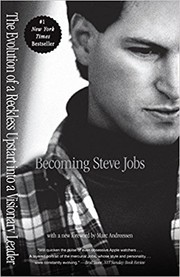
Steve Jobs was not a finished “genius-jerk” from the beginning. He became an effective visionary leader through failure, exile from Apple, exposure to better collaborators, and sustained personal and managerial growth. His enduring strengths—taste, intensity, persuasion, and an unusual ability to imagine integrated products—mattered most once maturity enabled him to use them constructively.
Overview
The book reinterprets Jobs’s life as an arc rather than a fixed personality profile. It contrasts the immature founder who was forced out of Apple with the more disciplined executive who returned, simplified the company, trusted talented lieutenants, and built systems capable of repeatedly producing excellent products. Schlender’s decades of access give the biography an unusually personal perspective; the authors also draw on interviews with colleagues, friends, and industry insiders.
Core ideas
Character is developmental, not predetermined
The central correction to the standard Jobs mythology is that his behavior changed. Early arrogance and volatility were real, but so were his capacity to learn from humiliation, failure, illness, collaborators, and the practical demands of running a company.
Failure supplied managerial education
Being removed from Apple and struggling at NeXT and Pixar exposed Jobs to limits that personal charisma could not overcome. The experience helped him become more patient about process, more selective about priorities, and better at turning a vision into an organization.
Vision required integration
Jobs’s distinctive contribution was not simply inventing isolated technologies. He connected hardware, software, services, design, retail, and presentation into coherent experiences. The book treats this ability to integrate many parts as a major source of Apple’s power.
The lone-genius story is misleading
The authors emphasize the teams and partners around Jobs: engineers, designers, executives, creative collaborators, and demanding peers. Jobs supplied direction and judgment, but his results depended on recruiting exceptional people and pushing them toward a shared standard.
Leadership combines intensity with structure
The later Jobs remained demanding and emotionally difficult, but he increasingly paired pressure with clearer priorities, smaller product portfolios, stronger operating routines, and confidence in capable deputies. His effectiveness came from combining uncompromising taste with organizational discipline.
Pixar helped broaden his leadership
Pixar gave Jobs a setting in which he was not the primary creative authority. Working alongside figures such as Ed Catmull and John Lasseter helped him learn to support a creative culture rather than attempt to personally control every creative decision.
Apple’s comeback was organizational, not merely inspirational
The return to Apple succeeded because Jobs cut distractions, restored focus, recruited and retained strong leaders, and established a product-centered operating model. The iMac and later products were presented as consequences of this disciplined system, not just flashes of individual brilliance.
Practical takeaways
- When evaluating an unusually difficult leader, examine the trajectory: what did failure, feedback, and changing responsibilities teach the person?
- A compelling vision becomes valuable only when translated into priorities, staffing, processes, and a limited number of important bets.
- Do not confuse founder mythology with causal explanation. Identify the collaborators, systems, and constraints that made the outcome possible.
- Product quality can be a strategic discipline: reduce options, coordinate the whole user experience, and make trade-offs visible.
- Personal intensity is not a leadership model by itself. It becomes productive only when paired with judgment, capable colleagues, and organizational focus.
- A useful question for your own work: what role or project would force you to develop the capability your current style lacks?
Caveats and counterpoints
- This is an interpretive, corrective biography—not a neutral replacement for every other Jobs account. Its access through Schlender’s long relationship with Jobs can produce a more sympathetic portrait than Walter Isaacson’s biography.
- The book’s emphasis on growth can risk underplaying the damage caused by Jobs’s cruelty, volatility, and demanding work culture; readers should not treat later effectiveness as moral vindication.
- Its focus is especially strong on Jobs as a business and product leader. It offers less definitive access to his private inner life, an issue noted by contemporary criticism.
- The book is unauthorized and reconstructs events through interviews, journalism, and recollection; disputed episodes should be treated as reported interpretations rather than final facts.
Questions worth revisiting
- Which parts of Jobs’s later maturity came from deliberate self-correction, and which came from having better people around him?
- How much of Apple’s success depended on Jobs personally, versus the operating system and leadership bench he built?
- Where is the boundary between demanding standards that improve work and abusive behavior that harms people?
- Does the integrated-product model transfer to organizations whose products are less tightly controllable?
- Which failure in your own career might be functioning as an education you have not yet extracted?
Return to this when…
Return to the thesis and the “Failure supplied managerial education” and “Leadership combines intensity with structure” sections when thinking about founder mythology, leadership growth, or how exceptional products emerge from teams rather than isolated talent.
References
- Becoming Steve Jobs by Brent Schlender, Rick Tetzeli: 9780385347426 | PenguinRandomHouse.com: Books
- books.google.com
- Becoming Steve Jobs: The Journalist and the Genius
- books.apple.com
- goodreads.com
- en.wikipedia.org
- dallasmarks.com
- christianboyce.com
- openlibrary.org
- hachette.co.uk
- publishersweekly.com
- openlibrary.org
- time.com