
In one sentence
The Little Prince argues that meaning is created through attention, love, and responsibility—not through possession, status, calculation, or abstract knowledge. Its childlike perspective exposes how adulthood can mistake measurable usefulness for genuine value.
Overview
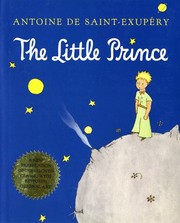
The narrator, an aviator stranded in the Sahara, meets a mysterious boy who has come from a very small planet. The prince recounts encounters with inhabitants of other worlds and describes his attachment to a rose. On Earth, encounters with a fox and others deepen his understanding of friendship, care, and what makes a relationship significant. This overview avoids the ending.
Core ideas
Childhood perception versus adult rationality
The book contrasts imaginative, relational attention with adult habits of classifying, counting, ranking, and demanding practical explanations. The criticism is not simply “children good, adults bad”: it suggests that maturity becomes impoverished when it abandons wonder and emotional perception.
Love creates responsibility
The rose is not valuable merely because it is rare; it becomes unique through time, care, conflict, and attachment. The book presents love as a practice that involves obligation, vulnerability, and the willingness to care for one particular being rather than admire abstractions.
Friendship requires time and ritual
The fox’s lesson reframes friendship as something gradually made. Repeated attention and shared rituals create anticipation and distinction; relationships are not interchangeable because they alter the meaning of the world around them.
Loneliness beneath social roles
The prince’s planetary encounters satirize people trapped in single identities—authority, vanity, busyness, possession, or expertise. Each role offers a narrow substitute for connection, leaving its inhabitant isolated despite appearing socially occupied.
The visible and the invisible
Desert, stars, sunsets, wells, and the prince’s drawings carry meanings that cannot be reduced to their physical descriptions. The work repeatedly asks readers to distinguish an object’s appearance from the emotional and moral significance it acquires.
A wartime, adult audience beneath the children’s form
Written and first published in the United States during Saint-Exupéry’s wartime exile, the novella’s gentle fable form carries mature concerns about loss, separation, responsibility, and human solidarity. Its simplicity is a vehicle for ambiguity, not evidence that its ideas are simple.
Practical takeaways
- Notice when you are evaluating something only by size, price, efficiency, prestige, or usefulness.
- Treat care and repeated attention as forces that create meaning, not merely as costs.
- Ask whether a relationship is being maintained through genuine presence or only through a social role.
- Return to the book’s tensions rather than extracting a single moral: love brings both joy and vulnerability; imagination can reveal truth but cannot remove loss.
- The ending is deliberately open to emotional and symbolic interpretation, so rereading may shift the balance between grief, consolation, and wonder.
Caveats and counterpoints
- The book’s critique of adults is broad and sometimes schematic; its planetary characters function more like fable figures than psychologically rounded people.
- The language and moral clarity can feel sentimental or overly aphoristic to readers who prefer realism or philosophical argument stated directly.
- The fox, rose, snake, stars, and desert invite symbolic readings, but no single interpretation should be treated as definitively authorized by the text.
- Translations differ in wording, tone, and some nuances. These notes describe the work generally and do not assume the user’s edition or translator.
Questions worth revisiting
- Which adult habit does the book criticize most sharply: authority, vanity, possession, arithmetic, or constant busyness?
- Does the prince’s attachment to the rose represent mature love, emotional dependence, responsibility, or all three?
- What does the book gain by presenting philosophical ideas through encounters, drawings, and repetition rather than argument?
- Is seeing “with the heart” an alternative to reason, or a corrective to reason used without empathy?
- How does the narrator’s role complicate the apparent opposition between childhood innocence and adult experience?
Return to this when…
Return to it when a short book needs to reopen questions about attention, friendship, grief, or what makes one person or place irreplaceable. It is especially useful after a period of excessive busyness or emotional detachment.
Highlights
When you tell them that you have made a new friend, they never ask you any questions about essential matters. They never say to you, "What does his voice sound like? What games does he love best? Does he collect butterflies?" Instead, they demand: "How old is he? How many brothers has he? How much does he weigh? How much money does his father make?" Only from these figures do they think they have learned anything about him.
If you were to say to the grown-ups: "I saw a beautiful house made of rosy brick, with geraniums in the windows and doves on the roof," they would not be able to get any idea of that house at all. You would have to say to them: "I saw a house that cost $20,000." Then they would exclaim: "Oh, what a pretty house that is!"
"The orders have not been changed," said the lamplighter. "That is the tragedy! From year to year the planet has turned more rapidly and the orders have not been changed!" "Then what?" asked the little prince. "Then-- the planet now makes a complete turn every minute, and I no longer have a single second for repose. Once every minute I have to light my lamp and put it out!" "That is very funny! A day lasts only one minute, here where you live!" "It is not funny at all!" said the lamplighter. "While we have been talking together a month has gone by."
"And now here is my secret, a very simple secret: It is only with the heart that one can see rightly; what is essential is invisible to the eye."
"The men where you live," said the little prince, "raise five thousand roses in the same garden-- and they do not find in it what they are looking for." "They do not find it," I replied. "And yet what they are looking for could be found in one single rose, or in a little water."