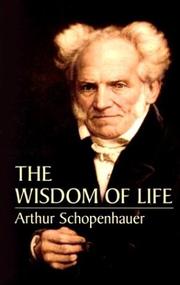

In one sentence
A tolerable life depends less on acquiring external advantages than on understanding one’s own character, limiting desire, and arranging circumstances around what one can actually control. Schopenhauer treats happiness negatively—as relative freedom from pain and anxiety—rather than as intense, lasting pleasure.
Overview
The essay is a practical supplement to Schopenhauer’s larger philosophy, not a complete statement of it. He explicitly brackets his metaphysical and ethical conclusions and adopts the ordinary standpoint that life can be made more or less agreeable. His organizing framework distinguishes what a person is, what a person has, and how a person is regarded by others. The first category—health, temperament, intellect, and character—is the most important because it shapes how every external condition is experienced.
Core ideas
Happiness is mainly the avoidance of suffering
Schopenhauer’s practical standard is not ecstatic fulfillment but a comparatively painless existence. Positive pleasures are often brief or depend on satisfying a prior lack; therefore, preventing major distress is usually wiser than pursuing continual excitement.
What you are matters more than what you possess
External goods—money, status, property, and social advantages—have limited value if a person lacks health, intelligence, emotional stability, or an ability to enjoy experience. Inner resources determine the usefulness of outer resources.
Know your own nature before choosing a life
A life plan should fit one’s actual temperament, abilities, needs, and limits rather than imitate other people’s ambitions. Self-misjudgment produces frustration: people pursue roles, pleasures, or relationships unsuited to their character.
Moderate desire and expectation
Much misery comes from comparing reality with inflated hopes. The practical discipline is to judge likely outcomes soberly, distinguish necessities from luxuries, and avoid making happiness depend on conditions that are fragile or outside one’s control.
Protect health and ordinary independence
Health is treated as a foundational good because pain, illness, and bodily limitation can eclipse nearly every other advantage. Solitude and financial independence also have value when they reduce dependence on unstable social approval or exhausting obligations.
Use solitude without becoming socially blind
A person’s capacity to be alone is a measure of inner resources. Solitude can protect thought and peace, but Schopenhauer does not turn sociability into a simple evil: practical life still requires tact, restraint, and selective association.
Reputation is powerful but secondary
People are strongly affected by honor, reputation, and the opinions of others, yet these are unstable and often governed by ignorance, envy, or fashion. Treat public judgment as strategically relevant, not as a reliable measure of worth.
Caution is rational because character and circumstance are persistent
People should not expect sudden transformation in themselves or others. Character tends to reassert itself, while chance can undo carefully built plans. Prudence therefore means preparing for reversals and choosing commitments with their long-term costs in view.
Practical takeaways
- Separate decisions into three questions: What kind of person am I? What resources do I have? How much do I depend on other people’s approval?
- When evaluating a goal, ask whether it will remove a recurring source of suffering or merely create a short-lived pleasure followed by new demands.
- Design your schedule and commitments around your actual energy, health, attention, and temperament—not an idealized self-image.
- Treat health, financial margin, and freedom from needless obligations as forms of wealth.
- Lower expectations about other people’s consistency; judge them by repeated conduct rather than promises or isolated impressions.
- Keep a deliberate capacity for solitude, while maintaining enough social contact for friendship, cooperation, and practical support.
- Use reputation as a consequence to manage, not as the foundation of self-respect.
- For major choices, imagine the ordinary bad outcome—not only the hoped-for best outcome—and decide whether the choice remains acceptable.
Caveats and counterpoints
- The essay’s account of happiness is intentionally narrow and pessimistic: it privileges tranquility and relief from pain over achievement, love, creativity, collective action, or moral purpose.
- Schopenhauer often generalizes from his own temperament and from nineteenth-century European social assumptions. His observations can be penetrating without being universally valid.
- His contrast between inner wealth and external success can understate how poverty, discrimination, illness, and political conditions constrain the ability to cultivate independence.
- The advice to withdraw from society may protect peace for some people but can become isolation, avoidance, or an excuse to neglect relationships and civic responsibilities.
- The framework is practical rather than empirically tested. It is most useful as a set of questions about trade-offs, not as a scientific theory of well-being.
Questions worth revisiting
- Which of my current goals would still matter if no one else knew about them?
- What forms of suffering am I repeatedly creating through expectation, comparison, or overcommitment?
- Which parts of my life fit my actual temperament, and which imitate someone else’s idea of success?
- What external advantages am I treating as necessary for happiness when they are merely pleasant?
- How much solitude helps me think clearly, and at what point does it become avoidance?
- Where does Schopenhauer’s pessimism clarify my choices, and where does it distort the value of effort, attachment, or shared projects?
Return to this when…
Return to this essay before making a lifestyle change, accepting a prestigious but ill-fitting role, taking on major obligations, or feeling that external success must precede contentment. It is especially useful as a corrective to comparison, overambition, and unrealistic expectations—but should be balanced with more affirmative accounts of relationships, meaning, and social responsibility.
Highlights
We should add very much to our happiness by a timely recognition of the simple truth that every man’s chief and real existence is in his own skin, and not in other people’s opinions; and, consequently, that the actual conditions of our personal life,—health, temperament, capacity, income, wife, children, friends, home, are a hundred times more important for our happiness than what other people are pleased to think of us; otherwise we shall be miserable.
Now, it is obvious that happiness, which consists for the most part in peace of mind and contentment, would be served by nothing so much as by reducing this impulse of human nature within reasonable limits, —which would perhaps make it one fiftieth part of what it is now. By doing so, we should get rid of a thorn in the flesh which is always causing us pain. But it is a very difficult task, because the impulse in question is a natural and innate perversity of human nature. Tacitus says, The lust of fame is the last that a wise man shakes off.43 The only way of putting an end to this universal folly is to see clearly that it is a folly; and this may be done by recognising the fact that most of the opinions in men’s heads are apt to be false, perverse, erroneous and absurd, and so in themselves unworthy of any attention; further, that other people’s opinions can have very little real and positive influence upon us in most of the circumstances and affairs of life.
And why? For this reason: the more a man belongs to posterity, in other words, to humanity in general, the more of an alien he is to his contemporaries; since his work is not meant for them as such, but only for them in so far as they form part of mankind at large; there is none of that familiar local colour about his productions which would appeal to them; and so what he does, fails of recognition because it is strange. People are more likely to appreciate the man who serves the circumstances of his own brief hour, or the temper of the moment,—belonging to it, and living and dying with it.
We should do well to remember old Gellert’s fine and touching lament, that the best gifts of all find the fewest admirers, and that most men mistake the bad for the good,—a daily evil that nothing can prevent, like a plague which no remedy can cure. There is but one thing to be done, though how difficult!—the foolish must become wise,—and that they can never be. The value of life they never know; they see with the outer eye but never with the mind, and praise the trivial because the good is strange to them:—
Would a musician feel flattered by the loud applause of an audience if he knew that they were nearly all deaf, and that, to conceal their infirmity, they set to work to clap vigorously as soon as ever they saw one or two persons applauding? And what would he say if he got to know that those one or two persons had often taken bribes to secure the loudest applause for the poorest player!