
In one sentence
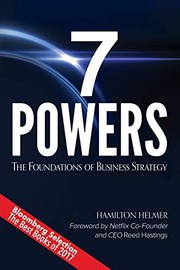
Strategy is a route to continuing Power in a significant market. A company needs more than a good product or temporary advantage: it needs a cash-flow benefit protected by a barrier that rivals cannot readily arbitrage away. Helmer argues that durable Power appears in seven forms, and that building it is the central task of strategy.
Overview
The book divides strategy into two questions: statics—what makes an advantaged position durable—and dynamics—how a company reaches that position. It introduces the “Power Progression,” linking different strategic priorities to three business phases: Origination, Take-Off, and Stability. Invention comes first; strategy then determines whether the invention becomes a valuable, defensible business.
Core ideas
Power requires both benefit and barrier
A benefit may mean higher prices, lower costs, or lower investment. It becomes Power only when a barrier prevents competitors from reproducing the benefit and competing away the returns. Helmer’s practical test is to look for the barrier first: benefits are common; durable barriers are rare.
The seven Powers
Scale Economies: unit costs fall as cumulative volume rises, often because fixed costs are spread over more output. Network Economies: the product becomes more valuable as participation grows. Counter-Positioning: an entrant adopts a superior model that an incumbent cannot copy without damaging its existing business. Switching Costs: customers face meaningful costs or risks when changing providers. Branding: accumulated trust or preference supports pricing power or lower acquisition costs. Cornered Resource: the company controls a valuable, scarce resource—such as talent, intellectual property, location, or access—that rivals cannot easily obtain. Process Power: an embedded, difficult-to-copy operating process produces persistent cost or quality advantages.
Statics and dynamics are different problems
Recognizing an attractive position is not the same as creating one. Statics asks, “Why does this advantage persist?” Dynamics asks, “How did the company obtain it?” A company can possess a valuable asset without having a strategy for building or defending Power, and a promising invention can fail before a barrier forms.
Timing matters: the Power Progression
Helmer distinguishes Origination, Take-Off, and Stability. Early choices—especially business-model design and acquisition of scarce resources—can determine later defensibility. During Take-Off, growth can strengthen scale or network effects; during Stability, the challenge is to preserve Power while competitors attack and the market matures.
The strategic crux
Every business eventually faces a high-consequence directional choice under uncertainty: which market to enter, which model to adopt, or which capability to build. The framework is intended as a “strategy compass,” helping leaders ask whether a proposed move can create a specific Power rather than merely produce growth or short-term differentiation.
Value depends on persistence, not just size
A large market is not enough. If returns are quickly competed away, market opportunity does not translate into enduring company value. The important combination is significant market size plus persistent Power—especially because much of a company’s value depends on future, not current, cash flows.
Practical takeaways
- For any strategy, write down the expected benefit, then identify the specific barrier that keeps competitors from copying it. If the barrier is vague, the strategy is probably incomplete.
- Diagnose the business by asking which, if any, of the seven Powers it currently has. Do not confuse popularity, rapid growth, proprietary technology, or talented employees with Power unless they create a durable barrier.
- Match the strategic move to the company’s phase. Early-stage firms should prioritize choices that are difficult to revise later; scaling firms should reinforce the feedback loops behind network or scale economies; mature firms should defend against erosion and imitation.
- Use Counter-Positioning as an entrant’s question: can you build a model that is attractive for customers but economically unattractive for the incumbent to imitate?
- Treat “growth” as an intermediate result, not the strategy itself. Ask what will remain defensible after competitors, customers, and capital markets respond.
- When evaluating a supposedly scarce resource, test whether rivals truly cannot acquire or replicate it—and whether the company can capture the resulting returns rather than paying them away.
Caveats and counterpoints
- The seven-category framework is deliberately broad and synthetic; many real advantages combine several Powers, making classification less precise than the clean labels suggest.
- Helmer’s claim that these are the fundamental or exhaustive forms of Power is a strong organizing hypothesis, not a universally demonstrated law. The framework is most useful as a diagnostic lens, not as proof that every durable advantage must fit neatly into one category.
- The book is stronger at identifying and analyzing defensibility than at giving a repeatable method for inventing the original breakthrough. Its advice can clarify what must be true after an opportunity appears, but it cannot reliably manufacture product-market insight.
- Some examples and categories depend on industry structure and historical timing. A Power can weaken when technology, regulation, distribution, or customer behavior changes.
- The framework can encourage moat-seeking at the expense of ordinary execution. Operational excellence, adaptability, and ethical treatment of customers still matter even when they do not constitute a distinct Power.
Questions worth revisiting
- What is our company’s clearest Power today—and what evidence shows that it is both valuable and difficult to copy?
- Which barrier protects our main benefit, and how could a well-funded competitor attack it?
- Are we in Origination, Take-Off, or Stability, and what Power must be established in this phase?
- If we were starting from scratch, what Counter-Positioning move could make our business model unattractive for incumbents to imitate?
- Which apparently scarce resources do we control, and are they genuinely cornered or merely expensive?
- What would cause our current Power to decay over the next five years?
Return to this when…
Return to this book when assessing a new venture, revisiting a company’s competitive position, evaluating a market entry, or questioning whether growth is creating durable value. The quickest refresher is: identify the benefit, identify the barrier, name the Power, and locate the business in the Power Progression.