
In one sentence
A society equipped with scientific habits of mind is better able to distinguish reality from comforting stories and manipulation. Sagan presents skepticism not as cynicism or disbelief, but as a method for caring whether beliefs are true—and for preserving freedom when ignorance and power combine.
Overview
The book moves between case studies of UFOs, alien abduction, faith healing, witch-hunts, miracle claims, and conspiracy thinking; explanations of how scientific inquiry works; and arguments about education, journalism, government, and democracy. Its central practical section is a “baloney detection” toolkit for evaluating evidence and reasoning. Sagan’s larger concern is civic: citizens who cannot assess claims become vulnerable to demagogues, advertisers, ideological movements, and institutions that benefit from credulity. Contemporary reviews likewise characterized the book as a broad defense of science as a model for knowing, not simply a storehouse of facts.
Core ideas
Science is a way of thinking
Sagan treats science as a self-correcting practice: formulate hypotheses, seek testable consequences, compare explanations with evidence, invite independent checking, and remain willing to revise conclusions. Its value lies as much in the method as in the results.
Extraordinary claims need proportionate evidence
A claim should not be accepted merely because it is vivid, emotionally satisfying, or difficult to disprove. The more a claim conflicts with established knowledge or asks us to infer hidden causes, the stronger and more independently checkable the evidence must be.
Skepticism and openness must work together
Sagan rejects both gullibility and reflexive dismissal. Good inquiry keeps possibilities open while refusing to treat possibility as probability or belief as evidence. Wonder supplies questions; skepticism prevents wonder from becoming credulity.
The ‘baloney detection’ toolkit
Useful tests include seeking confirmation, considering alternative explanations, separating correlation from causation, quantifying when possible, checking whether a claim is falsifiable, looking for independent evidence, and asking who benefits from acceptance of the claim.
Human perception is not a reliable final authority
Memory, expectation, cultural stories, sleep states, pattern-recognition, and social reinforcement can make subjective experiences feel certain without making their interpretation accurate. Sagan uses paranormal reports to illustrate the gap between sincerity and truth.
Scientific literacy is a democratic safeguard
Science education should teach reasoning and evidence assessment, not only scientific conclusions. Without those habits, citizens may possess powerful technologies while lacking the intellectual tools to evaluate political claims, media narratives, and institutional authority.
Science has ethical and political limits—but abandoning it is worse
Scientific methods cannot by themselves settle every value question, and scientists or institutions can be mistaken, biased, or abusive. Sagan’s answer is more scrutiny and transparency, not treating unsupported alternatives as equally reliable.
The book’s emotional center is responsibility
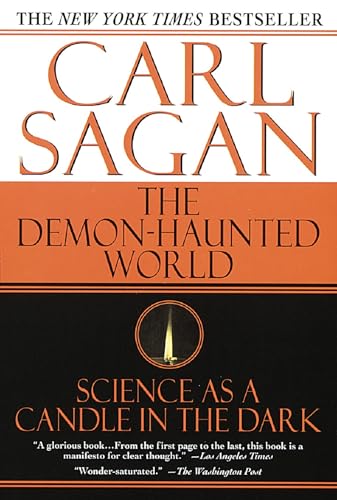
The “candle” metaphor joins epistemic discipline to moral purpose: understanding the world expands agency, while superstition and deliberate confusion make people easier to control. Sagan’s defense of reason is therefore also a defense of human dignity and democratic self-government.
Practical takeaways
- When encountering a striking claim, write down exactly what would count as evidence for it—and what would count against it.
- Ask whether the source is independent, whether the evidence is reproducible, and whether a simpler explanation fits the facts.
- Distinguish “I experienced something” from “I know what caused it.”
- Look for omitted base rates, selective examples, unfalsifiable explanations, and appeals to authority or secrecy.
- When confident, actively search for the strongest counterargument rather than only confirming material.
- Treat uncertainty as a legitimate conclusion, not as a failure to choose a side.
- For public issues, learn enough of the relevant science to evaluate evidence rather than outsourcing judgment entirely to personalities or institutions.
Caveats and counterpoints
- The book is a persuasive essay collection, not a systematic textbook on probability, statistics, or scientific methodology; some tools are memorable but abbreviated.
- Many examples reflect the mid-1990s media and political environment. The underlying reasoning remains applicable, but the specific technologies, controversies, and information channels have changed.
- Sagan’s rhetoric sometimes places diverse religious, paranormal, and pseudoscientific claims under one skeptical frame; readers may find that treatment insufficiently differentiated.
- A serious review noted that Sagan sometimes refers broadly to studies, findings, or polls without giving enough bibliographic detail for readers to verify them independently.
- Science is not automatically impartial: evidence can be distorted by funding, institutions, incentives, or poor methodology. The book’s ideal of self-correction depends on functioning norms of criticism, openness, and replication.
Questions worth revisiting
- Which of Sagan’s tests for dubious claims do I actually use, and which do I neglect when a claim supports my preferred worldview?
- How should skepticism respond when evidence is incomplete but decisions cannot wait?
- What distinguishes a reasonable trust in expert consensus from an unexamined appeal to authority?
- Does scientific literacy require learning more facts, better reasoning habits, or both?
- Where does Sagan’s defense of science understate legitimate criticism of scientific institutions?
- What modern examples best fit his warning about ignorance combined with power?
Return to this when…
Return to the book when evaluating conspiracy theories, miracle claims, political misinformation, alarming scientific stories, or confident explanations built mainly from anecdotes. The most useful reread is the section on testing claims and the argument that scientific literacy is essential to democratic freedom.
References
- openlibrary.org
- BOOK REVIEW / NON FICTION : For This Scientist, the Truth Is Out There : THE DEMON-HAUNTED WORLD: Science as a Candle in the Dark by Carl Sagan; Random House $25, 452 pages - Los Angeles Times
- search.worldcat.org
- bookreviewguide.com
- Review » The Demon-Haunted World, by Carl Sagan » (Reviewed by Wil C. Fry)
- theguardian.com
- kirkusreviews.com
- search.worldcat.org
- latimes.com
- books.google.com
- cs.cmu.edu
- en.wikipedia.org