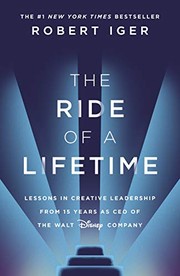

In one sentence
Iger’s central argument is that effective leadership combines clear principles with disciplined adaptation: protect quality, embrace technological change, expand globally, take calculated risks, and give talented people enough autonomy to do their best work. His version of creative leadership depends less on having the best ideas than on creating the conditions in which others can produce them.
Overview
The book is organized broadly around “Learning” and “Leading.” Iger traces his rise through television and ABC before focusing on his 2005 succession to Disney’s CEO role, when the company faced internal conflict, technological disruption, and weakening creative performance. His solution was to restore confidence in Disney’s creative identity while building a larger portfolio of valuable stories, characters, platforms, and distribution capabilities. The memoir’s most detailed episodes concern negotiations and integration around Pixar, Marvel, Lucasfilm, and Fox.
Core ideas
Quality is the foundation of scale
Growth cannot compensate for weak products. Iger presents quality—not merely efficiency or financial engineering—as the source of durable brands, audience trust, and long-term value.
Embrace technological change
New technology is initially disruptive, but resisting it is usually worse than adapting. Disney needed to move toward digital distribution and new platforms rather than defend older business models indefinitely.
Think bigger and think globally
Disney’s future required international reach and a broader ecosystem in which films, characters, television, merchandise, parks, and technology could reinforce one another. The strategy was to turn intellectual property into a connected, global business rather than treat each release as an isolated product.
Protect creative autonomy after an acquisition
Iger’s acquisition logic was not simply to buy revenue; it was to acquire exceptional creative capabilities and brands. Integration should provide resources and distribution while avoiding unnecessary interference with the people who understand the creative culture.
Optimism is a working discipline
The book treats optimism as a leader’s responsibility: confront bad news directly, but keep attention on possible solutions instead of blame or fatalism. This is not cheerfulness without evidence; it is an attempt to preserve agency under pressure.
Candor builds trust
Iger repeatedly favors direct communication, transparency about difficult decisions, and early acknowledgment of problems. People can accept unwelcome news more readily when they believe the leader is neither hiding reality nor manipulating them.
Take calculated risks—and accept that some will look foolish
The Pixar, Marvel, and Lucasfilm deals involved large bets that attracted skepticism, yet Iger judged them against Disney’s strategic needs and creative potential rather than short-term criticism. Risk-taking works here because it is tied to a coherent thesis, not novelty for its own sake.
Humility is operational, not ornamental
A CEO cannot personally master every domain. Iger’s practical version of humility is to listen, seek advice, change course when necessary, and allow experts—including strong personalities—to disagree without turning disagreement into disloyalty.
Practical takeaways
- Before pursuing growth, identify the capability or customer value that must not deteriorate.
- When technology changes the industry, ask how it can strengthen the mission instead of treating it only as a threat.
- Use acquisitions to obtain scarce talent, culture, or intellectual property—not merely size.
- After a merger, clarify what should be standardized and what must remain culturally independent.
- Make the strategic thesis behind a risky decision explicit; this improves judgment and communication even if the bet fails.
- Deliver bad news early and plainly. Avoiding discomfort usually increases the eventual cost.
- Separate creative judgment from financial oversight: both matter, but they require different forms of expertise.
- Build a leadership team that can challenge the CEO and eventually operate without the CEO.
Caveats and counterpoints
- This is an executive memoir and therefore a selective, self-presenting account. Iger gives substantial attention to deals and high-level decisions, but less sustained analysis of ordinary operations, labor, organizational politics, or failures that did not become part of the success narrative. Reviews have noted that it can read as an engaging but limited account of Disney’s transformation rather than a fully balanced business history.
- The advice is especially shaped by a massive, globally recognized company with valuable intellectual property, substantial capital, and unusual access to elite creative talent. Smaller organizations may not be able to imitate Disney’s acquisition-led strategy or absorb comparable risk.
- The book’s emphasis on optimism and decisive leadership can understate structural constraints, stakeholder conflicts, and the possibility that bold bets succeed partly because of timing and market conditions, not leadership principles alone.
- The Fox transaction is included in the book’s strategic arc, but its long-term results and Disney’s later difficulties cannot be assessed fully from the memoir alone; readers should distinguish Iger’s contemporaneous rationale from subsequent evaluation.
Questions worth revisiting
- Which of Iger’s principles would still work in a company without a famous brand or acquisition budget?
- When does protecting creative autonomy become insufficient coordination or weak accountability?
- How can a leader practice optimism without suppressing dissent or inconvenient evidence?
- What measures should determine whether a large acquisition has created value beyond revenue growth?
- Which parts of Disney’s success came from Iger’s leadership, and which came from timing, existing assets, or market power?
Return to this when…
Return to the book when evaluating a major strategic bet, integrating a creative team after an acquisition, responding to technological disruption, or thinking about how a leader can combine candor, optimism, and respect for specialist talent. Its strongest refresher value is in the contrast between the strategic principle and the messy negotiation required to apply it.
References
- The Ride of a Lifetime: Lessons Learned from 15 Years as CEO of the Walt ... - Robert Iger - Google Books
- goodreads.com
- Book review: The Ride of a Lifetime
- goodreads.com
- penguinrandomhouse.com
- goodreads.com
- Lecciones de liderazgo creativo. Lecciones aprendidas como CEO de Walt Disney Company por 15 años / The Ride of a Lifetime by Robert A. Iger: 9788416883578 | PenguinRandomHouse.com: Books
- naos.com.au
- The Ride of a Lifetime: Lessons Learned from 15 Years as CEO of the Walt Disney Company by Robert Iger - Books on Google Play
- allenc.com
- latimes.com
- blinkist.com
- time.com