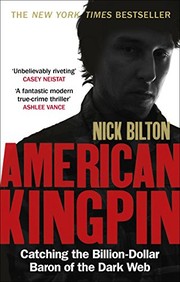

In one sentence
Silk Road was not simply a technological achievement or a criminal enterprise: it was a real-world test of whether software, anonymity, cryptocurrency, and libertarian ideology could create a marketplace beyond state control. Bilton’s account shows how that experiment became increasingly corrupted by scale, money, secrecy, and power—and how small operational mistakes ultimately made an apparently invisible network traceable.
Overview
The book follows two converging stories. Ross Ulbricht builds Silk Road under the alias Dread Pirate Roberts, presenting it as a safer, freer alternative to conventional drug markets. Meanwhile, investigators from multiple agencies try to identify the site’s operator, penetrate its infrastructure, and connect an online pseudonym to a physical person. The narrative culminates in Ulbricht’s 2013 arrest at a San Francisco library and the legal consequences that followed. Bilton emphasizes the pursuit and uses the structure of a thriller, with frequent reversals and close calls.
Core ideas
Ideology can disguise responsibility
Ulbricht’s stated vision treated Silk Road as evidence that drug prohibition caused violence and that voluntary exchange should prevail. The book’s central tension is the gap between an abstract theory of freedom and the concrete harms enabled by the marketplace.
Technology changes scale, not human motives
Tor, Bitcoin, pseudonyms, ratings, escrow, and automated systems made an illicit market more accessible and organized. But trust, reputation, greed, coercion, betrayal, and fear remained recognizably human problems.
Anonymity is conditional, not magical
The investigation succeeds through accumulated weaknesses rather than one miraculous breakthrough: public traces, investigative persistence, technical analysis, informants, and mistakes made while operating under a pseudonym. The practical lesson is that anonymity systems reduce exposure; they do not eliminate it.
Scale transforms a project’s moral character
What begins as a programmer’s ideological experiment becomes a large criminal organization handling drugs, weapons-related goods, hacking tools, and other dangerous products. Growth brings revenue and influence, but also incentives for concealment, intimidation, and violence.
The platform is part of the crime
Silk Road was not merely a neutral venue. Its design—vendor systems, reviews, escrow, payment mechanisms, and administrative rules—actively structured illegal exchange. Platform architecture can distribute responsibility while still shaping outcomes.
Narrative momentum has trade-offs
Bilton’s investigative reporting is widely praised for making a technically complex case fast and accessible. Critics also note that the thriller-like style can become pulpy and may blur the boundary between documented fact and reconstructed scene.
Practical takeaways
- Treat claims of technological liberation skeptically when the system’s real-world effects are outsourced to users or hidden behind abstractions.
- When assessing an anonymous system, examine metadata, operational habits, financial flows, human relationships, and points where online activity meets the physical world.
- A marketplace’s rules and interface are not neutral: they influence trust, incentives, participation, and harm.
- Rapid growth can invalidate the ethical assumptions under which a project began; reassess purpose and safeguards as scale changes.
- For technology investigations, follow the people and institutions around the system—not only the code.
- Remember that the book is a crafted narrative of a true case, not a transcript of every event; its reconstructed scenes and suspenseful pacing deserve some source-awareness.
Caveats and counterpoints
- The book is primarily a narrative true-crime account, not a balanced philosophical or legal analysis of drug policy, cryptocurrency, or the fairness of Ulbricht’s sentence.
- Bilton’s framing strongly emphasizes the prosecution and the dramatic hunt. Readers interested in civil-liberties arguments, trial procedure, or claims of prosecutorial misconduct should consult independent legal reporting and court records.
- The book’s cinematic presentation—including reconstructed dialogue and scene-level detail—can make inference feel more certain than the underlying evidence. This is a criticism raised by some readers and should not be treated as proof that particular scenes are fabricated.
Questions worth revisiting
- At what point does building infrastructure for voluntary exchange become direct responsibility for the exchange’s harms?
- Does Silk Road undermine drug prohibition, or mainly demonstrate how prohibition creates profitable black markets?
- Which safeguards could have limited harm without simply reproducing the failures of conventional markets?
- How much of Ulbricht’s stated libertarian philosophy explains his conduct, and how much functioned as post hoc justification?
- Are decentralized or anonymous systems safer when governed by code, by communities, or by public institutions?
Return to this when…
Return to the core-ideas section when evaluating claims that technology automatically produces freedom, privacy, or neutrality. Return to the caveats before using the book as a source for legal conclusions or a precise reconstruction of disputed events.
References
- All Book Marks reviews for American Kingpin by Nick Bilton Book Marks
- AMERICAN KINGPIN by Nick Bilton
- 'American Kingpin': Nick Bilton on the Rise and Fall of the Silk Road
- podcasts.apple.com
- global.penguinrandomhouse.com
- podcasts.apple.com
- kirkusreviews.com
- books.google.com
- philsimon.com
- goodreads.com
- American Kingpin: Catching the Billion-Dollar Baron of the Dark Web by Nick Bilton | Goodreads
- worth.com