
In one sentence
The book’s central achievement is not a triumphant “overcoming” narrative but an unsparing record of how a young person keeps revising her understanding of self and hope as illness removes ordinary abilities. Writing becomes both evidence of suffering and a practical way to remain an active person.
Overview
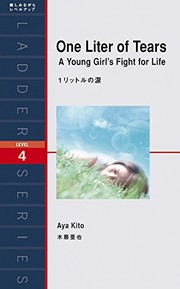
Originally published in Japan on February 25, 1986, the book is presented as Aya’s diary, with entries organized around ages fourteen through twenty-one. The publisher’s outline follows her family life, the illness’s progression, increasing communication and mobility problems, and her effort to resist despair. A later Japanese paperback describes diary-writing as a support that helped her continue living. The catalogue description supplied here is broadly accurate about the diary basis, but “script” is misleading: this is a memoir/diary record, not a screenplay. The original Japanese title is 1リットルの涙—難病と闘い続ける少女亜也の日記, literally a diary of a girl continuing to struggle with serious illness.
Core ideas
Illness changes identity gradually
The book’s structure emphasizes stages rather than one dramatic turning point: early bodily irregularities become difficulty walking, speaking, writing, and participating in ordinary social life. Aya’s distress comes partly from recognizing, step by step, that familiar definitions of competence and independence no longer fit.
Writing preserves agency
The diary is not merely a record for other people. It gives Aya a continuing action she can choose, a place to examine fear and anger, and a means of asking what remains valuable when physical control diminishes. The publisher specifically frames diary-writing as a support through the ordeal.
Hope is unstable, not inspirational certainty
Aya’s perspective includes discouragement, humiliation, loneliness, and resistance—not just courage. The meaningful pattern is repeated reorientation: she wants to live, struggles with what living now requires, and looks for workable forms of participation rather than a cure or a return to her former life.
Relationships are part of the illness experience
The diary’s focus on family and school life shows that disability is lived socially. Help can protect Aya while also reminding her of dependence; other people’s care matters, but it cannot erase grief over lost abilities or the need to be treated as a person with preferences and ambitions.
The book is mediated testimony
Although Aya is credited as author, the published work is a shaped book rather than an untouched private diary: the edition is organized and presented for readers, and related publications separately tell her mother’s account. This matters when treating the narrative as evidence of Aya’s voice: it is intimate, but also edited and contextualized.
Practical takeaways
- When circumstances cannot be restored, look for the next form of agency that remains possible rather than measuring life only against former abilities.
- Keep a record during prolonged difficulty—not necessarily to produce a polished story, but to preserve perception, choices, changes, and questions that illness or crisis can otherwise flatten.
- Offer practical assistance without reducing someone to a diagnosis; support should expand participation and preserve decision-making where possible.
- Expect emotional fluctuation. A person can be grateful, frightened, angry, hopeful, and exhausted without those states cancelling one another out.
- Read this as a first-person illness narrative, not as medical guidance or a general formula for “fighting” disease.
Caveats and counterpoints
- The book should not be treated as a straightforward model of resilience or as proof that determination can defeat degenerative illness. Its ending and value lie in testimony, not cure.
- The supplied metadata says Aya died at twenty-five; the sources consulted here establish that the book concerns her prolonged illness and diary, but the publisher pages used for the notes do not independently provide a full biographical chronology.
- Some summaries and adaptations can blur Aya’s actual diary with later dramatizations. The publisher lists television and film adaptations as related works, but characters and plot devices in adaptations should not automatically be attributed to the book.
- Descriptions of the exact 2024 English-catalogued edition are sparse: Google Books identifies it as a 2024 biography/autobiography edition but provides no searchable full text. These notes therefore summarize the documented work and its publisher descriptions, not the user's particular edition.
Questions worth revisiting
- Which parts of Aya’s identity remain continuous when her physical abilities change?
- Does writing mainly help her understand herself, communicate with others, or resist being defined by illness?
- Where does family support feel empowering, and where might it intensify her awareness of dependence?
- What would respectful care look like if the goal were participation and dignity rather than optimism?
- How does knowing the diary was later published affect the way you read its most private observations?
Return to this when…
Return to this book when you need a grounded reminder that endurance is often repetitive and emotionally mixed—not a victory over circumstances, but the preservation of attention, relationship, and agency within them.
Highlights
I try to copy what I can get out from the book, "Hello Miss (Ojyousan Konnichiwa)," (Kusanagi Taizou).
I am going to leave Higashikou and I will live "alone" carrying this heavy package called handicap. I at least needed 1 liter of tears to make this decision and I will need more in the future. I don't want to cry anymore. Losing makes me frustrated. If you feel frustrated, do something about it! I can't continue to lose.
I can't write as well anymore...is this a sign that the illness is getting worse? It's okay if you fall. You can just get up again. Why don't you look up at the sky, while you're down there. The blue sky spreads across above you. Can you see it smiling at you? You are alive. I cried in front of my friends. It made me very sad when my club teacher asked me, "Are you quitting school?" Does it make you feel good to be crying? Not only does it make the people around you feel bad, but doesn't it make you feel empty? Then stop crying! You're cuter when you smile.
Half crying, I borrowed Wild Animals I Have Known by Ernest Thompson Seton. I cried, even though I knew I could contact the dormitory using the interphone if I was shut in the library.
But when I got back, the room leader suddenly said, "Aya, you can't clean the room, can you? So take care of the towels and disposal boxes in the toilet!" I was frustrated that I didn't argue back when she jumped to the conclusion that I couldn't do it. 'Forgive everything, bear the unbearable, endure the unendurable . . .' In some ways, the teachings of God distress me. It's that way of thinking that has made me weak.
Gone with the Wind and Anya Koro (A Dark Knight's Passing) by Naoya Shiga.
If I could go to a record shop, I'd buy an LP of Paul Mauriat's music.
Partly because I was tortured by my conscience, I felt like reading Okasan 2 (Mother 2), a collection of poems by Hachiro Sato. My hand reached out toward the bookshelf. Asking My Self Some Questions
Feeling sad, I wrote some letters to my teachers and friends. "Please buy me a spiral-bound notebook like sketchbook," I asked Mom "I don't feel like writing my diary in an ordinary close-ruled notebook." "What?" she replied. "Aren't you being a bit selfish saying you can only write your diary depending on your mood. It might be different story when your condition is bad, but right now you should think that you must write something anyway." I learned something else from Mom's way of life. She was right. If she said, "I can't get into the mood for preparing dinner," I'd starve.
I'm living the life of an old woman: no youth, no energy to live, nothing to live for, no goals to work toward . . . All I have is my deteriorating body. Why do I have to be alive? On the contrary, I want to live. The only things I enjoy are eating, reading and writing. I wonder what other 19-years-old enjoy?
There's another thing I felt happy about. Up to now, I couldn’t do something that to most people is a matter of course. It's embarrassing to write this, but because I often couldn't get to the toilet in time, I had to keep changing my underwear. I realized the cause of the problem: I only started moving after nature called, but I couldn't move fast enough. So I decided I should go to the toilet regularly at fixed times. And it worked! - now I can manage without any accidents! I'm so happy, I want to tell someone. But it's not the kind of thing you can tell to everyone, so I'm secretly enjoying my success.
can hardly talk. All I can say is "A-RI-GA-TO" (Thank you). But I want to convey my happy feelings to them using lots more words. Each person has unspeakable distress. When I remember the past, Annoyingly, I cry; The reality of today Is too cruel, too severe, And doesn't even offer me a dream; Imagining the future Brings me yet another kind of tears.
I remembered the words Aya had said before her condition deteriorated: "It would be so nice to fade away like falling asleep on a beautiful carped of flowers listening to my favorite music." Aya passed away at 00:55 an May 23rd, 1988.