
In one sentence
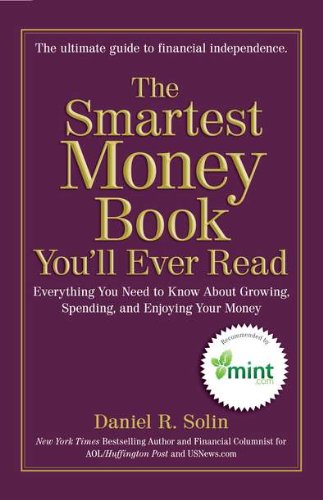
Financial security comes less from clever investing than from a coordinated system: know what you want money to accomplish, spend below your means, eliminate damaging debt, protect against major risks, and use simple, low-cost investments. Solin treats financial independence as a behavioral and organizational problem before it is an investment problem.
Overview
The book moves from orientation and goal-setting through budgeting, saving, debt, housing, insurance, investing, retirement, estate planning, and family obligations. Its chapter structure is deliberately modular, with short sections ending in practical summaries. The overall approach is do-it-yourself where possible, with fee-only professional help for decisions that are genuinely complex.
Core ideas
Start with a destination
A financial plan is useful only when connected to concrete goals: the lifestyle, work choices, security, and experiences money should enable. Solin’s sequence is essentially: identify the destination, measure net worth and cash flow, then choose actions.
Use systems, not willpower
Budgeting, paying yourself first, automating savings, and building an emergency reserve turn good intentions into recurring behavior. The book frames financial progress as repeated small decisions rather than a single dramatic fix.
Debt is a freedom problem
High-cost debt competes directly with saving and investing. The practical priority is to understand the full cost of borrowing, stop adding unaffordable obligations, and direct surplus cash toward debt whose interest rate and risk overwhelm likely investment returns.
Be skeptical of financial salesmanship
Solin distinguishes advice from product distribution. Commission incentives, opaque fees, unnecessary complexity, and conflicted recommendations can reduce returns; investors should understand compensation and consider low-cost providers or fee-only advisers.
Invest simply and stay the course
The investment chapters favor broad diversification, index funds, attention to costs, and acceptance that markets cannot be reliably timed. The mental model is to control what can be controlled—asset allocation, expenses, taxes, and behavior—rather than forecast markets.
Housing is a choice, not automatically an investment
Buying versus renting depends on price, financing, maintenance, mobility, taxes, time horizon, and the opportunity cost of the down payment. Homeownership can provide stability, but it is not inherently superior financially.
Insurance should transfer catastrophic risk
Buy coverage for losses that would materially damage the household, while avoiding insurance mainly designed to cover manageable expenses or sell investments. The relevant questions are probability, severity, exclusions, deductibles, and affordability.
Retirement planning includes spending and mortality
Retirement is not just accumulating a balance; it requires estimating future spending, deciding when to claim or draw income, managing longevity risk, and planning for illness, incapacity, beneficiaries, and estate transfer.
Practical takeaways
- Write a one-page money map: goals, current net worth, debts, monthly spending, savings rate, and major future obligations.
- Automate saving and retirement contributions before discretionary spending reaches the checking account.
- List every investment’s expense ratio, transaction cost, tax treatment, and adviser compensation; complexity needs justification.
- Separate emergency savings from long-term investments and insure against events that could permanently derail the plan.
- Evaluate a home using total ownership cost and expected time in place—not appreciation stories alone.
- Use diversified, low-cost investments and rebalance according to a written policy instead of reacting to headlines.
- Review beneficiaries, powers of attorney, insurance coverage, and retirement-income assumptions after major life changes.
- Spend deliberately: the point of financial discipline is not maximum accumulation but greater control over time, choices, and experiences.
Caveats and counterpoints
- This is an introductory guide, not a personalized financial, tax, insurance, or legal plan. Its broad advice cannot resolve questions involving unusual income, concentrated assets, disability, divorce, business ownership, or complex estates.
- The book was published in 2011, with an ebook release in December 2011 and a paperback edition in December 2012. References to Mint.com, online tools, financial products, retirement rules, tax provisions, and market conditions should be independently checked before use.
- Library Journal found the book accessible and practical for beginners but less comprehensive than larger personal-finance references; that is a meaningful trade-off, not merely a stylistic preference.
- The investing framework is intentionally hands-off and low-cost, but readers still need a current asset-allocation plan suited to their horizon, risk capacity, taxes, and account choices.
- The book’s American focus limits its usefulness for readers facing different healthcare systems, pensions, tax regimes, consumer protections, or retirement benefits.
Questions worth revisiting
- What specific life does my money need to support, and by when?
- What is my current net worth and savings rate—and are they improving?
- Which debt should receive the next dollar, after considering interest rate, tax effects, and liquidity?
- Am I paying for advice, products, or both—and are the incentives transparent?
- What risks could permanently damage my household, and are they properly insured?
- Is my investment plan simple enough to follow during a severe market decline?
- What parts of this 2011 guidance require current verification before I act?
Return to this when…
Return when reorganizing a personal-finance system from first principles: goals → cash flow → debt → protection → investing → retirement and estate contingencies. It is most useful as a compact checklist for beginners or as a reset when money decisions have become scattered.
Highlights
From the start of 1980 to the end of 2004, home sale prices increased 247%. A pretty sweet deal, it would seem. Over the same period, however, the S&P 500 shot up more than 1,000%.
About 70% of the percentage of your portfolio you invest in low-cost stock index funds should be in U.S. stock index funds and 30% in international stock index funds. The percentage not invested in stock index funds should be in bond index funds.
They say bonds are for old folks who need low-risk and regular income. That makes sense, but many young and not-so-young investors take this to mean avoid bonds. That’s bad advice. Low management fee bond index funds help you manage risk. Good bond funds can offset the risk of more aggressive investments. No matter what they say, you should accept enough risk to obtain returns that meet your goals while providing enough safety so you don’t sustain major long-term losses.
Switch your focus from market timing and stock picking to asset allocation. Implement your asset allocation with low management fee index funds.
You can also invest this way using exchange traded funds (EFTs). ETFs may be an option if you don’t meet the minimum investment thresholds, since ETFs typically don’t have a minimum investment requirement.
There are three ways to rebalance your portfolio: 1. If you invest additional money in your portfolio, you can buy more of the assets that are underrepresented to achieve your desired allocation. 2. If you must work with your existing assets, you should sell the overrepresented ones and purchase the underrepresented ones to achieve your desired allocation. 3. If you work with an investment adviser, have him or her contact you every three to six months and review your portfolio. Also, contact your adviser if your situation changes. You can then discuss any need to rebalance, and your adviser can execute any necessary changes.
As discussed in Part Two, you should keep a sum equal to three to six months (or more) of your monthly expenses in the bank. Don’t put cash you may need in the short term into long-term investments. There are risks associated with investing that don’t apply to savings, and you assume those risks to achieve higher returns.
Yet despite market conditions, you must shift to living mainly on investment income once you retire. How do you go about doing it while guarding your future investment income? Here are some guidelines: • The 2% to 4% rule: William Bernstein said, “Two percent is bulletproof, 3 percent is probably safe, 4 percent is pushing it, and, at 5 percent, you’re eating Alpo in your old age.” If you limit your annual withdrawals to 2% to 4%, you’ll be fine in bull markets and in bear markets. • The 4%-plus rule: You limit withdraws to no more than 4.15% in your first year of retirement. For each subsequent year, you take the amount of the previous year’s withdrawal and increase it by the annual inflation rate. For example, if you withdrew $40,000 in the previous year and the inflation rate was 3%, you could increase the withdrawal for the current year by $1,200. This rule of thumb works only if you have 50% to 75% of your portfolio in stock funds. If you’re more conservatively invested, stick with the 2% to 4% rule. • The floor-and-ceiling rule: William Bengen developed a floor-and-ceiling strategy for safe withdrawals. You start with a withdrawal of 5% and then follow a couple of rules. In a bull market, you can take up to 25% more than the initial year’s withdrawal. In a bear market, you cut back to 90% of the initial withdrawal. This assumes withdrawals are taken at the beginning of the year. Bengen concluded that retirees using this approach had a 91% chance of having their portfolios last for 30 years.
The portion of your assets you allocate to stock and bond index funds depends on your time horizon and liquidity needs, income and savings rate, net worth, attitude toward risk, and knowledge of investing. The maximum standard deviation for the total portfolio of a conservative, moderately aggressive, or aggressive investor should be 8%, 15%, or 20%, respectively.
References
- The Smartest Money Book You'll Ever Read by Daniel R. Solin: 9780399537783 | PenguinRandomHouse.com: Books
- goodreads.com
- books.apple.com
- The Smartest Money Book You'll Ever Read | Library Journal
- goodreads.com
- overdrive.com
- books.google.bs
- share.libbyapp.com
- kirkusreviews.com
- goodreads.com
- goodreads.com
- books.google.com.ng