
In one sentence
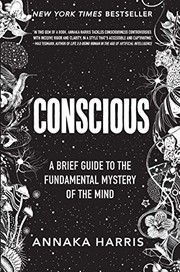
Consciousness is the fundamental mystery: science can increasingly explain behavior and information processing, but not why experience exists at all. Harris argues that familiar ideas about a unified self, conscious control, and consciousness emerging from unconscious matter may be assumptions rather than established facts. She presents panpsychism—the possibility that consciousness is a basic feature of matter—as a serious alternative, not a settled conclusion.
Overview
Core ideas
The explanatory gap
Neuroscience can correlate experiences with brain activity and describe functions, but correlation and mechanism do not yet explain why processing is accompanied by felt experience. Harris treats this gap as a genuine philosophical problem, not merely a temporary lack of data.
The self may be constructed
The apparently unified “I” may be an experience assembled from many processes rather than a separate inner agent. Split-brain findings, changing states of consciousness, meditation, and psychedelics are used to loosen the intuition that there is one fixed, independent self.
Free will is questioned
If thoughts, intentions, and choices arise from prior causes outside conscious control, then the feeling of authorship may not amount to ultimate free will. This does not imply that deliberation is useless; it reframes deliberation as one causal process within the person rather than an uncaused act of an independent self.
Binding creates unity
Sensory systems process different features at different times, yet experience presents them as one coherent world. Harris uses this “binding” problem to suggest that the unity of consciousness is something constructed—and potentially fragile—rather than an obvious property of a central observer.
Panpsychism as a live possibility
Panpsychism proposes that consciousness, or some primitive form of experience, is fundamental to matter. Harris presents it as a way to avoid the apparent leap from wholly nonexperiential matter to experience, while acknowledging that it raises the difficult combination problem: how basic experiences could form unified minds.
Behavior is not enough
Parasites, bacteria, plants, animals, robots, and future AI complicate the assumption that sophisticated behavior proves consciousness—or that human-like behavior is required for it. The book urges separating intelligence, information processing, self-awareness, and felt experience.
Practical takeaways
- Treat the feeling of being a single, fully autonomous self as an experience to investigate, not automatically as a metaphysical fact.
- Separate three questions that are often conflated: what a system does, whether it processes information, and whether anything is experienced from the inside.
- When considering free will, avoid fatalism. Even if ultimate authorship is doubtful, reflection, incentives, education, and social conditions can still influence future behavior.
- Use meditation or other altered-state reports as evidence about the structure and flexibility of experience—not as conclusive proof of a particular theory of consciousness.
- When discussing AI or animals, avoid inferring consciousness solely from intelligence, language, or outward behavior; the problem is precisely that subjective experience is privately accessible.
Caveats and counterpoints
- The book’s case for panpsychism is primarily philosophical: it identifies a possible advantage over emergence theories but does not provide an empirical test or a detailed account of how micro-experiences combine into a mind.
- The book’s challenges to free will and the self are presented forcefully, but both conclusions remain contested in philosophy and cognitive science; evidence that conscious awareness is delayed or constructed does not by itself settle every version of free will.
- Examples involving psychedelics, meditation, split-brain patients, and unusual biology are suggestive about the variability of consciousness, but they do not independently establish panpsychism.
- As a short popular introduction, the book prioritizes provocative framing and accessibility over exhaustive engagement with competing theories, technical definitions, and primary research.
Questions worth revisiting
- What would count as evidence distinguishing panpsychism from consciousness emerging from sufficiently complex organization?
- If basic matter has primitive experience, what explains the combination of many small experiences into one person’s unified experience?
- Can a constructed self still be a meaningful level of explanation for responsibility, planning, and moral practice?
- Does the absence of ultimate free will change how punishment, praise, and personal improvement should work—or mainly how we understand them?
- What behavioral or structural tests, if any, could justify attributing consciousness to an AI without direct access to its experience?
Return to this when…
Return to these notes when comparing theories of consciousness, thinking about meditation or psychedelics, evaluating claims about AI sentience, or revisiting the distinction between subjective experience, intelligence, and free will.