
In one sentence
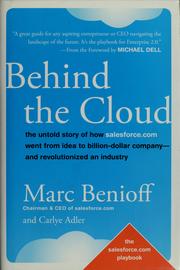
Salesforce succeeded by combining a contrarian product model—delivering CRM over the internet rather than through installed enterprise software—with disciplined execution across positioning, sales, events, technology, partnerships, culture, and philanthropy. Benioff’s broader claim is that a company can turn values and market disruption into mutually reinforcing growth engines.
Overview
The book is organized as a series of “playbooks,” covering start-up formation, marketing, events, sales, technology, corporate philanthropy, and global expansion. Its recurring examples describe Salesforce’s attempt to oppose traditional enterprise-software assumptions, popularize the “End of Software” message, survive the dot-com collapse, and create an ecosystem around its cloud platform.
Core ideas
Position against the incumbent model
Salesforce did not merely sell a cheaper CRM product; it framed installed enterprise software as cumbersome and outdated, then made internet delivery central to the company’s identity. The lesson is to define a category-level contrast that customers can easily repeat.
Turn values into operating infrastructure
The book treats values and culture as early design decisions rather than internal decoration. A clear mission is supposed to guide hiring, product choices, customer relationships, and behavior as the company scales.
Make marketing an experience
Distinctive branding, provocative messaging, events, and public demonstrations helped Salesforce cut through a crowded market. Marketing is presented as a coordinated system for creating attention, educating buyers, and making customers feel part of a movement—not simply as advertising.
Use customers as distribution
Customer references, evangelism, testimonials, and visible success reduce skepticism toward a new category. The practical model is: win credible early users, help them succeed, and turn their evidence into a sales and marketing asset.
Scale through repeatable sales mechanics
The sales playbook emphasizes focus, specialization, disciplined execution, expansion within existing accounts, and learning from measurable results. “Land and expand” is particularly important: an initial foothold can become a platform for additional products and wider organizational adoption.
Build an ecosystem, not only a product
Partners, developers, and complementary applications extend a platform’s reach and usefulness. The implication is that a company’s strategic asset can become the network around its product, not just the product’s feature set.
Treat philanthropy as part of the business model
Benioff presents the 1-1-1 approach—allocating company equity, product, and employee time to social purposes—as a way to institutionalize giving. The claimed benefit is cultural and reputational as well as social, though the book largely presents the founder’s case rather than independently testing it.
Change tactics without abandoning the mission
The playbooks repeatedly distinguish enduring purpose from temporary strategy. Companies should preserve the central problem they aim to solve while dropping tactics, positioning, or processes that no longer fit market conditions.
Practical takeaways
- Write a one-sentence category contrast: what established way of doing the job are you replacing, and why now?
- Define a small set of operating values before growth makes culture accidental.
- Recruit respected early customers and design a deliberate process for converting their success into proof.
- Separate acquisition from expansion: identify what earns the first commitment and what creates broader adoption later.
- Use events, demos, and public narratives to make an abstract product category tangible.
- Develop partner economics early if third parties can increase distribution, capability, or customer trust.
- Create explicit mechanisms for listening to prospects and customers; do not confuse founder conviction with market evidence.
- Review strategies periodically and retire those that have become habits rather than advantages.
Caveats and counterpoints
- This is a founder-led success narrative, not an independent company history. It compresses complexity into numbered “plays” and naturally emphasizes decisions that appear coherent after the outcome is known.
- The advice is most applicable to markets where a new delivery model, category narrative, or ecosystem can create leverage. It transfers less directly to businesses constrained by regulation, physical operations, long sales cycles, or limited network effects.
- The book’s treatment of risk and difficulty is selective. A critical reader may find the account overly polished and motivational, with less attention to failed experiments, internal conflict, competitive responses, or the role of timing and existing relationships.
- Some recommendations—such as bold positioning, highly visible events, and culture-led growth—can consume substantial capital and management attention. They require evidence that attention will convert into durable customer value.
- Philanthropy can strengthen culture and trust, but it does not substitute for product quality, governance, or accountability; the book’s advocacy should not be treated as neutral evidence of impact.
Questions worth revisiting
- Which parts of Salesforce’s success came from the cloud-delivery model, and which came from execution that a conventional software company could also copy?
- What would this playbook look like if told by employees, customers, partners, or competitors rather than by the founder?
- Which “plays” remain useful for a modern company, and which depended on the early-2000s software market?
- How should a leader distinguish principled contrarianism from attention-seeking differentiation?
- What evidence would show that a values program is changing decisions rather than improving the company’s story?
Return to this when…
Return to the start-up, marketing, sales, and ecosystem sections when launching or repositioning a product. Revisit the culture and philanthropy sections when designing company values or stakeholder commitments. Read the caveats alongside the playbooks whenever the advice begins to sound universally applicable.
Highlights
The very best part was being able to witness Steve Jobs walking around, motivating the developers. Steve’s leadership created the energy and spirit in the office. Apple encouraged the “think different” mind-set throughout its entire organization. We even had a pirate flag on the roof. That summer, I discovered that it was possible for an entrepreneur to encourage revolutionary ideas and foster a distinctive culture.
My sabbatical was one of the most productive periods of my career; it was certainly one of the most influential. Don’t be afraid to take time off when you need it. You could learn something that will change the course of your life, and at the least you will stave off the burnout that plagues so many driven, entrepreneurial people.
“He who is quick tempered can be insulted,” Sun Tzu explained in the Art of War. These four checkpoints can help you stay cool—and retain your power—even in the most heated situations: • Stay in the present moment. • Observe your feelings. Do not become your feelings. Be aware of your reactions. • Do not take on others’ feelings, but listen to others—and yourself. • Ask yourself, “How should I handle this? Should I react at all?”
What I learned from Larry: • Always have a vision. • Be passionate. • Act confident, even when you’re not. • Think of it as you want it, not as it is! • Don’t let others sway you from your point of view. • See things in the present, even if they are in the future. (We joked that Larry got his tenses confused because he would talk about things that hadn’t happened yet as if they had. This taught me that a successful leader is one who is always thinking about the future, not just the present. Wayne Gretzky famously put it another way: “Skate to where the puck is going, not where it has been.”) • Don’t give others your power. Ever.
Outline for a Sales Call: The Top Five Points for a Winning Conversation 1. Leverage the experience the prospect has had with other solutions. 2. Introduce the value your product offers. 3. Provide success stories from customers. (Build and maintain a strong referral program.) 4. Verify success stories by offering customer testimony. 5. Provide a customer for the prospect to contact.
Listening Is an Underrated Virtue There is only one way to get customer support: earn it. If you deliver on your promises and treat customers well, you will earn their trust and loyalty. That makes customers root for your company and its success. Through open communication and transparency you can keep customer trust, and even make changes they may dislike without losing them. Do not make changes without their permission or without giving them a choice. (Coca-Cola learned this the hard way when customers revolted against “the new taste of Coca-Cola.” They hadn’t asked for this sweeter formulation, they didn’t want a new Coke, and they didn’t buy it. Only by listening to customers and then reintroducing the original Coke did the company regain loyalty and sales.) Customers need to be aware of changes that are happening—and they need to feel as if their needs are considered in the company’s decisions.
A normal development cycle in the technology industry is three years. At salesforce.com, it’s ninety days. We make minor upgrades every week and unveil a major release every three to four months. (We brand these according to the seasons, as the fashion industry does.) With this process, innovation is constant and our customers participate in the maturation process.
References
- Behind the Cloud: The Untold Story of How Salesforce.com Went from Idea to ... - Marc Benioff, Carlye Adler - Google Books
- Behind the Cloud: The Untold Story of How Salesforce.com Went from Idea to ... - Marc Benioff, Carlye Adler - Google Books
- goodreads.com
- goodreads.com
- books.google.com.et
- oreilly.com
- books.apple.com
- Behind the Cloud: The Untold Story of How Salesforce.com Went from Idea to Billion-Dollar Company-and Revolutionized an Industry by Marc Benioff | Goodreads
- getabstract.com
- oreilly.com
- bookshop.org
- books.google.com.mt