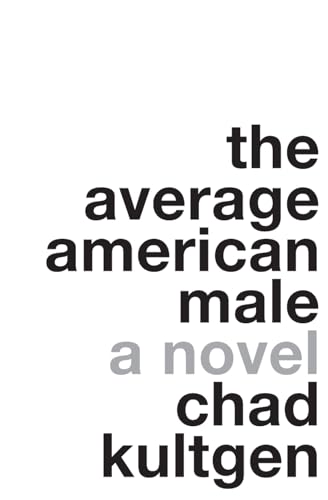

In one sentence
The novel presents an unnamed man whose life is dominated by sexual fantasy, pornography, video games, consumer routines, and avoidance of emotional commitment. It asks whether his supposedly ordinary male consciousness is being honestly exposed—or whether “average” is an excuse that disguises narcissism, misogyny, and emotional emptiness.
Overview
The narrator moves through casual sex, relationships, parties, family encounters, and mundane urban routines while continually assessing women as sexual possibilities. A major relationship gradually forces the question of whether intimacy can satisfy someone trained to want novelty and fantasy more than another person. The episodic structure and repetitive thoughts are intentional parts of the book’s portrait of stasis. This note avoids the ending.
Core ideas
“Average” as defense and provocation
The narrator claims to represent ordinary American male desire, but the book never securely proves that claim. The title can be read as satire: calling this mindset average may expose how normalization shields selfishness from moral scrutiny. Critics disagree over whether the novel is brutally candid, exaggerated, or simply misogynistic.
Desire without recognition
Women are usually encountered as bodies, categories, or imagined sexual opportunities rather than as full subjects. The resulting problem is not merely excessive libido; it is the narrator’s inability—or refusal—to let desire coexist with curiosity, empathy, and mutuality.
Sex as repetition, not fulfillment
The narrator pursues variety, yet the novel’s repeated fantasies and encounters create sameness. His appetite promises freedom but produces a closed circuit: notice, objectify, pursue, become dissatisfied, and begin again.
Emotional cowardice beneath sexual confidence
He appears assertive in sexual matters but is evasive when relationships demand vulnerability, responsibility, or a stable decision. The contrast suggests that compulsive pursuit can function as avoidance rather than confidence.
The banality of contemporary masculinity
Video games, pornography, restaurants, errands, parties, and consumer routines surround the sexual monologue. Their ordinariness matters: the novel links private fantasy to a wider culture of distraction, entitlement, and low-level dissatisfaction rather than portraying depravity as exceptional.
Satire whose target remains unstable
The book’s crude exaggeration can be read as a send-up of male self-description, but its voice often offers little distance from the attitudes it depicts. That instability is central to its reception: some readers find the voice funny or cathartic, while others find the work one-dimensional and degrading.
Practical takeaways
- A narrator’s claim to represent “everyone” should be tested, not accepted—especially when the claim conveniently excuses harmful behavior.
- Repeated desire is not necessarily meaningful desire; compulsion can look like freedom while narrowing a person’s world.
- Sexual honesty does not equal emotional honesty. What the narrator admits about fantasy may coexist with profound self-deception.
- Pay attention to what a first-person voice leaves out: empathy, other people’s interiority, work, friendship, and consequences are largely displaced by appetite.
- The novel is useful as a cultural artifact of early-2000s masculine anxiety, but its provocations should not be mistaken for a reliable account of men in general.
Caveats and counterpoints
- The book’s central premise is intentionally contestable: the narrator is not demographic evidence for what an “average” American man thinks.
- Its sexualized and frequently misogynistic language is not neutral description; it is the mechanism through which the narrator’s worldview is delivered and judged.
- Reviews differ sharply on whether the lack of distance is a deliberate satirical strategy or a failure of characterization.
- Available summaries and reviews support the broad structure and themes, but they do not establish the author’s definitive intention. It is safer to describe competing readings than to declare one correct.
Questions worth revisiting
- Is the narrator exposing misogyny, reproducing it, or doing both at once?
- What would have to change for his behavior to count as ordinary rather than merely common?
- Does the novel offer any meaningful distinction between fantasy, speech, and action?
- Why does he need the label “average,” and who benefits from that label?
- Can a relationship based on possession, comparison, and fear become intimate?
- Does the repetitive form deepen the critique by making the reader feel entrapment, or does it simply become tedious?
Return to this when…
Return to these notes when considering unreliable narrators, masculinity and sexual politics in contemporary fiction, the limits of shock satire, or the difference between depicting a harmful worldview and endorsing it.