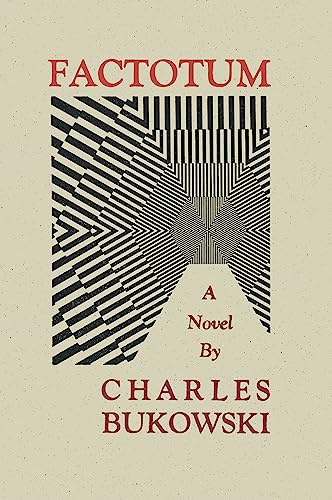

In one sentence
Factotum presents refusal as both liberation and self-sabotage: Chinaski resists the institutions and routines that would organize his life, but his resistance also leaves him trapped in repetition, poverty, intoxication, and isolation.
Overview
Henry Chinaski drifts through wartime-era America, moving from one temporary, poorly paid job to another while pursuing drinking, sexual encounters, and a writing life. The episodic structure makes the novel feel deliberately circular: jobs, landlords, bars, women, and rejections change, but Chinaski’s basic predicament persists. The title points to his status as a person hired for miscellaneous tasks—and to the interchangeability of the labor he performs.
Core ideas
Work as an institution to resist
Chinaski experiences ordinary employment less as a path to dignity than as a system demanding obedience, conformity, and the surrender of time. His job-hopping is therefore political in miniature, though the novel also shows its material cost: resistance does not automatically produce freedom. A scholarly reading specifically identifies organizational resistance as a central concern of the book.
Freedom versus drift
The novel refuses to settle whether Chinaski is courageously independent or merely unable to sustain responsibility. His refusal of the respectable life protects his autonomy, but it also becomes a habit that prevents durable change.
Writing as a private vocation
Writing is the one activity Chinaski treats as genuinely his own. It offers an alternative to wage labor and a way to transform degrading experience into form, even though publication, recognition, and financial security remain uncertain. Critics note the contrast between his apparent indifference to conventional success and his seriousness about being a writer.
The comic surface and the bleak underside
Bukowski uses bluntness, repetition, grotesque situations, and deadpan humor to make deprivation readable without making it comforting. The jokes do not erase despair; they are part of Chinaski’s method for enduring it.
Self-mythology and ethical distance
Chinaski is an alter ego, not a transparent autobiography. His voice invites identification with the outsider while also exposing his vanity, cruelty, evasions, and dependence on other people. The book’s appeal should not require accepting his judgments about women, sex, or masculinity.
A deliberately narrow worldview
The novel’s intense focus on bars, jobs, money, bodies, and humiliation creates its force but also its limitation. Some readers find the persona vivid and liberating; others see arrested development, misogyny, or a romanticized low-life pose. Serious criticism of Bukowski often turns on precisely this tension between authenticity and self-dramatization.
Practical takeaways
- Notice the difference between rejecting a system and building an alternative to it; Chinaski is much better at the first than the second.
- The book treats artistic identity as something practiced before it is rewarded—but it also questions whether romanticizing hardship makes the work or the life better.
- Pay attention to repetition. The recurring cycle of job, paycheck, drinking, sex, rejection, and departure is not just plot; it is the novel’s model of entrapment.
- Read Chinaski’s confidence skeptically. His voice is compelling partly because it turns failure into a pose of superiority.
- The novel is useful as an exploration of alienation, but not as a straightforward guide to freedom, writing, sobriety, relationships, or self-respect.
Caveats and counterpoints
- The catalogue description is broadly accurate about the setting, jobs, drinking, and Chinaski’s writing ambition, but its celebratory language—such as calling him “bitter” and “brilliant”—is marketing rather than neutral description.
- The book’s sexual material and treatment of women are central to its persona but can feel misogynistic and emotionally limited; that discomfort is a substantive critical issue, not merely a matter of taste.
- Its semi-autobiographical quality should not be mistaken for documentary truth. Chinaski is Bukowski’s recurring fictional alter ego, shaped for comic, dramatic, and self-mythologizing purposes.
- The episodic form produces atmosphere and cumulative repetition more than conventional development. Readers expecting a tightly plotted transformation may find the book intentionally static.
Questions worth revisiting
- When does Chinaski’s refusal look like integrity, and when does it look like fear or narcissism?
- Does the novel criticize wage labor, or mainly use bad jobs as scenery for Chinaski’s self-mythology?
- What does writing accomplish for Chinaski even when it brings no immediate reward?
- How does the humor change your response to poverty, addiction, and exploitation?
- Which parts of the narrator’s worldview does the novel seem to endorse, and which does its repetition quietly undermine?
Return to this when…
Return to this book when thinking about artistic identity, anti-work attitudes, masculine self-invention, or the difference between freedom and mere escape. Pair it with Post Office to compare resistance within a long-term job with resistance through joblessness; read its admirers and critics together to test whether its “authenticity” survives scrutiny.
Highlights
It was the first time I had been alone for five days. I was a man who thrived on solitude; without it I was like another man without food or water. Each day without solitude weakened me. I took no pride in my solitude; but I was dependent on it. The darkness of the room was like sunlight to me. I took a drink of wine.
Frankly, I was horrified by life, at what a man had to do simply in order to eat, sleep, and keep himself clothed. So I stayed in bed and drank. When you drank the world was still out there, but for the moment it didn't have you by the throat.
Jan saw me coming. She lifted her head and even in the gloom of the bar she seemed to pale. I walked up behind her, standing near her stool. "I tried to make a woman out of you but you'll never be anything but a god damned whore!" I back-handed her and knocked her off her stool. She fell flat on the floor and screamed. I picked up her drink and finished it. Then I slowly walked toward the exit. When I got there I turned. "Now, if there's anybody here... who doesn't like what I just did... just say so."
In the morning it was very quiet and I thought, that's nice, they've taken him to the hospital or the morgue. Now maybe I'll be able to shit.
If I was any kind of man, I thought, I would rape her, set her panties on fire, force her to follow me all over the world, make tears come to her eyes with my love letters written on light red tissue paper.
How in the hell could a man enjoy being awakened at 8:30 a.m. by an alarm clock, leap out of bed, dress, force-feed, shit, piss, brush teeth and hair, and fight traffic to get to a place where essentially you made lots of money for somebody else and were asked to be grateful for the opportunity to do so?
Some jobs were amazingly easy to get. I remember one place I walked in, slouched down in a chair, and yawned. The guy behind the desk asked me: "Yes, what do you want?" "Oh hell," I answered, "I guess I need a job." "You're hired."
put my arm around her waist. "We're going to make it. You are the wisdom of centuries and I am me. We are meant for each other."
"Thanks. And I end up getting fired for trying to fuck a slant-eyed squaw with a gimp in her left leg on top of forty gallons of auto paint - which, by the way, you've been selling to the L.A. City College Art Department as the real thing. I ought to turn you over to the Better Business Bureau."
"You were lecturing him on how to run this hotel. Mr. Pelvington has been in the hotel business for thirty years. You suggested that prostitutes be registered on the first floor only and that they should be given regular physical examinations. There are no prostitutes in this hotel, Mr. Chinaski."
References
- dictionary.cambridge.org
- blinkist.com
- bookrags.com
- Drunk walks into a bar… movie review
- 'Factotum' is true to the grit, poetry of Charles Bukowski - Los Angeles Times
- "All I want to do is get that check and get drunk": Testifying to resistance in Charles Bukowski's Factotum - Macquarie University
- Factotum (novel)
- my.lcad.edu
- en.wikipedia.org
- interactive.cornish.edu
- arxiv.org
- THE PORTRAYAL OF WOMEN IN THE NOVELS OF CHARLES BUKOWSKI