
In one sentence
Rakim treats creativity less as spontaneous inspiration than as cultivated mastery. Original expression grows from purpose, awareness, influence, spiritual grounding, and sustained technical practice. The artist’s task is to absorb the world deeply, transform those materials through personal perspective, and make deliberate choices about sound, structure, and meaning.
Overview
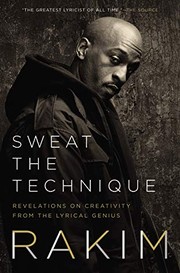
The book combines autobiographical reflection with advice for writers and musicians. Rakim discusses how he thinks about words, music, rhyme, flow, performance, and storytelling, while connecting his development to hip-hop, jazz—especially John Coltrane—and the Five Percent Nation’s emphasis on “knowledge of self.” Its organizing framework is described as five pillars: Purpose, Inspiration, Spirituality, Consciousness, and Energy.
Core ideas
Technique makes inspiration usable
Talent or inspiration is only raw material. The writer must work on rhyme patterns, internal rhythm, sound, phrasing, and structure until ideas can be expressed with precision and force. Rakim’s example is lyric writing, but the principle applies to any craft.
Purpose precedes style
A distinctive voice is not merely a collection of tricks. It develops when technique serves something the artist is trying to communicate. Purpose helps determine what belongs in a piece and prevents virtuosity from becoming empty display.
Consciousness supplies material
Strong writing depends on paying attention—to people, history, language, music, and one’s own experiences. The writer’s vocabulary and subject matter expand through listening, reading, observation, and reflection rather than by staying inside a narrow creative bubble.
Influence should become transformation
Rakim’s relationship to jazz and other musical traditions illustrates a useful model: study admired forms closely, then convert their principles into a personal language. Borrowing surface features is weaker than understanding what makes an influence powerful.
Sound carries meaning
In rap, meaning is inseparable from delivery. Multisyllabic rhyme, internal rhythm, cadence, pauses, and musical placement shape how an idea feels. For prose or poetry, the analogous lesson is to revise sentences aloud and treat rhythm as part of thought.
Knowledge of self creates artistic authority
Confidence is not simply bravado. It comes from knowing one’s sources, values, experiences, and position well enough to speak without imitating someone else. Self-knowledge gives technique a recognizable center.
The memoir is selective rather than comprehensive
The book is primarily a reflection on creative process, not a full career autobiography. Readers looking for an exhaustive account of Eric B. & Rakim, recording history, or every major career turning point may find the personal narrative comparatively limited.
Practical takeaways
- Define the purpose of a piece before polishing its style: what should the reader feel, understand, or remember?
- Build a personal reservoir of material through reading, listening, observation, conversation, and notes.
- Study admired work for underlying mechanics—rhythm, structure, compression, imagery—not just memorable surfaces.
- Revise for sound: read drafts aloud, mark stresses, remove awkward syllables, and test alternate cadences.
- Practice technical constraints such as internal rhyme, repetition, or fixed line lengths to generate possibilities.
- Separate influence from imitation by asking what principle you are borrowing and how your own subject changes it.
- Develop confidence through preparation and self-knowledge rather than relying on performance alone.
Caveats and counterpoints
- The framework is strongly rooted in Rakim’s experience as an MC; some advice is suggestive for novelists or general writers rather than a detailed, transferable writing curriculum.
- The available descriptions emphasize principles and influences more clearly than they document specific exercises, so the book may be more useful as an artistic philosophy than as a step-by-step workbook.
- Its account of creativity privileges discipline, consciousness, and personal authority. That is valuable, but it leaves less room for other models centered on collaboration, deliberate play, revision systems, or external editorial feedback.
- The print and digital listings differ in reported length—252 pages for the print edition and 128 pages for the ebook listings—so edition-specific organization may vary.
Questions worth revisiting
- What is my purpose in this piece, and does every major choice support it?
- Which influences am I studying, and what deeper principle—not just surface style—can I learn from them?
- Where does my own knowledge, experience, or perspective enter the work?
- How does the piece sound when read aloud?
- Am I using technical complexity to sharpen meaning or merely to display skill?
- What subjects do I need to observe, read about, or experience before I can write about them convincingly?
Return to this when…
Return to this book when your work feels technically competent but impersonal, when you need to reconnect craft with purpose, or when you want a compact reminder that originality is built through disciplined listening, study, self-knowledge, and revision.
References
- Sweat the Technique by Rakim on Apple Books
- Sweat the Technique: Revelations on Creativity from the Lyrical Genius - Rakim - Google Books
- catalog.sbplibrary.org
- play.google.com
- Sweat the Technique: Revelations on Creativity from the Lyrical Genius by Rakim | Goodreads
- search.worldcat.org
- overdrive.com
- cmc.marmot.org
- discover.cuyahogalibrary.org
- catalog.dmpl.org
- bookshop.org
- catalog.chattlibrary.org