
In one sentence
The best strategist creates conditions in which victory is likely before committing to a costly fight: understand the situation, control information and tempo, exploit asymmetries, preserve one’s own strength, and adapt tactics to circumstances. War is treated as a dangerous instrument of state policy, not as an arena for glory.
Overview
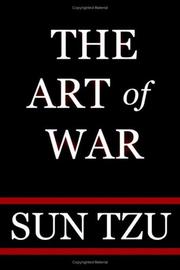
The work traditionally attributed to Sun Tzu (Sunzi) is a concise military classic associated with the late Spring and Autumn/Warring States world. The traditional biography places Sunzi around 500 BCE, but modern scholarship commonly treats the received text as a compilation or layered work, with strong evidence for a Warring States-era formation. Bamboo-slip discoveries support the antiquity of much of the text while complicating any simple single-author story. The standard version has thirteen chapters covering strategic assessment, warfare and costs, offensive strategy, disposition of forces, energy, strengths and weaknesses, maneuver, tactical variation, the army on campaign, terrain, difficult situations, attacks by fire, and espionage. Publisher descriptions of major modern translations emphasize that the text includes both translation problems and extensive traditional commentary; therefore wording and emphasis vary substantially by edition.
Core ideas
Win before fighting
Assessment comes first: compare political legitimacy, leadership, organization, terrain, weather, discipline, and relative strength. The aim is to make the opponent’s position untenable before a decisive clash.
Economy is strategic, not merely financial
War consumes supplies, attention, morale, and political authority. Prolonged campaigns degrade the victor as well as the defeated, so speed, preparation, and sustainable logistics matter more than dramatic battlefield success.
Information and deception shape the battlefield
Appear weak or strong as useful; conceal intentions; misdirect the opponent; and gather reliable intelligence. Deception is not an isolated trick—it works by influencing the enemy’s expectations and choices.
Adaptation beats fixed doctrine
There is no universally best formation or tactic. Responses should change with terrain, morale, timing, weather, enemy behavior, and the relationship between direct and indirect methods.
Position creates power
Good commanders arrange circumstances so that ordinary actions produce disproportionate effects. Momentum, timing, coordination, and the use of terrain can substitute for raw numerical superiority.
Command combines discipline with judgment
An army needs clear standards, training, trust, and coordinated signals. Yet rigid obedience is insufficient: the commander must interpret changing conditions and adjust orders without losing coherence.
The text is about statecraft as well as battle
Its opening frame treats war as a matter of national survival and ruin. Political purpose, civilian costs, alliances, morale, and the consequences of escalation remain part of strategic calculation.
Practical takeaways
- Before acting, map the situation: objectives, constraints, stakeholders, incentives, information gaps, and likely reactions.
- Prefer moves that improve your position while narrowing the other side’s options.
- Treat speed as valuable when delay increases cost—but do not confuse haste with preparation.
- Use indirect methods to create leverage, while keeping the main objective and exit conditions clear.
- Preserve optionality: avoid commitments that make adaptation impossible.
- Separate useful intelligence from assumptions, rumors, and information supplied by interested parties.
- In negotiation or competition, study what the other side believes you will do, not only what it can objectively do.
Caveats and counterpoints
- The book is a military text for ancient Chinese warfare, not a general-purpose management manual. Business and personal applications are analogies, not direct evidence of what Sunzi meant.
- Its famous aphoristic style encourages decontextualized quotations. The chapters are compressed and sometimes internally tensioned; apparent contradictions often reflect different situations rather than a single universal rule.
- The attribution to one historical Sun Tzu and the traditional dating around 500 BCE are not secure. Scholarship commonly distinguishes between the traditional figure, an earlier strategic tradition, and the received compilation.
- Deception and instrumental reasoning can become unethical or counterproductive outside war, especially where trust, transparency, law, or long-term cooperation are central.
- The text underplays or assumes away many modern variables: technology, mass politics, international law, economic interdependence, organizational complexity, and the human costs of total or industrial war.
Questions worth revisiting
- What conditions make avoiding direct conflict more valuable than seeking a decisive win?
- Which parts of my current judgment are observations, and which are assumptions about the other side?
- Where am I spending resources to defend a position that no longer matters?
- What changes in terrain, timing, incentives, or morale would require a different strategy?
- How can I gain information without allowing the search for information to delay necessary action?
- When does strategic deception undermine the trust required for future cooperation?
Return to this when…
Return to this book when facing a consequential conflict, negotiation, competitive decision, or prolonged project. Re-read especially the ideas on assessment, costs, intelligence, positioning, and adaptation; use them to diagnose conditions, not to justify aggressive behavior.
References
- The Art of War translated by Ralph D. Sawyer | Hachette Book Group | Hachette Book Group
- The Art of War: Quotes, Sun Tzu & Summary | HISTORY
- Sun Zi (Sun Tzu) (ca. fourth century BCE) - Morillo - 2011 - Major Reference Works - Wiley Online Library
- vitalsource.com
- indigo.ca
- penguinrandomhouse.com
- catalog.libraries.vsc.edu
- citeseerx.ist.psu.edu
- ndupress.ndu.edu
- en.wikipedia.org
- afe.easia.columbia.edu
- s3-euw1-ap-pe-df-pch-content-store-p.s3.eu-west-1.amazonaws.com