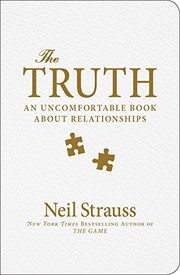

In one sentence
Strauss’s central argument is experiential rather than systematic: changing the relationship model cannot substitute for confronting the fears, compulsions, wounds, and self-deceptions one brings into relationships. Monogamy is not presented as automatically superior, nor non-monogamy as automatically liberating; honesty, consent, emotional responsibility, and self-knowledge are the harder requirements. This is an interpretation of the memoir’s trajectory, not a universal relationship theory.
Overview
Core ideas
The real subject is commitment
Strauss frames commitment as the difficult problem beneath love and sex: too little, too much, or poorly understood commitment can all create suffering. The question is not simply “monogamy or freedom?” but what promises people can honestly make and sustain.
Sexual variety can conceal emotional avoidance
The memoir treats infidelity and sexual novelty not merely as appetites but as possible ways to avoid vulnerability, dependence, boredom, shame, or the risk of being fully known. Strauss’s own behavior is the case study, and he explicitly casts himself as responsible rather than heroic.
Labels do not solve underlying problems
Sex-addiction treatment, exclusive partnership, and polyamory each become possible answers to Strauss’s crisis, but none works simply by being adopted. The book’s implied test is whether a relationship arrangement produces honesty, stability, mutual consent, and emotional presence—not whether it conforms to a preferred ideology.
Self-knowledge is relational, not merely intellectual
Strauss investigates family history, parental secrecy, childhood experience, and recurring patterns to understand how people may reproduce familiar forms of intimacy. Insight matters only when it changes conduct and makes repair possible. The memoir offers this as personal exploration, not as clinically validated diagnosis.
Radical honesty has ethical limits
The book’s confessional method is both its strength and its problem. Disclosure can expose self-deception, but narrating intimate events can also burden or instrumentalize other people. Strauss’s willingness to reveal damaging behavior does not by itself establish that every disclosure is fair to those involved.
Freedom requires consequences, not just options
The later movement toward “freedom” is not simply permission to pursue every desire. It is tied to accepting consequences, making explicit agreements, and choosing a life deliberately rather than drifting between impulse and convention.
Practical takeaways
- Before changing a relationship structure, identify the problem you are actually trying to solve: desire, loneliness, novelty, resentment, fear of dependence, or difficulty tolerating vulnerability.
- Do not confuse confession with repair. Accountability requires changed behavior, clear agreements, patience, and willingness to accept another person’s boundaries.
- Any nontraditional arrangement still needs informed consent, specific rules, renegotiation, and attention to unequal risks or unequal emotional investment.
- Treat “sex addiction” cautiously: the book presents Strauss’s treatment experience, but it is not a substitute for professional assessment or evidence-based clinical guidance.
- Ask whether a proposed arrangement makes you more honest and emotionally available—or merely gives your avoidance a more sophisticated vocabulary.
Caveats and counterpoints
- This is primarily a memoir and investigative personal journey, not a balanced scientific study of monogamy, infidelity, addiction, or polyamory. Its conclusions are shaped by Strauss’s unusual history and personality.
- The narrative’s self-accusatory framing can create an impression of accountability while still keeping the author at the center of every event. Kirkus found the introspection compelling but also described parts of the polyamory journey as frustrating and tedious.
- The book’s treatment of sexuality and relationships may be valuable as provocation, but readers should not generalize its anecdotes into universal psychological laws.
- Its portrayal of non-monogamy should not be read as either a condemnation or a recommendation. The memoir’s stronger lesson concerns emotional health and responsibility, not the superiority of one relationship form.
Questions worth revisiting
- What problem am I trying to solve when I seek more freedom, more commitment, or a different partner?
- Which of my relationship preferences are genuine values, and which may be defenses against vulnerability or rejection?
- What would informed consent require from everyone affected by my choices?
- When does radical honesty help another person—and when does it primarily relieve my own guilt?
- What repeated relationship pattern might be familiar because it is healthy, and what might be familiar because it is unresolved?
Return to this when…
Return to this book when thinking about commitment, infidelity, open relationships, or the difference between sexual freedom and emotional freedom. Revisit it alongside stronger empirical or clinical sources if you want guidance rather than a provocative autobiographical case study.
Highlights
They say that when you meet someone and feel like it’s love at first sight, run in the other direction. All that’s happened is that your dysfunction has meshed with their dysfunction. Your wounded inner child has recognized their wounded inner child, both hoping to be healed by the same fire that burned them. In fairy tales, love strikes like lightning. In real life, lightning burns. It can even kill you.
one of the world’s most successful and beautiful women, Victoria’s Secret supermodel Miranda Kerr, making him one of the most envied men on the planet. And the first thing out of his mouth? “I don’t know if marriage is worth it. I don’t know why anyone does it. I mean, I want romance and I want to be with someone, but I just don’t think it works.”
Lying is about controlling someone else’s reality, hoping that what they don’t know won’t hurt you.
“Being overcontrolled as a child sets you up to lie as an adult,” she concludes. “So the theory of sex addiction is that when you feel out of control or disempowered, you sneak around and act out sexually to reestablish control and regain your sense of self.”
“I once interviewed a woman who was going through a sex change to become a man,” I tell him. “And she told me that as soon as the testosterone therapy kicked in, she suddenly understood men, because she wanted to fuck everything that moved.”
“The problem with therapy is that they try to normalize everyone and keep them in the middle of the road. But if you do that to a society, there’s no innovation. Nothing new is created. You need that one caveman who said, ‘We can’t just keep waiting for lightning to strike every time we need fire. We have to make fire ourselves.’ They probably thought he was crazy, rubbing rocks and sticks together. Today they’d diagnose him as obsessive-compulsive. But then he gave them fire, and all of a sudden everyone was doing it.
As I write the family rules on my timeline, I suddenly realize: No wonder I hate monogamy. It’s just another irrational rule I have to put up with.
“When your mom is emotionally dependent on you and has intimate discussions with you that she should be having with her spouse, there’s a name for that.” Joan looks at me like a prizefighter sizing up a dazed opponent, then lands her final blow. “It’s called emotional incest.” And I’m done.
This creates wounded children, who are often depressed and indecisive, see themselves as flawed and less valuable than others, and feel they can’t face the world alone. In relationships, they tend to have what’s called anxious attachment. They may feel like they’re not enough for their partners; become so wrapped up in their relationships that they lose sight of their own needs and self-worth; and be emotionally intense, passive-aggressive, or in need of constant reassurance that they’re not being abandoned. Here, they call this type of person a love addict.
move on to explain the third type of parenting: enmeshment. This is my upbringing. Instead of taking care of a child’s needs, the enmeshing parent tries to get his or her own needs met through the child. This can take various forms: a parent who lives through a child’s accomplishments; who makes the child a surrogate spouse, therapist, or caretaker; who is depressed and emotionally uses the child; who is overbearing or overcontrolling; or who is excessively emotional or anxious about a child. If you grew up feeling sorry for or smothered by a parent, this is a sign that enmeshment likely occurred: In the process, enmeshed children lose their sense of self. As adults, they usually avoid letting anyone get too close and suck the life out of them again. Where the abandoned are often unable to contain their feelings, the enmeshed tend to be cut off from them, and be perfectionistic and controlling of themselves and others.
Though they may pursue a relationship thinking they want connection, once they’re in the reality of one, they often put up walls, feel superior, and use other distancing techniques to avoid intimacy. This is known as avoidant attachment—or, as they put it here, love avoidance. And most sex addicts, according to this theory, are love avoidants.
The sins of the parents are the destinies of their children. Unless the children wake up and do something about it.
“Self-deprecation is still self-worship,” she is telling Calvin. “It’s the flip side of the same coin. It’s still about self.”
“Remember that humor is a wall. It’s a form of denial, just the same as repression, rationalization, globalization, and minimization.”
Any time you overreact to something—by shutting down, losing your temper, sulking, feeling hopeless, freaking out, disassociating, or any of numerous other dysfunctional behaviors—it’s typically because an old wound has been triggered. And you’re regressing to the childhood or adolescent state that corresponds to that feeling. Note that the wounded child tends to directly internalize the messages that caretakers give; the adapted adolescent tends to react against them.
“She suffocated you, so you set up a wall with her that you kept in place through anger and sneaking around behind her back. And you’re still using that wall to keep from being suffocated by Ingrid.”
“There’s one thing that’s been bothering me,” I tell Lorraine. “I can’t understand why I never stood up for myself against her strictness and just rebelled or ran away?” She looks at my genogram for a moment, then responds: “Because your example was your dad, and he never stood up for himself. And his father didn’t stand up to his mother either.”
Probably. “And you’ll notice,” she continues, “that they didn’t model a healthy relationship for you. It’s no wonder you have fear when it comes to Ingrid. You don’t want to end up in a relationship like the one your parents have.”
“Intimacy problems come from a lack of self-love,” she continues. “Someone who fears intimacy thinks, unconsciously, If you knew who I actually was, you’d leave me.”
“I’d classify all of you as intimacy avoidants,” she presses on. “The avoidant is very good at seducing, in the sense that he has an uncanny ability to find out what his partner needs and give it to her. Because he was usually enmeshed, he gets his worth and value from taking care of needy people.”
“That’s the enmeshed child in you speaking. You should be in recovery for you, not for her. And that’s typical of your marriage as a whole. Because when a love avoidant and a love addict begin a relationship, a predictable pattern occurs: The avoidant gives and gives, sacrificing his own needs, but it’s never enough for the love addict. So the avoidant grows resentful and seeks an outlet outside of the relationship, but at the same time feels too guilty to stop taking care of the needy person.”
“But the avoidant’s behavior has consequences,” Lorraine continues, “and chief among them is something most of you are familiar with: getting caught. And that shatters the fantasy for the love addict, who experiences her biggest nightmare: abandonment, which replicates her original wound.” One thing Odysseus did right is that he didn’t get caught. That’s because they didn’t have paparazzi, social media, mobile phones, and the Internet back then. It was easier to compartmentalize. “The pain and the fear are so intense for the love addict that she often develops her own secret life as well. Where the avoidant wants the highs, the addict typically goes for the lows. She wants benzodiazepines, alcohol, romance novels, shopping till she drops, or anything that depresses the central nervous system. If she acts out sexually or has an emotional affair, it’s not for intensity, but to numb the pain and get away from the agonizing hurt. Soon, the relationship is no longer about love for either partner, but about escaping from reality.”
“A healthy relationship is when two individuated adults decide to have a relationship and that becomes a third entity. They nurture the relationship and the relationship nurtures them. But they’re not overly dependent or independent: They are interdependent, which means that they take care of the majority of their needs and wants on their own, but when they can’t, they’re not afraid to ask their partner for help.” She pauses to let it all sink in, then concludes, “Only when our love for someone exceeds our need for them do we have a shot at a genuine relationship together.”
Pets are the gateway drug to children. As a general rule, when a woman over twenty-five gets a dog, it means she’s ready to start a family. Nearly
I grab my computer, find an image of the Mexican flag, and print it. I have a small publishing imprint at HarperCollins, and decided recently to contact two anonymous news bloggers in Mexico about writing a book on the drug war there. Because the Mexican cartels have been trying to find out who they are and execute them, however, the journalists want me to verify my identity. So they asked me to email a photo of myself holding a Mexican flag in one hand and a newspaper with today’s date in the other. Lorraine would say this is a way to find intensity outside the relationship without cheating. And perhaps she’s right.
Maybe love isn’t so sacred if we can attach it to any furry thing with a heartbeat, bad breath, and no bladder control. She scoops the dog up in her arms and trots to the bedroom to take a nap. Now she’s sleeping with him. Is this still monogamy?
through me. As a result of this confusing dynamic, Adams continues, when the child grows up, relationships often begin with “immediate and total commitment,” but this is soon “followed by uncertainty and ambivalence.” And, often, “having an affair is a way to be relieved of the struggle with commitment.”
Many women think that if they put out too quickly, their partner won’t respect them. This is not the case. It’s not about waiting for a certain quantity of time before having sex, it’s about waiting for a certain quality of connection.
An hour later, Belle arrives. She’s pale and petite, wearing a plaid skirt, a navy blue cardigan, a white blouse, funky red glasses, and braided honey-blond pigtails. It’s a schoolgirl look designed to drive men wild with both lust and guilt simultaneously. “Is this your den of sin, Mr. Strauss?” she asks playfully as we embrace in the doorway.
Perhaps the secret to fidelity is knowing that the grass is crazier on the other side.
What I’ve learned about relationships is that the most important thing is talking. If two or more people have a relationship, they must be able to talk with each other with no hesitation about their feelings. As an example, I was upset about his texting and didn’t say anything. But he understood me and started to talk with me himself. I told him what I was feeling and ever since that moment, everything’s been different. We changed our behavior and found a compromise. It was very surprising because it wasn’t hard at all. I’m so glad that he did it.
We both struck out. In the dance of infatuation, we see others not as they are, but as projections of who we want them to be. And we impose on them all the imaginary criteria we think will fill the void in our hearts. But in the end, this strategy leads only to suffering. It’s not a relationship when the other person is completely left out of it.
“Deepak Chopra says that if you want to stop smoking, you have to change the way in which you smoke. In other words, if you smoke with coffee or after sex, stop smoking with coffee or after sex. Then, when you smoke at other times, really feel all the sensations in your body. And you’ll see it for what it really is: putting poison in your lungs.”
Researchers at Princeton University did a study on the correlation between money and happiness. As people’s incomes rose up to $75,000 annually, their happiness increased. But at incomes beyond that, people on average did not become happier. Perhaps the same is true of sexual partners. Coming on more tits is not going to make me any happier.
“That’s the sad thing for women,” he says afterward, shaking his head. “You can’t be perfect enough for a man not to want to cheat.”
Suddenly, my world has become much smaller. And after the initial fear and panic of letting go subside, I realize it’s also become much easier to manage.
“All the things you’ve been trying to get from these relationships—freedom, understanding, fairness, acceptance—are exactly the things that you never got from your mom. So every time you load all that unfinished business onto your partner, you’re setting yourself up for another disappointment. Because as an adult, the only person who can give you those things is you. Do you understand that?”
“Perhaps. But I like to believe he also said something else: ‘You worked on the farm because you felt like you should; your brother came back to work on the farm out of choice. And that is the more meaningful of the two.’”
I realize why monogamy never worked for me before. It’s always been something that I felt my partner expected or made me do. If I treat it as a choice this time as opposed to a demand, then maybe I can be the Prodigal Boyfriend.
“Don’t trade long-term happiness for short-term pleasure.”
- No matter what the situation may be, the right course of action is always compassion and love.
- As long as at least one partner is in the adult functional at any given time, most—if not all—arguments can be avoided.
- Recognize when you are backsliding into a childish or adolescent behavior. Then pinpoint what old story is being triggered and tell yourself the truth of the situation. Let go of the lie.
- Accept what is.
- You can’t have a relationship with someone hoping they’ll change. You have to be willing to commit to them as they are, with no expectations. And if they happen to choose to change at some point along the way, then that’s just a bonus.
- Communicate and maintain healthy boundaries. This means finding the proper balance of filtering and protecting your self, thoughts, feelings, time, and behaviors without either closing off behind walls, or becoming overwhelmed or overwhelming.
- Ask yourself throughout the day, “What do I need to do in this moment to take care of myself?” If you can be aware of what legitimate needs and wants you’re not attending to, and then take actions to meet them on your own—or ask your partner for help if you can’t—that is the road to happiness.
- No one can make you feel anything and you don’t make anyone feel a certain way. So don’t take on responsibility for your partner’s feelings and don’t blame your partner for yours. The most caring thing to do when they’re upset is simply to ask if they want you to listen, to give advice, to give them space, or to give them loving touch.
- Love, honor, and affirm yourself. Whatever your decisions, actions, feelings, and thoughts throughout the day may be and whatever outcome they may lead to, if you are healthy, then they are ultimately healthy.
- And, above all, always remember to breathe and be in the moment.
It is the great lie—that husbands and wives have no sexual interest in anyone except each other.
Though Disney cartoons and romance movies end the moment the lovers reunite, leaving the audience to assume they lived happily ever after, in real life this is the moment the story truly begins. It’s when Sleeping Beauty asks Prince Phillip, “How many princesses did you kiss while I was asleep?” It’s when the Little Mermaid yells at Prince Eric, “An enchantment spell? That’s the worst excuse I’ve ever heard. You were about to marry that other girl!” It’s when the princess who kissed the frog asks the resultant prince, “Be honest: While you were a frog, did you have sex with any female frogs?”
And so, I think as I take in Ingrid’s words, in the end, love is not about finding the right person. It’s about becoming the right person.
As I take her hand in mine, I realize that before trauma healing, I always wanted more—more women, more success, more money, more space, more experience, more possessions. Not once did I stop and say, as I do now, “I have enough.”
“I think that’s only true if two people see each other as objects or employees. If they’re emotionally healthy adults, then there’s no dilemma that they can’t work out together. They’re not going to even notice each other aging but just getting happier.”
As a result, we developed the relationship I’d been looking for the whole time, only I didn’t know what it was: a relationship without fear. Without fear of intimacy, without fear of suffocation, without fear of loss, without fear of speaking our truth, without fear of being hurt, without fear of boredom, without fear of change, without fear of the future, without fear of conflict, and even without fear of other people.