
In one sentence
A building is not complete when construction ends. It performs well when its parts and occupants can change at different speeds, allowing use, maintenance, and incremental alteration to improve the building over time. Architectural success should therefore be judged less by the original design than by long-term adaptability.
Overview
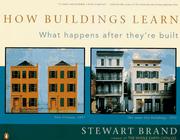
Brand challenges architecture’s tendency to privilege original intention, visual novelty, and the building’s opening-day appearance. Through historical examples, photographs, and comparisons among houses, institutions, commercial buildings, vernacular structures, and celebrated modern designs, he asks what happens afterward: who changes a building, why changes are resisted, and which physical arrangements make useful adaptation easier. The book is both an architectural critique and a practical theory of maintenance, reuse, and incremental improvement.
Core ideas
Study buildings in time, not only in space
The important object is not the pristine building shown in architectural photography but the building’s entire life: construction, occupation, repair, alteration, decay, reuse, and replacement. A building’s history of changes reveals whether it actually serves people.
Shearing layers of change
Buildings contain layers with different lifespans and rates of change: site, structure, skin, services, space plan, and stuff. Adaptability depends on letting faster-changing layers—interiors, equipment, furnishings, and uses—change without forcing costly disruption to slower layers such as structure or site.
Occupants are part of the design process
People continually test and revise buildings through ordinary use. Their modifications are not necessarily failures of architecture; they are evidence about what the building needs. Designs that make legitimate user changes easy can learn from experience rather than pretending the first plan is final.
Different building types learn differently
Houses can respond directly to family changes; commercial buildings face competitive pressure to adapt; institutional buildings often change slowly because authority, budgets, symbolism, and procedure make alterations difficult. The same design philosophy cannot be applied without regard to ownership and governance.
Low Road, High Road, and architectural spectacle
Brand distinguishes loosely adaptable, ordinary buildings from prestigious buildings whose cultural or institutional importance makes change difficult. He is especially skeptical of “magazine architecture”: buildings optimized for a dramatic initial image but poorly suited to maintenance, alteration, or everyday use. This is criticism of a tendency, not a claim that all ambitious architecture fails.
Maintenance is a form of learning
Repair budgets, records of alterations, accessible components, standard materials, and attentive facilities management give a building the means to improve. Adaptability is not free flexibility; it requires ongoing investment, practical knowledge, and permission to make changes.
Vernacular and ordinary buildings contain useful intelligence
Traditional buildings often endure because they use familiar materials, incremental construction, repairable details, and forms shaped by local climate and custom. Brand treats vernacular evolution as a counterweight to centralized, one-time design decisions—not as proof that old forms should always be copied.
Form follows funding and use
A building’s physical possibilities are constrained by economics, ownership, maintenance capacity, regulations, and patterns of use. The feasible design is therefore not simply the architect’s ideal form; it is the form that can survive the financial and organizational conditions surrounding it.
Practical takeaways
- When evaluating a building, ask what has changed since completion and whether those changes were easy, expensive, hidden, or destructive.
- Separate long-lived structure from short-lived services, partitions, finishes, and equipment whenever possible.
- Design for replacement and access: components that cannot be reached, repaired, documented, or upgraded become future liabilities.
- Budget for maintenance and alteration as part of the building’s initial cost, not as an optional afterthought.
- Preserve evidence of change: keep as-built information, alteration records, photographs, and drawings for later occupants and owners.
- Treat occupant modifications as feedback. Before removing them, determine what need they express.
- Prefer robust, familiar, repairable solutions when the building must last under uncertain future conditions.
- For technology or product work, use the shearing-layers analogy carefully: keep foundational infrastructure stable while allowing interfaces, workflows, and content to evolve independently.
Caveats and counterpoints
- The book’s argument is deliberately polemical: Brand strongly favors adaptive, ordinary, user-shaped buildings and is hard on architectural formalism. That makes it memorable but can understate cases where symbolic coherence, security, accessibility, environmental performance, or civic representation legitimately require tighter control.
- Its examples and framework are centered largely on buildings in affluent Western settings. The model may transfer less directly to informal settlements, highly constrained housing markets, short-life commercial property, or contexts where adaptation is prevented by law, finance, displacement, or deliberate obsolescence.
- Adaptability can itself create costs: more interfaces, spare capacity, maintenance obligations, and decision points. A building designed to change is not automatically cheaper, greener, or better.
- User alteration is valuable evidence but not always good design. Changes may reflect inadequate resources, unsafe conditions, exclusion, or regulatory failure rather than healthy adaptation.
- The “shearing layers” model is a useful heuristic, not a complete theory of buildings. Layers interact; a change in services or regulation can force structural work, and social or financial systems may matter as much as physical separation.
Questions worth revisiting
- Which parts of my current environment are slow-changing foundations, and which should be allowed to change quickly?
- What user adaptations are already visible, and what unmet needs do they reveal?
- Where does the system make routine repair or replacement unnecessarily difficult?
- Am I optimizing for launch-day appearance or for performance after years of use?
- What records, budgets, interfaces, or access points would help future occupants continue the learning process?
Return to this when…
Return to this book when designing, renovating, buying, or managing anything expected to last. Its most useful reminder is simple: durability is not merely the ability to resist change; it is the ability to absorb change without losing usefulness.
References
- en.wikipedia.org
- HOW BUILDINGS LEARN | Kirkus Reviews
- en.wikipedia.org
- How Buildings Learn: What Happens After They're Built — Stewart Brand · Íñigo Medina
- research.gold.ac.uk
- brayden.org
- How Buildings Learn: What Happens After They're Built by Stewart Brand
- search.worldcat.org
- cir.nii.ac.jp
- goodreads.com
- goodreads.com
- dalspaceb.library.dal.ca