
In one sentence
The book turns a drug-fueled trip into an assault on American myths: objective journalism, respectable citizenship, commercial entertainment, and the promise that rebellion can permanently transform society. Its madness is not merely escapism; it is a distorted method for exposing a culture already saturated with violence, fraud, and fear.
Overview
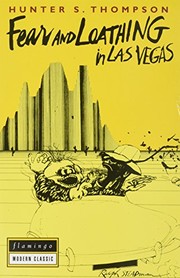
Originally published in Rolling Stone in November 1971 and as a book in 1972, the narrative follows Raoul Duke, Thompson’s fictionalized alter ego, and his attorney, Dr. Gonzo, as they travel to Las Vegas to cover the Mint 400 motorcycle race and a district attorneys’ conference on narcotics. The assignment repeatedly dissolves into surreal episodes, failed reporting, paranoia, and reflection on what happened to the counterculture. The book draws on Thompson’s real trips with Oscar Zeta Acosta but reshapes them through exaggeration, invention, and a deliberately unstable narrative voice.
Core ideas
The American Dream as spectacle
Las Vegas embodies a national promise reduced to neon, gambling, consumption, and staged excitement. Duke and Gonzo pursue an elusive ideal but encounter surfaces, transactions, and institutional power rather than liberation.
The failure of the 1960s counterculture
The book mourns the defeat of a rebellious political and social energy. Its protagonists retain the counterculture’s hostility to authority, but their excesses also show rebellion becoming self-destructive, theatrical, and politically impotent.
Gonzo journalism and subjective truth
Thompson places the reporter inside the story rather than pretending to be a neutral observer. Fact, fiction, hallucination, and personal judgment collide; the result sacrifices conventional objectivity for an intensely subjective account of power and atmosphere.
Violence beneath entertainment
The book links the grotesque violence of its narrators and surroundings to a wider America shaped by war, policing, racial conflict, and institutional aggression. The protagonists’ behavior is both satirical exposure and moral contamination.
Duke and Dr. Gonzo
Duke is the observing, narrating intelligence; Gonzo is a more openly volatile embodiment of appetite and menace. Their partnership makes the journey feel like an argument between self-conscious analysis and uncontrolled impulse.
Style as both weapon and limitation
Thompson’s speed, repetition, comic grotesquerie, and verbal distortion make perception itself feel chemically and politically unstable. The style can reveal hidden absurdity, but critics have also argued that it substitutes sensational surfaces for emotional depth and sustained analysis.
Practical takeaways
- A narrator’s intensity is not the same as reliability; ask what the performance reveals and what it obscures.
- Satire can attack a culture while reproducing some of its cruelty. The book invites admiration for its energy but also scrutiny of its misogyny, violence, drug romanticism, and indifference to bystanders.
- The central target is larger than Las Vegas: examine how institutions turn rebellion, danger, and desire into consumable spectacle.
- The book is best read as a collision of reportage, autobiographical material, fiction, and performance—not as a straightforward record of events.
Caveats and counterpoints
- Calling the work simply a novel or simply journalism misses its deliberate hybrid form; Thompson used an essentially fictional framework built from real experiences.
- Its countercultural critique is not politically even-handed. The narrators’ contempt for authority coexists with elitism, aggression, and a narrow masculine perspective.
- Some readers experience the middle and later sections as repetitive or aimless rather than cumulatively insightful; this is a meaningful critical disagreement, not merely a matter of taste.
- The book’s drug imagery is central to its voice and symbolism, but its excess should not be mistaken for a practical endorsement or realistic account of drug use.
Questions worth revisiting
- Is Duke exposing the American Dream, or enjoying the spectacle he condemns?
- When does gonzo subjectivity produce insight, and when does it become evasion?
- Are the protagonists failed revolutionaries, satirical performers, or symptoms of the culture they attack?
- How do Ralph Steadman’s illustrations alter the reader’s sense of credibility and violence?
- Does the book mourn the counterculture more than it celebrates it?
Return to this when…
Return to it when thinking about gonzo or New Journalism, the literary uses of unreliable narration, the commercialization of dissent, or the tension between political disgust and self-indulgent spectacle.
References
- Fear and Loathing in Las Vegas
- Fear and Loathing in Las Vegas Themes | LitCharts
- News and Journalism Theme in Fear and Loathing in Las Vegas | LitCharts
- rottentomatoes.com
- rogerebert.com
- supersummary.com
- Our Original Book Review of "Fear and Loathing in Las Vegas"
- idleguy.com
- en.wikipedia.org
- en.wikipedia.org
- en.wikipedia.org
- en.wikipedia.org