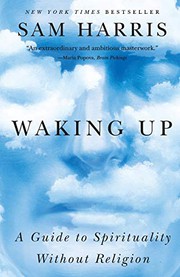

In one sentence
Spiritual life need not depend on supernatural beliefs. Harris’s central claim is that meditation can reveal how consciousness works—especially that the familiar sense of a separate, enduring self is constructed—and that this insight can reduce suffering and improve the quality of experience.
Overview
The book combines memoir, philosophy of mind, criticism of religion, and practical meditation instruction. Harris treats “spirituality” as a domain of experience and disciplined inquiry, not as a license for metaphysical speculation. He presents contemplative traditions as repositories of psychological techniques while rejecting their dogma and authority claims. The later chapters address meditation, teachers, death, and psychedelics.
Core ideas
Secular spirituality is possible
Harris thinks secular culture has retained science and ethics while neglecting direct investigation of consciousness. Spiritual experiences should neither be dismissed as irrational nor automatically interpreted through religion; they can be examined as experiences with psychological significance.
The self is not what it seems
The ordinary feeling of being a stable inner observer is, in Harris’s account, a process produced by thoughts, memories, sensations, and attention—not a separate entity behind them. Meditation is meant to make this claim experientially testable rather than merely philosophical.
Attention shapes well-being
Suffering is intensified by identification with thoughts, cravings, fears, and narratives. Since attention determines what occupies consciousness, training attention can create distance from mental events without requiring suppression or denial.
Meditation is an investigation, not just relaxation
The practice involves observing experience closely—often beginning with breath or sensory awareness—and noticing that thoughts arise on their own. Harris emphasizes insight into consciousness and selfhood more than stress reduction alone.
Mystical experience need not prove a supernatural world
Experiences of unity, boundlessness, or ego-loss may be profound without establishing claims about God, cosmic purpose, or an immaterial soul. Harris separates the value of an experience from the doctrines often attached to it.
Traditions contain techniques as well as beliefs
Harris selectively draws from Buddhism, Hinduism, Christian mysticism, and other contemplative traditions. His method is to preserve practices and phenomenological insights while discarding what he regards as unsupported theology.
Psychedelics can expose possibilities, not finish the work
Psychedelic experiences can disrupt habitual models of self and reality, but their intensity does not guarantee lasting understanding or ethical improvement. Integration and sustained practice remain necessary.
Teachers are useful but dangerous
A teacher may shorten the learner’s path or communicate insights that are difficult to discover alone. Yet spiritual authority can enable manipulation, abuse, and self-deception; skepticism and ethical scrutiny are indispensable.
Practical takeaways
- Treat meditation as an empirical experiment: observe what happens when attention rests on breath, sensations, thoughts, or awareness itself.
- When a thought or emotion appears, notice that it has arisen without being deliberately summoned; this weakens the assumption that every mental event is “you.”
- Distinguish pain from the additional suffering created by resistance, rumination, and identification.
- Use spiritual language cautiously: preserve useful descriptions of experience without accepting unsupported metaphysical conclusions.
- Judge teachers and practices by their effects on clarity, honesty, compassion, and freedom—not by charisma or claims of enlightenment.
- Approach psychedelics, intensive meditation, and nondual practices with care; unusual experiences can be destabilizing, confusing, or easily overinterpreted.
Caveats and counterpoints
- The book’s argument that the self is an illusion is philosophically and scientifically contestable; critics may regard it as a claim about the structure of experience rather than a settled conclusion about personal identity.
- Harris moves quickly between neuroscience, first-person meditation reports, and philosophical conclusions. Evidence that meditation changes attention or well-being does not by itself establish every claim he makes about consciousness.
- The book is heavily focused on meditation and ego-transcendence. Critics have found its roadmap somewhat disjointed and argue that secular spirituality may include more than altered or nondual states.
- Meditation is not uniformly beneficial for everyone, especially at high intensity or without suitable support. The book’s confident presentation may understate differences in temperament, mental health, training, and cultural context.
- Harris’s definition of spirituality is narrower than many religious, humanist, or community-based definitions: it prioritizes consciousness, attention, and liberation from the self-model over ritual, collective identity, or theological commitment.
Questions worth revisiting
- Do I experience thoughts as actions I choose, or as events that often arise before conscious intention?
- Which forms of suffering come from an event itself, and which come from my mental resistance or narrative about it?
- Am I treating a powerful contemplative or psychedelic experience as evidence for claims it actually supports—or merely as evidence that consciousness can change?
- What would count as meaningful progress in meditation: calm, insight, reduced reactivity, greater compassion, or something else?
- Where does Harris’s account clarify spirituality, and where does his rejection of religion leave out important social, ethical, or communal dimensions?
Return to this when…
Return to the notes when revisiting meditation, debates about free will and personal identity, secular approaches to spirituality, or the difference between a transformative experience and the interpretation imposed on it.
References
- goodreads.com
- Making Sense | Sam Harris
- A review of Sam Harris' Waking Up: A Guide to Spirituality Without Religion — Philosophy for Life
- Waking Up: A Guide to Spirituality Without Religion | Washington Independent Review of Books
- snsociety.org
- simonandschuster.net
- 12min.com
- simonandschuster.com
- howtohappy.com
- simonandschuster.net
- pmc.ncbi.nlm.nih.gov
- pmc.ncbi.nlm.nih.gov