
In one sentence
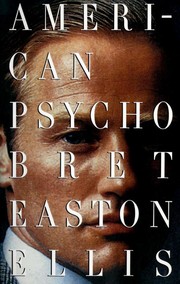
American Psycho turns a serial-killer narrative into an unstable cultural diagnosis: Bateman’s violence is horrifying, but the surrounding society’s obsession with status, surfaces, money, and consumption makes him disturbingly legible rather than wholly alien. The novel’s satire is inseparable from its ethical difficulty and graphic misogyny.
Overview
Set among affluent young professionals in late-1980s Manhattan, the novel is narrated by Patrick Bateman in a flat, meticulous voice. He moves through restaurants, clubs, offices, shopping, music commentary, and social competition while describing increasingly extreme acts of violence. The narrative repeatedly destabilizes what is factual, imagined, witnessed, or psychologically distorted; the book does not resolve that instability into a reassuring answer. Ellis described the project as both a portrait of Wall Street’s moneyed culture and, in a personal sense, a novel connected to his own rage, disgust, and passivity.
Core ideas
Consumption as identity
Bateman’s clothes, apartment, grooming, restaurants, and possessions receive the same controlled attention as human beings. This suggests a world in which taste functions as morality and people become interchangeable surfaces, brands, or social credentials.
Sameness beneath status
The elite characters constantly distinguish themselves through labels, reservations, business cards, and cultural preferences, yet they frequently confuse one another. Individuality is performed through identical systems of consumption, producing comic and unsettling interchangeability.
Violence and social blindness
The novel places extreme private violence beside a culture already structured by exploitation, racism, misogyny, homelessness, and indifference. Its provocation is not simply that Bateman is monstrous, but that respectable institutions and peers often fail to recognize—or meaningfully care about—monstrous behavior.
Unreliable narration and unstable reality
Bateman’s polished self-reporting, contradictions, repetitions, and possible hallucinations make him an unreliable narrator. This technique prevents readers from treating the violence as straightforward evidence while also refusing to neutralize its effects: uncertainty becomes part of the book’s horror.
Masculinity as performance
Bateman’s wealth, body, sexual entitlement, aggression, and professional status are forms of competitive masculine display. Beneath the performance is not a stable self but isolation, emptiness, and an inability to form reciprocal human relationships. Scholarly readings often connect the novel to a crisis of postmodern masculinity.
Satire with a serious ethical problem
Ellis and later commentators have treated the book as satire, particularly of corporate greed and 1980s consumerism. Yet the graphic sexualized violence and repeated slurs make its targets and moral stance difficult to contain. The novel can expose misogynistic culture while also being criticized for reproducing or sensationalizing misogynistic imagery.
Practical takeaways
- Notice what a culture treats as evidence of a person’s worth: possessions, taste, appearance, productivity, or empathy.
- When a narrator sounds precise and confident, ask whether precision is clarifying reality or disguising evasion.
- Satire does not automatically make disturbing material harmless; consider who is being mocked, who is being used as spectacle, and who bears the imaginative cost.
- The book is most useful as a test of interpretive boundaries: it asks whether social criticism can remain criticism when its methods imitate the brutality being condemned.
- Do not reduce the novel to either ‘a realistic confession’ or ‘only a satire.’ Its power comes from forcing those explanations into conflict.
Caveats and counterpoints
- The violence is exceptionally graphic, including sexualized violence, torture, murder, animal cruelty, racism, homophobia, and misogynistic language. This is not incidental atmosphere; it is a central formal and ethical feature of the reading experience.
- The ending and many episodes are deliberately ambiguous. Claims that every violent act either definitely happened or definitely did not happen overstate what the narration can establish.
- The film adaptation is not a substitute for the novel: the book is more repetitive, digressive, verbally saturated, and difficult to classify, with less interpretive containment than the film.
- The novel’s satire has been defended as deliberate cultural critique, but serious criticism remains possible regarding its treatment of women and the way graphic representation can overwhelm satirical intent.
Questions worth revisiting
- Is Bateman a distinct individual, or an extreme expression of a culture that has already made people interchangeable?
- Does uncertainty about the events deepen the critique, or allow readers to evade the violence?
- Where does the book’s satire land: on Bateman, on Wall Street culture, on masculinity, on the reader, or unevenly across all four?
- What is the relationship between cataloguing and cruelty—why does the same voice describe luxury goods and suffering with comparable attention?
- Can a work condemn dehumanization while repeatedly turning human beings into objects of spectacle?
Return to this when…
Return to the notes when thinking about unreliable narration, satire, consumer culture, toxic masculinity, or the ethics of representing violence. Revisit the questions after reading criticism that disagrees about whether the novel successfully controls—or merely reproduces—its misogynistic material.
References
- Themes and Analysis of American Psycho | Book Analysis
- panmacmillan.com
- litcharts.com
- The Bloody Banality of American Psycho | Rotten Tomatoes
- American Psycho by Bret Easton Ellis | Books | The Guardian
- American Psycho by Bret Easton Ellis: 9780679735779 | PenguinRandomHouse.com: Books
- breteastonellis.com
- publishersweekly.com
- complex.com
- theguardian.com
- "And as things fell apart": The Crisis of Postmodern Masculinity in Bret Easton Ellis's American Psycho and Dennis Cooper's Frisk : Critique: Studies in Contemporary Fiction: Vol 47, No 1
- en.wikipedia.org